
Who should Ottawa target at the deadline?

Ottawa is in a fairly unique situation among NHL teams, in that they’re (occasionally) competitive, with loads of cap room, and the prospects to upgrade. Really, the only other team in this situation is Colorado, maybe the Rangers. But I see on various blogs (and not just the Ottawa-centric ones) how Ottawa is a team that could make some noise if they went out and got that extra piece at the deadline. They’re having their occasionally dominates stretches of possession. Their goaltending, though still all over the place some nights, can lock it down and frustrate opponents, seemingly out of nowhere. It’s all hearsay and speculation, but when fans of other teams start really paying attention to Ottawa, I think it’s mildly indicative. It’s at least exciting.

Leaving aside where Ottawa would actually get the cash from, let’s look at some of the expiring contracts for 2014 and 2015, which could represent trade targets. I’ve only taken wingers because 1) that’s what Murray is rumoured to be looking for, and 2) when you take a look at the pending UFA defencemen, you’ll see it’s not even worth writing about. Unless you think Henrik Tallinder is an upgrade on Chris Phillips.

Oh, and I’ve only looked at teams who could be sellers. Sure, Thornton and Marleau are pending UFAs, but I don’t see San Jose packing it in this season.

Here’s what we’ve got.

Gaborik, Marian »

R

CLB

31

$7,500,000

Vanek, Thomas »

L

NYI

29

$7,142,857

Alfredsson, Daniel »

R

DET

41

$5,500,000

Hemsky, Ales »

R

EDM

30

$5,000,000

Whitney, Ray »

L

DAL

41

$4,500,000

Callahan, Ryan »

R

NYR

28

$4,275,000

Jagr, Jaromir »

R

NJD

41

$4,000,000

Moulson, Matt »

L

BUF

30

$3,133,333

Samuelsson, Mikael »

R

DET

37

$3,000,000

Vrbata, Radim »

R

PHX

32

$3,000,000

Jokinen, Jussi »

L

PIT

30

$3,000,000

Bouchard, Pierre-Marc »

R

NYI

29

$2,000,000

Havlat, Martin »

R

SJS

32

$5,000,000

Dubinsky, Brandon »

L

CLB

27

$4,200,000

Stafford, Drew »

R

BUF

28

$4,000,000

Some interesting options in there, but let’s start with what would easily be the most intriguing: Daniel Alfredsson.

I’m going to go out on a limb and say he’s got some comfort with the market. There’s probably not a lot to worry about when it comes to chemistry. Would it be awkward? For a minute or two, then we’d all dig our Alfredsson jerseys out from the bottom of the trunk where we buried them, and get ready to chant his name at 11:11. He thought Detroit would give him a better chance to win. Well, maybe they still do. But as of right now Detroit is not in a playoff spot.

Now, if Daniel Alfredsson is going to be traded at the deadline, it would likely be to an honest-to-goodness contender. San Jose or Los Angeles or something. (Imagine, for a moment, if Alfredsson was traded to the league-leading Ducks – the franchise that beat his Senators in the Final in 2007, and now including former Senator Jakob Silfverberg. Would you cheer for them in the playoffs? Talk about being conflicted.) But if it’s a comfort thing – somewhere where his family will be familiar and somewhere where he will be appreciated – well, I can think of no better destination.

I put both Callahan and Dubinsky on the list, even though New York and Columbus are both pretty close to a playoff spot and probably won’t be sellers, but those are the type of guys who you know managers salivate over adding to a playoff-bound team. They produce points, their possession stats are respectable, and they have all of those delicious intangible bullshitty things like handshakedness and stick-to-it-iveness that coaches and GMs love.

I don’t see Jagr being traded, and if he is I don’t see him being traded to Ottawa. But how amazing would it be if Jaromir Fucking Jagr played for Ottawa, even if only for a couple of months.

For basically any of these guys I think Ottawa would have to trade one of their better prospects – a Puempal, maybe even a Lazar (though we hear he’s untouchable). Mark Stone seems pretty entrenched where he is, but I imagine he’s got a few GMs’ attention at this point. And then there are several second tier prospects who are performing well in the AHL, but who may never be NHL players – your Shane Princes and Mike Hoffmans. All of them, along with a second round pick, would surely be up for grabs for the players on this list.

Sound off in the comments: should Ottawa be looking to buy? If so, who should they target?
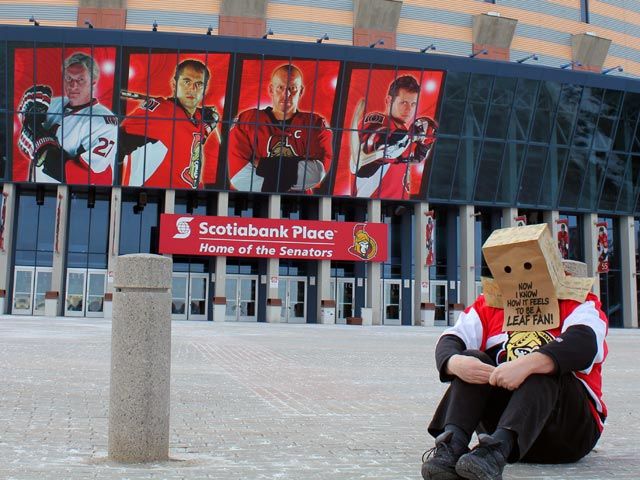
Things are about to get weird

I don’t mean just this season, though this season’s been plenty weird. This season was weird before it even started, right around the time people starting picking Ottawa as a Stanley Cup contender. Since that time it’s been an acid trip for Sens fans, from Spezza on the third line with Chris Neil to now Cody Ceci is a 20-minute-a-night guy to Ottawa’s weirdly putrid home record to the fact that every game Ottawa plays is at 2pm. It’s a polar vortex of emotions.

But if you think we’re in uncharted waters right now, get ready. We’re about to enter the lost world.

There’s a tendency to treat changes in management as state-of-the-union, “what does it all mean?” moments. We might look back at the loss of Assistant GM Peter Chiarelli to Boston as one such moment. Shortly after Chiarelli’s departure, Zdeno Chara signed in Boston, and shortly after that Boston won some trophy.

If the rumours are true, and heir apparent Tim Murray is also fleeing Ottawa for the balmy beaches of division rival Buffalo and Terry Pegula’s unlimited budget, then we’re about to head into another period of soul searching.

After all, we were talking about Bryan Murray being too old to stay on, or him not being the real brain behind the solid scouting and overperforming Sens, the LAST time he was extended. Now, at 71, Murray will likely be extended again—if only because what else do you do when your entire secession plan is pulled out from under your feet?

This should probably be a pretty big deal. Not because we can’t handle another year of Murray doing his competent, respected GM thing. But because when Murray finally does go in a year or two, there’s a greater risk of losing the structure and personnel that have made Ottawa a first class organization. If Tim had stuck around we’d know that from Pierre Doiron and his team on down, the strategy, outlook, and expectations would probably remain the same. But if a whole new GM comes in he’ll want to bring in his guys—his assistant GM, his scouts, maybe even his coaches. A team with its share of ups and downs over the last half-decade could enter another period of instability.

And once again it has to do with money. Eugene Melnyk’s shaky finances may have led to the loss of the most beloved player in franchise history, and now is leading to the loss of the candidate they’d been grooming for years to take over the role. Ottawa has expiring contracts for three top six forwards, one top two defensemen, and a starting goaltender all happening at the same time. Maybe they love it here and will re-sign regardless the situation, but I don’t think I’ve ever seen a franchise in flux that’s been able to attract and keep core pieces. Whether rightly or wrongly, stability is seen as key to contention.

THEN there’s the arena. Hoooooboy, the arena. With all the hand-wringing about money, and Melnyk’s propensity for playing with the sentiment of fans to pressure city council, I am not looking forward to a prolonged—years-long, potentially—debate with my city councillor, my mayor, my family, my boss, my girlfriend, my colleagues, James’ dog, etc. about the role of the sports franchise as a public institution and its right (or lack thereof) to public funding. Personally, I tend to fall on the side of “a few tax breaks” rather than “tens or hundreds of millions in public dollars,” but I think the latter is where we’re headed. That’s the precedent, and Melnyk will say “me too” when the time is right. Fair-weather fan Ottawa will slap on the chastity belt, and the debate will go on for-fucking-ever.

All this to say that I would love it if sports franchises did as organizations tend to and make public a five year plan: when do we plan to contend; what major investment milestones are coming up; who’s driving the boat? What is this team’s identity? Am I being naive to think that the Ottawa Senators, being a low-payroll, small market team with a caustic owner, would benefit from providing a little clarity in uncertain times?

Because here’s a scary thought: the only constant over the next few years might be Eugene Melnyk.

Can a case be made for trading Jason Spezza?

Let me be clear: I am not a Jason Spezza hater.

Rather, I think he’s a sublime offensive player whose long tenure in Ottawa has led to his skills being taken for granted; a lightning rod for Ottawa’s inconsistent play in a post-Alfie world; and an easy target for the character-and-grit brigade in Ottawa. (Just yesterday The Ottawa Sun’s Don Brennan called for Ottawa to claim Zenon Konopka off of waivers. That should give you an idea of the mindset.) With every drop pass to nobody, Spezza earns another round of tongue clucking from a group that thinks that every complex problem can be reduced to common sense and hard work. I am not one of these people.

I am, however, a dork for asset management, and Jason Spezza presents an interesting case study in whether or not the time is right to maximize one’s return on an expensive and elite player. Finding a partner with cap space, cash, and the fact that Spezza has a no trade clause makes all of this highly unlikely. But even considering trading Spezza opens up a number of interesting possibilities, questions about the identity of this team, and the best way to build a winner.

First, Jay-Jay’s Production

Spezza, for all of his highly visible mistakes (which, I maintain, are a byproduct of his being a creative playmaker), is a productive center. His 30 points in 39 games is respectable; his career production is even higher; his possession statistics are positive, if not astounding (and nowhere near the best on the team at even strength); up until this year he drew more penalties than he took. He’s produced despite playing with a rotating cast of wingers, including noted offensive powerhouses Eric Condra and Chris Neil. He’s not entirely sheltered, playing against the opposition’s weaker lines, but being deployed in all three zones by virtue of his ability to win faceoffs.

He’s been playing long enough to get a clear picture of what you can expect: a consistent offensive producer, if one with defensive deficiencies and an injury history. You could argue he’s one of the ten best playmakers in the league, depending on the type of team and how they use him. He is, however, having a bit of a down season. The team scores about 12.2% more of the time without him on the ice.

Put another way: in a down year, Jason Spezza still puts up 30 points in 39 games. He’s only 30 years old.

His Contract Looks Great

Spezza’s production is well established, but he’s also on the kind of contract that GMs drool over. First, he’s not on an expiring deal, meaning that a team wouldn’t need to give up assets for what could turn out to be a rental. Second, the real money on his contract is only $5MM this year and $4MM next—which is insane value put next to other players in his strata. (Ryan Getzlaf’s salary goes up to almost $9MM next year.) There’s not much on the free agent market for those who miss out on Joe Thornton, unless you consider Paul Stastny or David Legwand legit top line centers. And finally, with the salary cap going up next year, there should be a number of teams who can make room for Spezza’s $7MM cap hit.

His Role on This Team

Jason Spezza is a better offensive option for the Ottawa Senators than Kyle Turris or Mika Zibanejad. (Analysis!) And therein lies the question of what kind of team Ottawa wants to be. Right now they’re offensively potent and defensively porous, relying on engines Spezza and Karlsson to outscore the competition. If the team rolled four lines and traded Spezza for a defenseman and/or a well-rounded power forward, does that mean they could provide a more balanced attack?

Interestingly, with Spezza’s injury over the past few games, we’ve had a look at what Ottawa would look like with Turris and Zibanejad as their 1A and 1B centers. While it’s a miniscule sample size, the results have been encouraging. Zibanejad remains Ottawa’s best possession forward, and has clicked well with Cory Conacher and Milan Michalek (neither of whom have seemed to click well with anyone this season), and the Turris-MacArthur-Ryan line has been Ottawa’s best all season long. Zack Smith is an effective 3rd line center with great faceoff skills. I don’t know where you slot Jason Spezza in when he returns from injury.

The Bobby Ryan Conundrum

From the day Bobby Ryan was brought in from Anaheim, there were visions of Spezza and Ryan recreating 2006 / 2007 levels of offense. The approaching Armageddon of negotiating a contract for both your top center and winger was still two years off. In the meantime we were told to sit back and watch the fireworks.

That Ryan hasn’t really meshed with Spezza (not that they’ve played very much together) could be a blessing in disguise. As Bobby Ryan produces on a line with high value / low cost players like Turris and MacArthur, the emphasis might shift from having to absolutely re-sign both players to simply ensuring that Ryan stays in the fold. (Along with Methot, MacArthur, and possibly Anderson.) Ryan has demonstrated an underrated playmaker’s ability to go along with his scoring and possession. Suddenly, Spezza and Ryan no longer come as a unit.

What could you get?

This is always hard to predict, but if Ottawa gave up a young roster player, a good prospect, and a 1st round pick for Bobby Ryan, and if you consider Spezza to be a player on the same level as Ryan—albeit a different kind of player, older, and at a higher cap hit—then you might expect that Ottawa could get a good roster player and a good prospect for Spezza, or perhaps a very good roster player in a one-for-one swap.

So, would you do it?

At the end of the day…I don’t know. Spezza isn’t just a good player; he’s an elite talent, and extremely difficult to replace. You don’t find a player who’s top ten in his category without drafting him in the top five and developing him for years, as Ottawa has done here. I certainly wouldn’t make the trade except for a similarly skilled player with a different set of tools.

What do you think?

What is “compete level” anyway?

WAIT WAIT WAIT: before you click away, this isn’t an article in which I try to quantify compete level.

I think that trying to quantify “effort” in pro sports is a game of diminishing returns—if you’re looking to consistently gain advantage over another group of pro athletes, “trying harder” or raising your “compete level” probably isn’t the way to do it. Some teams or players have lazy moments, but I would wager those are extremely insignificant outliers on an overall level of competition that, to us mere mortals, is unfathomable. Everybody tries hard. 

I suspect that when I hear “effort,” like when I hear “focus” or “leadership” or “grit,” what I’m actually hearing is an easy substitution for any number of more nuanced and complex reasons for why a team might stink. Effort is always unquantifiable, so, there can always be more of it. What’s worrisome is that you hear these platitudes the most from Paul MacLean.

Now, MacLean isn’t exactly going to get up in front of the media and outline the Xs and Os of his playbook for all the world to see. What else is he going to say other than, “We need to get ready for the next game, prepare properly, and raise our compete level”? But I’m telling you—if this is what the players are getting in the dressing room, I don’t know how mad we can be about the Sens’ current record. After almost half a season of hearing about compete level, it’s starting to sound obnoxiously disconnected from the real world.

Saddled with one of the lowest payrolls in the league, the team is still top 10 in offense—and that’s with Michalek, Conacher and Greening all disappearing from view. The goalies are facing more shots than normal; if you told Lehner he didn’t compete he’d bite you on the face. Even the much maligned defense has a guy like Karlsson, who plays 30 minutes a game and last night skated end-to-end and back on a single shift about six times that I counted.

I’ve already written about how if the team’s PK picks up even a little bit, or if they take fewer penalties, they’ll be in a good spot. Their possession stats are trending in the right direction. So how can you look at all of this and conclude that they should just “try harder”?

Defensive coverage and a stinky PK seem to be the problem, and really, they’ve been a problem all season. Are special teams not assistant coach Dave Cameron’s area? Oh, and did you see Cameron screaming at Spezza from the bench last night after another blown play? Something isn’t right in his shop.

We don’t have access to the dressing room, or to the coach’s thoughts or strategies, but there’s a worrisome disconnect between the stats and the grizzled-leader stuff MacLean gives us whenever he’s asked for an explanation for his team’s poor play.

Stuff like this:

“We’re an inconsistent group. We can’t get the puck out of our zone. We play good against good teams. We play bad against teams below us. That’s just a lack of focus, a lack of leadership and that’s a lack of us wanting to play in the National Hockey League and be an elite team. We are a long, long way from being an elite team.”

So, when asked for a reason why the team is good against good teams and bad against bad teams, MacLean offers that we’re bad because we’re bad, and if we wanted to not be bad, we would be good. The reason we don’t want to be good? We don’t actually want to play in the NHL.

This stuff is maddening to hear night-in and night-out. And as frustrating as it is for us, you’ve got to really feel for the team if those are their marching orders.

Does the Senators’ insistence on hitting make them easier to play against?

There isn’t one thing you can point to to explain why this year’s Ottawa Senators have underperformed. Bad goaltending. Lack of secondary scoring. A sudden inability to transition the puck out of their own zone. An allergy to home ice and afternoon games. Daniel Alfredsson was actually a pretty useful player. The Western Conference in general. The list goes on.

Despite all of these shortcomings, it’s not as if the team has fallen off a cliff. As of today their playoff chances sit at about 20%, and they’re five points out of a wild card spot with underwhelming division rivals like the Toronto Maple Leafs and Detroit Red Wings hanging on by the skin of their teeth. They’re not going on extended losing streaks, or being blown out. Fix just one or two small things and maybe you see this team on the other side of the bubble.

The question is which of the many broken things you concentrate on when every loss makes recovery exponentially more difficult. MacLean has shown a remarkable faith in Craig Anderson, given that his play has sometimes ended the game by the first intermission, but it’s too easy to say “goaltending” when the trade market is frozen up due to lack of cap space or cash. Odds are this team ends the season with their $3.5MM starting goaltender. In other words, simply having a different team is not a solution to this team stinking.

However, there is one deficiency that seems a constant this year: Ottawa’s penalty kill is 24th in the league at about 79%, and they are the most penalized team in the league, having been shorthanded 141 times. (To contrast, San Jose, the least penalized team, has been shorthanded just 90 times.) These two stats may be related; your penalty kill will lag when it’s constantly out there.

So the question is whether to work on the penalty kill—which, in the absence of a trade market or a sudden strategic epiphany, seems unlikely to work—or to have the team actively try to take less penalties.

Perhaps surprisingly, Ottawa’s ratio of PK time to PP time is not too bad. They’re 21st in the league in that regard, which means they’re still drawing penalties, and their powerplay, at 13th in the league, is humming along. But that only reinforces the point that only a few less penalties and this team is in a much more favorable position to win games.

I imagine the most effective way to do this (outside of simply procuring additional skilled players) is to target players whose ratio of penalties-taken-to-penalties-drawn is particularly egregious, and to look a little more closely at how team behaviour drives penalty taking.

I’ve already written about how Chris Neil’s P-to-PD is a career worst–and, also, almost league worst. He takes 2.8 penalties per 60 minutes of play to only 0.3 penalties drawn. That’s horrendous. He’s second in the league in minor penalties—not the stuff you associate with enforcers, but the really boneheaded stuff like impeding a player with your stick or body.

To contrast, Zack Smith is also in the top ten in the league in minor penalties taken, but his penalties-drawn is slightly higher—he might cause some goals against, but with a good powerplay, you might still score more goals with Zack Smith on the team than not. He’s not a part of the problem.

The next closest Ottawa player is Jason Spezza, way down at 66th in the league. Interestingly, Spezza’s penalties drawn per 60 is 0.0, obviously lower than his penalties taken. That’s a weird stat for someone who’s supposed to be your most skilled player. Chris Phillips also takes more penalties than he draws. So, what you have is this team’s core consistently taking more penalties than it draws.

Does this speak to a leadership problem in Ottawa? Purely for fun, let’s look at Daniel Alfredsson’s P-to-PD…oh look, he draws more penalties than he takes, 0.9 per 60 to 0.4. Nothing to see here.

Still–how do you fix this? Many minor penalties are taken because the player is out of position, is being outworked, or isn’t skilled enough to strip the puck without impeding play. How do you fix this without resorting to “get a different team”-style solutions?

Which brings me to the second thing I noticed, and what the coaching staff might actually be in a position to affect. Ottawa is one of the “hittingest” teams in the league. I know the way that hits are tracked is not exactly scientific, but individual stats will serve our purpose here as a rough measure.

Tyler Dellow over at MC79 has written extensively about whether there’s any correlation between hitting and scoring. In a nutshell: teams that outhit seem to score less than teams that are outhit, in part because you usually don’t have the puck if you’re trying to hit, and in part because of the type of players you’re putting out on the ice in order to be a team that outhits. Going out of your way to hit or be a team that hits doesn’t necessarily make you a harder team to play against.

Ottawa has five players in the top 27 in the league in hitting: Colin Greening (3rd) Chris Neil (4th) Zack Smith (21st) Jared Cowen (24th) and Marc Methot (27th). (Chris Phillips is next at 68th, and Bobby Ryan – swoon—is 78th. Is there anything he can’t do?) Of these players, Greening and Smith are the only ones who draw more penalties than they take, though it’s slight in both cases. Every other player on this list, outside of Bobby Ryan, who’s not really in the hitting conversation so low down on the list, take more penalties than they draw. (And in the case of Chris Neil it’s a huge, huge disparity.)

Given that the club’s hit leaders are also some of their most penalized players, there may be something to the argument that a hit thrown leads to a player out of position, or an unnecessary roughing penalty. Someone with more access and skill than I—say, someone inside the Senators organization with time and resources on their hands—may wish to look at how often a minor penalty is incurred in the seconds following a hit. If there’s a trend there, asking that these specific players—Neil, Cowen and Methot—no longer try to hit everything in sight may be one small step towards righting the ship.

(I’m not even getting into the fact that Cowen’s dangerous hit on Buffalo’s Zemgus Girgensons led to a two game suspension and left the team low on defensive depth–a much more straightforward example of how hitting has a higher cost than benefit.)

What we might also learn from the hitting and penalty-ratio statistics is which players are making smart hits. Perhaps we can take a moment here to appreciate Colin Greening, who hits like an animal and doesn’t seem to get excessively penalized for it. Or Bobby Ryan, who seems to hit a lot for a scorer but obviously not at the expense of his scoring. If there is a correlation between hitting and minor penalties, then we can learn which players are hitting for hitting’s sake. They might be hitting because it makes them look good, but it’s actually hurting the team.

And if that’s the case, then benching or scratching Chris Neil to send a message about responsible play might be a start. It’s not as if Ottawa is lacking a fighter, or will miss Neil’s offensive production. But something has to be done for this team to understand that throwing more of the same hits at skilled teams only lands you back in the penalty box.

Combine fewer penalties with Anderson’s game recovering even a little bit and the team learning to score in the shootout and there might be hope for this season yet.

A note on whether or not the Ottawa Senators actually stink. (No they do not.)

Last night’s loss to Tampa Bay was a gut punch. Ottawa loses a close game, and every team that Ottawa is chasing wins theirs. In one night the Sens’ playoff probability drops from about 25% to 15%. Moreover, the feeling that this team takes one step back for every step forward weighs down the whole #fearless experience. The feeling of futility is settling in. But as is usually the case, the real story of the game lies just below the box score.

Ottawa outshot Tampa 34-22 and dominated possession 5v5 60.3%-39.7%. It was a one goal game right up until the last few minutes, and at one point, with the score tied, Bishop absolutely robbed Bobby Ryan. If he doesn’t maybe the whole narrative changes. A team with excellent goaltending stole a couple of close ones away from the team who should, by all rights, have won.

In fact, if you look at the Senators’ last 10 games—of which they’ve lost seven—they’ve controlled possession in seven of those games. In four of those games—also all losses—they’ve been north of 60% when 5v5, which, in a league this good, you can consider absolute domination in possession terms. In that same time they’ve allowed fewer than 30 shots on net at even strength eight times, and 20 or fewer shots at even strength five times.

The Senators, at even strength, are a good team. Or at least they have been lately. When Patrick Wiercioch said post-game that the team has been “finding ways to lose,” he’s not kidding.

So why are they losing so much? We don’t have to go far to find areas of legitimate concern. Their PK is terrible, currently rated 23rd in the league, and is absolutely giving the game away in places. This couldn’t be worse when you also consider Ottawa leads the league in times shorthanded. Their goaltending could also stand to make one or two more timely saves, which is a kind way of saying that Craig Anderson has been brutal this season. But my key takeaway here is that if this team stays out of the box even a little bit more, some of these losses turn to wins.

RELATED NOTE: Chris Neil’s penalties per 60 minutes of play this season is 2.9, which is 2nd in the league among players with 20 or more games played behind the also-useless Zac Rinaldo. This is almost a career high for Neil. (He took 3.1 penalties a game per 60 back in 2007-2008.) His penalties drawn? 0.4! That’s a career low.

For an agitator who doesn’t really do much to drive possession or put up points, that’s stunningly ineffective. For a team that is so pressed for cash that in order to call up Mike Hoffman they also need to send down effective fourth liner Derek Grant, Neil’s $1.9MM salary (for two more seasons after this…sigh) is a boat anchor.

I think the book is out on Chris Neil; the refs aren’t biting anymore. More importantly, I don’t know how you scratch young players for not playing responsibly in their own zone, and then not only give Chris Neil a free pass, but also the assistant captaincy. It can’t do much for your credibility.

Anyway…sometimes it’s helpful to just curse the hockey gods and move on. Toronto was massively outshot last night and eked out another win in OT, clinging to the edge of a regression cliff by their fingernails and the grace of good goaltending. Ottawa, at least over their last 10 games, is the reverse story. Their fundamentals are starting to come into alignment, but bad luck and discipline are doing them in.

To be a 92 point team they need to go 30-17-2 over the rest of the season. They have a big game against Toronto on Saturday—the battle of teams with opposite luck and possession. (I’m still looking for somebody to do an analysis of Ottawa’s record during Hockey Night in Canada broadcasts. I’m going to go out on a limb and suggest it’s really very terrible.) And knowing the hockey god’s cruel sense of humour, it could go absolutely anywhere. But if there are two things that you can bet on, they’re that Chris Neil will take a penalty, and on the ensuing penalty kill, Ottawa will probably get scored on.

Taking a look at the new Rogers broadcast deal

This is an Ottawa Senators fan blog, so we usually stay away from league-wide business developments (unless it’s a lockout and there’s nothing else to write about). But this seems too important to me, and that it will affect Ottawa, along with every other market in the league.

If you haven’t read about it, here’s the story: The NHL and Rogers reached a 12-year broadcast deal worth $5.2 billion that gives Rogers, under their Sportsnet suite of channels, exclusive national rights to all NHL broadcasts, across all platforms. Rogers will sublicense out some Saturday night games to CBC so they can continue their iconic Hockey Night in Canada broadcasts.

My initial gut reaction is that TSN has set the standard for hockey broadcasting in Canada, and it’s a shame to see them rewarded for all their hard work by being frozen out of the hockey picture altogether. I would argue that hockey is the commodity it is in Canada, in part, because of TSN’s effective campaigns to amp up and market international tournaments, league-wide events like trade deadline day and the free agent ‘frenzy,’ and just the general excellent of their broadcasts. Sportsnet’s quality, in my mind, has been lower.

And more importantly, without competition from TSN, it’s hard to see how Sportsnet has any incentive to improve their product now. CBC has always seemed like the fuddy duddy of the bunch, running embarrassing sketches with Don Cherry dressed as the Phantom of the Opera and giving airtime to brute personalities over respected analysts (Elliotte Friedman being the exception), so they probably won’t be the ones driving Sportsnet to new heights. If anything, the low quality broadcasts of Sportsnet will stagnate over time as Rogers tries to control costs and maximize profit on this massive, up-front investment. (In fact, they pay $150 million up front in the deal.)

While this sucks for TSN, and the consumer, I think the bigger story is the consolidation of media services under one umbrella. Rogers now owns a massive chunk of the television and telecom infrastructure and contracts in Canada, is part owner of the Leafs, and has exclusive broadcast rights for hockey. Those who follow media and telecom in Canada will tell you that when the distributors of content also own the content, that’s usually bad news for consumers, who end up paying more for less choice.

I can see the appeal for the league and, frankly, the short term appeal for a poor team like Ottawa. They get a massive infusion of cash to be shared among the league’s teams (hopefully Melnyk doesn’t have to sell any more of his prize horses now), and they partner with a provider who is ideally situated to deliver their content across an array of devices. People are increasingly watching media wherever they are, on tablets and phones as well as televisions. Rogers is in the position to provide those services. Bell, who owns TSN, must have made a less compelling case. Really, the writing should have been on the wall as soon as Rogers became part owner of the Leafs (along with Bell) that market consolidation was coming, and we’d all have to sign lifetime deals with either Rogers or Bell to keep watching hockey. This is good for the league, even if that doesn’t necessarily mean it’s good for the fans. Make no mistake, this is unprecedented centralization in the Canadian market, and less competition has always meant higher prices and less choice.

I’m hoping that Rogers proves me wrong, but then I’ve been an off-and-on Rogers customer for years – purely because of lack of choice – and they’ve let me down countless times before. We could see more specialty channels requiring additional payments to watch games in your market; additional charges for access across devices; obligations to sign contracts to gain access to the content you want; and a whole lot more Leafs.

I won’t turn this into a blog complaining about the telcos because we’ll be here all day, but Canada has tried to diversify its media and telecom landscape for decades – and it just got that much smaller. I’ll miss TSN, but more than that, I’ll miss a stable of quality broadcasters driving each other to deliver better quality broadcasts, more original content, and better access.

A Prescription for the Next 58 Games

1302138248157_ORIGINAL

I think it goes without saying that this year’s version of the Ottawa Senators is an infuriatingly inconsistent mess. As of today, their playoff probability sits a smidge over 25%. With absolutely everyone in their conference outside of Florida and Buffalo capable of playing at least .500 hockey, Ottawa needs to go 31-21-6 to have even odds of making the post-season. Bryan Murray is faced with some tough decisions. With that in mind, and knowing that he reads this blog religiously, I’ve come up with a plan to fix the Ottawa Senators.

1: Accept your situation

The Ottawa Senators can’t be fixed. Thanks for reading!

Seriously though, this season is just about in the bucket. While it’s possible that they can play at a better than .500 rate for large stretches of the season, they’ll need to play that way consistently, and have Montreal, Detroit, and/or Tampa falter significantly. It’s possible, given that Detroit has looked inconsistent (and almost missed the playoffs last year), Tampa is missing Stamkos and is due for some regression as they’re eighth in the league in PDO (luck), and Montreal is ninth in that regard and barely a bubble team. Ottawa’s own PDO is average (almost exactly 1000, or 15th in the league), so it’s possible that they could take a run. But we should recognize and acknowledge how tough of a spot we’re in at the moment, and set a date at which it’s time to make the painful but necessary moves for the future.

Having said that…

2: Don’t read too much into a lost season

There will be plenty of people who don’t watch a whole lot of Senators hockey but who are expected to produce thousands and thousands of words about the league. They will survey the standings, look at the lineup, and make a pronouncement about the state and direction of the franchise that is largely disconnected from reality. None will use trend analysis, or even drill down to individual players. For example, I don’t know how many non-Sens writers I currently see attributing the team’s poor start to losing Alfredsson (currently hurt) and Gonchar (currently terrible). These same people picked Ottawa to finish dead last the year after they finished fifth last, and who picked Ottawa to be a dark horse contender this year. Don’t trust polemics. This team needs minor adjustments at best. There’s a big difference between accepting a lost season and blowing it up.

3: Hand leadership over to the young core

Taking the As from Phillips and Neil doesn’t have to be a disgrace. It can be a symbolic gesture about the future and direction of this team. Ottawa is filled with players on very affordable deals. For a poor team like Ottawa, it needs to have these guys outperforming their contracts. Having your team living and dying for the crest, which is what happened for most of last year, is the only way to get value and performance out of this motley crew. Karlsson is an obvious candidate, given he’s on the ice for half the damn game anyway. Handing the other A over to a young player you hope will start to play better, like Colin Greening, is a cheap and easy thing to do, and not much of a stretch given his character role. The team can be anything the young players want it to be, but they need to lead to make it so.

In any case, it can’t be much worse than having take-way-more-penalties-than-I-draw / lord-of-the-offside Chris Neil as your role model. What, is Neil going to stop playing the way he plays if you take away his A? If he did, what would he have left to offer?

4: There’s not as much dead weight as you think

Outside of Milan Michalek, who isn’t playing anywhere close to the value of his $6MM base salary, or Chris Neil, who is just annoying, most of the players are on affordable deals, or their shortcomings are more than made up for in other areas. (Spezza is a -8, but almost a point-per-game player, yet again.) While the temptation might be there to make a deal, I’d hesitate to part with anyone like Cowen, Phillips, Greening, or Concacher, who have shown flashes of what they can do, and the financial risk of keeping them is low. This team’s survival is based entirely on achieving value. To that end, I’d much rather have Chris Phillips on an even cheaper deal than he’s on now than the 2nd round pick in a weak draft that we could get for him at the deadline.

5: Figure out your own barn

Ottawa’s home record is especially bad at 4-6-2, and could be due for an uptick. Ottawa plays 11 of its 16 December games at home. If Ottawa is not at least a game or two over .500 by Christmas, it should seriously consider building for next year. If there’s going to be a turnaround, it has to take place in the intimidating and spectacular farmer’s fields of Kanata.

When you think about it, so much of the Senators’ problems are tied up in their play at Canadian Tire Centre. They play terribly, ticket sales slow, management can’t put money into the roster…I know it doesn’t happen quite so quickly, but winning a couple of those friggin’ afternoon games would go a long way towards selling hope to the fans. Also: when given the opportunity to play the Edmonton Oilers at home, those are two points you have to take.

6a: Build a compelling case for 2015’s free agents

If Ottawa bombs out this year, even without its first round pick, it’s not the end of the world. They’ll bring back a young core of Karlsson, Turris, Zibanejad, Lehner, and Cowen, and their star players are around for another year. The year after that, however, has apocalyptic potential—full rebuild potential. We could lose Spezza, Ryan, MacArthur, Methot, and Anderson. Say what you will about their performance this year, but there aren’t many teams who can lose three top six forwards, a top four defenseman, and a veteran starting goaltender and not take a big step back. We don’t have the depth on the farm to replace those guys, and they aren’t in the free agent pool.

To get these guys re-signed means communicating early and often that whatever struggles the team is encountering now are temporary, and when next year rolls around the team will be ready to make changes, spend money on free agents, and be aggressive when it comes to winning. If I have one takeaway from watching a lot of terrible Senators hockey this year, it’s that this team would be even less fun to watch without Bobby Ryan.

6b: Or, actually, a little bit of extended rebuilding wouldn’t be all that bad either

This is what I would imagine to be an unpopular alternative to re-signing all of our best players and magically getting good again. We could accept our young core as the future, let all or most of our stars walk, pick up another potential superstar in the draft, and try to re-open the window of contention in 2016. Karlsson is signed through 2019 (sucker), Zibanejad is starting to come into his own at only 20 years old and will be firmly in his prime by then, and Lehner is the real deal. Add to that a Connor McDavid (a guy can dream, can’t he?) and some key free agent signings, and perhaps Ottawa is in a better spot than it would be in its current incarnation as a bubble team that hopes to go on a streak in the playoffs.

7: Decide what kind of team this is supposed to be

And I don’t mean “hard working” or “pesky.” Yes, you should try to score goals when you’re down late in the game. Yes, you should outwork your opponents. This is a strategy adhered to by every single team in the NHL (except maybe Florida). But is this the up tempo puck possession team we’ve all been conditioned to think it is? If so, why is our only other puck moving defensemen outside of Karlsson the unstoppable Wiercioch / Corvo ensemble? For the former  there is no evidence of being a capable top four defender, and the latter is a seventh defenseman making less than a million per. On the other hand, if this is a defensively staunch team, as the numbers implied last year, then why were they so heavily outshot and having to depend on Craig Anderson’s career season?

Ottawa has a lot of well-rounded utility guys in the lineup, but they aren’t particularly good at any one aspect of the game. You don’t have to be one or the other, but it helps to know where on the spectrum of risk and playing style you fall.

8: Whatever you decide to do, let the fans in on it

Uncertainty breeds fatigue. It’s not the team’s fault that there are several media outlets and about 2000 blogs covering every move the Sens make in breathless fashion, but it certainly gets exhausting to read about the daily ins and outs of a mediocre hockey club. What gets people on board is a vision for the future. Are we going for it in 2014? Are we continuing our rebuild? Is the team broke or what, and if it is, what are the plans to remedy that? When Bryan Murray retires I imagine there’ll be plenty of speculation about the direction of the franchise, and this can be a healthy discussion.

More than anything, I think that people like to follow a good story. Years of being a bubble team doesn’t have any sense of forward momentum, of progress. Give us something to look forward to.

Fourteen consecutive games (Ed note: if by consecutive you mean not in a row)

That’s how many games in a row Ottawa has given up the first goal. (Ed note: I got this stat from TSN’s game notes, but they scored first against the Panthers a few games ago. If I’ve learned anything from Rob Ford, you apologize and move on without actually changing anything, no matter how big the mistake.)

Let that sink in. Remind yourself that they’ve only played 21 games in the season, which means almost 70% of the time Ottawa will allow the first goal. That in itself is pretty disparaging, and also makes for less than entertaining hockey. But doing it 14 times in a row is…wow. Just wow. It’s almost an accomplishment. You’d have to try to do that. You’d think a shot would accidentally go in first at some point.

And for it to not really be the fault of goaltending is what makes this problem particularly infuriating. The team’s penalty kill will be good…until it isn’t anymore. (It’s down to 20th in the league after a short stint of being the best.) Their goaltending will be good overall…but the team will still be scored on in the first couple minutes of a game. The team will dominate the cycle…and then dump the puck back into their own end. Their defensive coverage will go from keyed in to completely out-of-synch in the course of a single shift. It’s absolutely dumbfounding to watch.

I’m not calling for the coach or GM’s head or anything, but you have to think this is either a system problem, or that Murray simply hasn’t given MacLean the horses to run an up-tempo puck possession team. Wiercioch and Cowen clearly haven’t worked out as planned. Karlsson can’t do it all. The team is just constantly pinned in their own end.

In any case, the team’s playoff probability went from about 60% two games ago, thanks in part to Montreal and Detroit also struggling, to 35% now. These things turn around quickly, but as James said in his last JDP: Ottawa is going to want these losses at home to Columbus and Edmonton back in the spring when they’re four points out of a wild card spot and have to play the Blackhawks and the Penguins.

We’re only a quarter of the way into the season, and I feel as if Murray has a move to shake this team up pending, but as has been mentioned on plenty of other blogs, the team is getting above average goaltending and has a good shooting percentage. If either of those stats regress even a little bit, this isn’t going to be a team trying to keep its head above water. It will be a team trying to stay out of the bottom five in a year when it doesn’t even have its first round pick. It’s already 10th last in the league.

It’s not as if Murray doesn’t have a few choices. Michalek and Phillips are on expiring deals (though the latter has a NMC until Jan. 1, after which he can pick 10 teams to which he cannot be traded). Conacher has been disappointing, though if he was traded now it would be selling pretty low on a player who at this time last year was being talked about as a dark horse Calder candidate. And of course we keep hearing about Anderson being on the block, though I can’t imagine anyone giving up what the Sens need for an underperforming goaltender at a time when there are still free agent goalies sitting around playing NHL 14.

All of this to say that the team is damned lucky to be sitting at 8-9-4 through this point of the year. They’re a short winning streak and a moribund Montreal stretch away from being back in the picture. But there’s something really disturbing about that 14 game streak. It says everything you need to know about this year’s Ottawa Senators. If last year they were pesky, this year they’ve become very, very accommodating.

Vanek for Moulson, and good old fashioned money puck

vanekasgjersey

As I’m sure you’ve heard, a couple of days ago the Islanders traded Matt Moulson, a 1st round pick this year, and a 2nd round pick next year for Thomas Vanek.

Everything about this trade is fascinating to me, from the assumptions made by the teams involved to the way the media is writing about it. I feel like this could be one of the most straightforward examples I’ve ever seen of one general manager exploiting the superficial perceptions of another to receive a higher trade return.

Let’s start with Moulson:

                                  GP    G    A  Pts 
NHL Totals                        334  126  109  235

Moulson has a career point-per-game average of 0.70 with three 30+ goal seasons, or a .37 goals-per-game. (He was on course for a fourth 30 goal season in the lockout shortened year.) His career Relative Corsi is a respectable 6.06, and that’s including his first two pretty terrible seasons in LA. If you look only at his Islanders years, his Relative Corsi is 7.1. He’s never been a negative possession player in his time on the island.

In other words, Moulson hasn’t just been good; he’s been consistently good. In Ottawa we talk about Bobby Ryan being a four-time 30 goal scorer as if that’s the new benchmark for superstars, and it will entitle him to $8MM+ when his new contract is due. Moulson, on the other hand, is making just over $3MM a year for the same kind of production. He provides some of the best value in the NHL.

Now Vanek:

                                   GP    G    A  Pts 
 NHL Totals                        598  254  243  497

First thing to mention is that Vanek has 3.2 more seasons of experience than Moulson. So, there is the seniority factor here. He sports a marginally higher 0.83 points-per-game average, and a marginally higher goals-per-game average of 0.42. His career Relative Corsi is 7.2, or almost exactly the same as Islanders Years Moulson.

In other words, the two players are so similar in production and possession as to almost be shadows of each other. Vanek, however, has had a couple of 40 goal seasons, and is paid about $7.2MM a year–or about two-and-a-half times what Moulson is making.

The key difference between the two players seems to be the perception of their potential. Shortly after the trade, I saw something on Puck Daddy to the effect of Vanek being the kind of player who is capable of “carrying a team on his back for weeks on end,” whatever that means. I’m not sure what the criteria is for team carrying, or why Moulson doesn’t meet those criteria, especially considering that Moulson has produced on an Islanders team that has consistently had one of the lowest payrolls in the league, while some of Vanek’s best years came when the Sabres were making the conference finals, racking up 100 point regular seasons, and when teammates Chris Drury and Daniel Briere were in their prime.

My point is that it’s not at all clear to me why Vanek is spoken about as if he’s an elite player, a star, a ‘special’ contributor, and Moulson is not. It’s certainly assumed that Vanek’s ceiling is higher than Moulson’s, and that other, mitigating factors have kept him from reaching that ceiling more consistently. In the right conditions–say, with a star centerman like John Tavares–he’ll flourish. (The same has been said about Rick Nash’s time in Columbus, though playing on a better Rangers team certainly hasn’t propelled Nash to stratospheric production.) Moulson, to put it diplomatically, is assumed to already be playing at his ceiling, or even outperforming his ‘natural state’ as a player.

This, maybe even more than this season’s Toronto Maple Leafs, who consistently get outshot and still win games, is a case study for advanced stats and the assumptions of general managers.

For both players we have a large enough sample size to theorize about what is reasonable to expect from them. Moulson, when given first line minutes and linemates like Tavares, can be a 30 goal scorer. That’s a proven commodity, and one, as we’ve seen in Ottawa, that teams will pay handsomely for. A player who can produce like that on a very cheap deal is the best of all worlds, the holy grail, the type of player you should constantly be seeking out in a cap- and fund-constrained league. And the Islanders just gave that guy away on the assumption that Vanek can return to 40+ goal form, or maybe even reach new heights. And I’m not sure how likely that is, considering his last 40 goal season was in 2008-2009.

And then there’s the draft picks. Next year’s 2nd rounder isn’t anything to get excited about. Assuming a 2nd round pick needs two to four years of development before you even know what you have, then whoever the Islanders draft there isn’t going to fit into their plans to contend in the next few years. The 1st rounder, on the other hand, represents significant risk. They’re banking on it being a mid- to late-round pick, in which case the player selected may still be a few years out. But those players are valuable assets nonetheless, and you can ask Chicago how valuable having a pipeline is when you want to extend your window as a contender.

I agree with the principle that the Islanders have plenty of prospects, and the time to upgrade is now. But as I’ve written on this blog about Ottawa time and again, you only really get one or two shots at a big upgrade when you’re at the apex of your rebuild. It takes a lot in terms of picks and prospects to get an established NHLer, and the Islanders just used some of those resources on a player who is only marginally better than the roster player they gave up. I’m not even really getting into the fact that the Islanders don’t need offsense, they need goaltending and defense.

If absolutely everything goes right for the Islanders–Vanek gels with Tavares, works in their system, and escalates his output–it’s not really reasonable to expect much more than Moulson’s ‘natural state’ output of 30 goals. Let’s say he’s able to break that magical 40 goal threshold that separates the superstars and special players like Vanek from the rest of the pack. Vanek has about $6MM left outstanding on his salary to Moulson’s $2.6MM. Will those extra ten goals have been worth $3.4MM, a first rounder which could land anywhere, and a 2nd rounder?

This trade really is dumbfounding. Even if you factor in intangibles which we’re not privy to–Vanek’s extra NHL experience, the fact that he was (for a very, very short time) a co-captain (with Steve Ott, fer Chrissake), and whatever other concerns the Islanders might have had about Moulson, it’s hard to understand what the Islanders are seeing in Vanek that’s worth the price of the upgrade. If you’d asked me whether I’d do Moulson for Vanek straight up, I’d have to really think about it because of the money involved and the fact that I know Moulson can produce for my team.

What’s even more confusing is the way this trade is being written about on blogs and in the media. The main issue, I’m told, is that there’s no guarantee the Islanders can re-sign Vanek. Where’s the emoticon for facepalming? Why on earth would a poor team like the Islanders want to pay Vanek what he can get on the open market when they should be looking for more guys like Moulson?

In fact, if the Islanders are very lucky, maybe they can re-sign Moulson in the offseason. After all, after his two goal night in his first game for Buffalo, he’s now on pace for a 53 goal season.