Why do so many Ottawa fans feel disconnected from the live game experience?

9224689415_59b54e644d_z

Trying to build a little bit on my earlier post about ticket prices, I’ve been thinking about the experience of going to a Senators game and where the value lies.

The WTYKY team went to the home opener last night, and I think it was a pretty typical Sens hockey experience. Not a bad seat in the house; competitive team put on a show, making up for some nail-biting defensive lapses by making legendary Marty Brodeur look awful; great facilities; good times all around. And one of the weirdest, dumbest commutes I’ve experienced in pro sports.

I don’t want to write a post that is only complaining about how long it takes to get to the game. It’s not that long a drive. It’s not a big deal. 40 minutes on the bus is a small price to pay for being able to see your affordable, competitive team whenever you like. But I think there’s something to the idea that Ottawa games are quieter, less raucous atmospheres than what other cities have going, and it has to do with how the arena is a bit of an afterthought. I’ve been to games in a few NHL arenas. Chicago, Toronto, Montreal. And, honestly, it took me as long to commute to those arenas–usually located in those cities’ business districts–as it takes to bus out to Kanata. But what those places have in common is the arena is on the regular public transit grid, meaning that you can go out early.

An NHL arena is a pretty special place, and teams know how to create atmosphere. You feel like you’re becoming a small part of your team’s history when you walk through those doors. A lot of thought is put into making the arena the sort of place where you’ll walk around, check out the memorabilia, maybe shop for some team gear, maybe grab dinner before the game. All the while, the anticipation for the game builds. The game I went to at the ACC a couple of years ago was completely bananas, even though Toronto was out of the playoffs at that time, and they were playing a St. Louis team that was also out of the playoffs. When Toronto won in a shootout, the place exploded.

The problem with Sens games is that it’s not physically possible to hang out at the arena unless you drive. We did our part: after a quick after-work beer, we were at the bus stop, waiting for the game shuttle, at 6 for a game that started at 7:30. The bus didn’t arrive for 30 minutes, and when it did, it was too full to pick us up and drove past. We arrived at about 7:25, just in time for the anthems, with no time for get beer or food, let alone walk around and experience all of the aesthetic touches that the Sens’ marketing team have put in place.

When the game ends, you have about 30 minutes to get on the shuttle back to downtown otherwise it’s gone without you. What this translates into is a very workmanlike experience. Get there; drink as many beers as you can in two periods; get home. It’s such a shame, because yesterday was the home opener and there were all kinds of events and booths set up which we had no choice but to hurry past on the way to our seats.

I’ve talked to friends in other cities who will make fun of Ottawa fans for not going to their good team’s cheap games because of the commute, but I really think there’s something to this. Ottawa has trouble establishing the same sense of prestige and history that other franchises possess, and it’s because the arena is basically inaccessible by public transportation for anything other than just the game. This is to say nothing about being on a bus that is driving through dark farmer’s fields instead of into the center of a buzzing urban center.

I know there’s nothing that can be done about the location of the arena, but I think there has to be something for those super-fans – the ones who have been looking forward to the game for weeks and want to make an event of it – to get out there earlier.

A few other notes from the game:

  • A guy on the bus home said something to the effect of Spezza’s empty netter being “such a Spezza goal.” I know following Alfredsson as captain is a tough thing for any player to do, but man does Spezz get a rough ride. He’s a creative player, which means that his mistakes, when they happen, are a lot more glaring than your typical north-south grinder / character player’s are going to be. I suppose there’s a valid point in here somewhere – you don’t want the ultra-skilled guy to be teaching your young players, since most of them won’t be able to pull off what he’s doing anyway. You want someone who teaches the fundamentals. But all the same, a lot of Ottawa fans assume there isn’t much to his game. Team Canada must feel the same way, not even offering him a try-out. Anyway: he only scored a hat trick the game before, so I guess you’re right that his next three point night, and his 8 points in 6 games, is a total fluke, bus guy.
  • Why the hell is Ottawa playing Chris Phillips out there on the power play? It’s awful to see. At one point Maclean sent a powerplay out of Phillips, Gryba, Smith, Neil and Greening. Must have been sending his skilled guys a message. Obviously that PP was hot garbage.
  • Re-watch Karlsson’s slick pass to Smith on the third goal. Spezza breaches the zone and waits, not passing to a wide open Smith so he can instead dish to a streaking Karlsson, who then draws four Devils to him before sending it to Smith for a back door goal. It was a thing of beauty, but what started it all? Jaromir Jagr, following Karlsson in his own end, gives up once Karlsson gets skating and peels off on a change, leaving Karlsson completely open to skate into the Devils’ zone unimpeded. I don’t envy Peter De Boer having to have that conversation with living legend Jagr, who will probably be gone at the deadline. Lazy, lazy play.
  • If you’re a fan of watching penalty kills, man are you getting your money’s worth out of the Sens.
  • Clearly some opening night bugs on display throughout the game. Lots of penalty announcements happening a minute after taken, and musical miscues. For all the ink spilled on Ottawa having new in-arena entertainment, it all seemed pretty standard, and off-kilter at that.. (“Don’t cheer too loud, you’ll break the Noise-o Meter!”)
  • The Sens have a really family friendly atmosphere going. This is not a compliment. Let’s work some of the Nickelodeon dance music out of the routine, fellas. It can’t be very intimidating for the opponents to know they’ll be playing The Wiggles.

How much more would you pay for Sens tickets?

Interesting little slide show over on Forbes about ticket prices throughout the NHL. A few observations:

1) Ottawa is right smack in the middle of the league, with a 15th highest average ticket price of $137.82. That’s less than the average ticket price for a non-traditional market like San Jose ($150.65) and teams who’ve been mediocre for a while, like the Islanders ($150.60) Wild ($153.82) and Sabres ($139.53).

2) There’s a pretty big drop between the top ten highest average ticket prices and 11 on. Number ten is Pittsburgh at $203.93, and 11 is the Wild–almost fifty bucks cheaper.

3) The Kings, Caps and Flyers are a surprisingly cheap ticket, considering their respective payrolls and the Kings’ recent success.

4) Is there better value in the league than a Colorado ticket right now? They’re 29th at $86.40, and you get to see Duchene, MacKinnon, and any day now Patrick Roy doing something insane.

5) The most expensive ticket is Toronto at $368.60. Obviously.

What makes this interesting for Ottawa fans is that we just emerged from a summer of reporting on the team’s financial woes. Melnyk (who is scheduled to appear on the radio later today…I’m going to go out on a limb and suggest that he’ll say something dumbfoundingly ridiculous and contradictory) said the team loses staggering amounts of money, doesn’t have much in the way of secondary revenue streams, etc.

I’m sure the team has reliable market data that tells them precisely the point at which raising ticket prices will result in a drop-off in attendance, but I was surprised by how low Ottawa’s ticket prices are. Especially considering that all of the other Canadian teams were in the top seven in ticket prices. Montreal is the next cheapest at $257.06–over a hundred  bucks more per ticket than Ottawa. (Though surprisingly they’re a cheaper ticket than Calgary and Edmonton. Also cheaper than Winnipeg, though given the small size of their arena, I suppose that makes sense.)

There’s a lot we don’t know here. For instance, does this average include corporate suites? What about ticket packages that drive down the average but increase stability for a team that needs a reliable revenue stream? Does the location of those other teams’ arenas increase walk-up purchases of pricier tickets? But just on the face of it, it looks like Ottawa could include a sizeable increase in ticket prices and they wouldn’t be out of line with the trends in the NHL. This, even with ticket prices having gone up by 6% over last year.

But would Ottawans be willing to pay more? I think the Sens have been really proactive about their outreach to fans, and I recall a poll performed in the last few years that showed that ticket prices were a concern. We also all know about how difficult it can be to get out to games. (Something they’re trying to alleviate by paying for additional ramps for buses to the arena from the highway.) With so many options to watch the game downtown and spend that ticket money on beer and food instead, would a sizeable increase really damage the underlying number of people who would be willing to chant Pageau’s name on the bus for 40 minutes?

Like anything, I assume you’d have to see the money reflected in the quality of the product. While it’s nice that Ottawa has affordable tickets, they don’t spend much in the way of salary, spending less than all but four other teams. It seems to me that Ottawa is running a pretty bare-bones operation: low salary, not much in the way of fan giveaways, none of the razzle-dazzle you see in big markets like Chicago with red-carpet openings and flashy free agent acquisitions. But on the other hand it’s cheap. We’re like No Name brand pancake mix.

[UPDATE: I got an email about the home opener today – there IS a red carpet event! Touch me, Stephan Da Costa! TOUCH ME.]

Remember also that this is the average ticket price, and there really isn’t a bad seat in the house. I don’t think I’ve paid more than $60 for a ticket unless it was to a playoff game. I’ll be at the home opener on Thursday and my ticket was $45.

So, what say you? If you knew that Ottawa was going to go from 25th in league spending on payroll to, say 15th (which is Chicago), would you pony up for it?

Jared Cowen and Expectations

8914396

As we approach the start of the 2013-2014 season, I’ve been thinking about our current edition of the Ottawa Senators and fumbling toward making some kind of prediction. Looking up and down the lineup, you can get a pretty good sense of what to expect out of almost everyone. Some players are well-established in terms of the data available on their play, allowing you to modulate your predictions accordingly. The really young guys, like Mika Zibanejad, are still on their very affordable ELCs, so even if they have a bum season, and even if that bum season is the start of a trend, the risk to the club is mitigated somewhat by how little their inclusion in the lineup keeps someone else out of it financially. In other words, I can look up and down the lineup and still feel like Jason Spezza, if healthy, will contribute well relative to his salary. I can still feel like Chris Neil will take more penalties than he draws and just generally be an overpaid agitator. I feel like the young guys with a lot of variability in their game (or at least in our predictions of their game) but don’t cost too much–you can healthy scratch them, or send them to the minors if something drastic happens. Status quo, in other words. The Senators are a team getting all sorts of value up and down the lineup.

The big exception for me is Jared Cowen, who just earned a shiny new contract, and on whom the organization will be heavily relying to linchpin their second pairing. Part of the problem, and the big difference between Cowen and the other youngins, is that usually someone with such a small sample size either gets a bridge contract, or was so ridiculously good in that small sample size that their teams felt comfortable predicting more greatness. Cowen’s only played one full season in the NHL, and a combined eight games outside of that, not including playoffs. His numbers aren’t exactly pretty–not horrific, just not pretty–even in that tiny window. In his one full season Cowen played mostly on the third pairing, against weak competition, and received a large number of favorable zone starts. You could charitably say that he didn’t lose Ottawa any games–which isn’t as backhanded a compliment as it sounds (this is a tough league), but then, he was on his cheap ELC at the time. The risk-reward factor is always going to be high on a player making so little.

My main contention here isn’t that Jared Cowen is secretly terrible. It’s that there’s very little we can actually tell about him, or his future in the NHL, based on what we’ve seen so far, and that makes management’s decision to give him $12.4 million over four years an interesting one.

It‘s clear what the organization thinks of him: that four year, $3.1 million AAV is actually the conservative contract Cowen ended up with. Rumors were flying around in the off season that Cowen received an eight-year, $28 million offer. In both of these deals, we can glean that management assumes Cowen will be a top four defenseman for many years to come. Not spectacular, but someone in the Chris Phillips mold, who plays solid NHL hockey, provides up to 20 minutes a night, and around whom you can reliably plan your hockey team.

That’s a hell of an assumption. They’re betting, basically, that a player who’s experienced several major surgeries, missed all of last season, and has never really been leaned on quite so heavily, is ready to take a big, big step. It’s a calculated risk–the kind of thing you have to do in the NHL, no doubt, and especially the kind of thing that a poor team like Ottawa has to do to provide value down the line. But there’s little denying that Cowen is being paid in advance of proving he can fill the role the team needs him to.

It’s worth noting that the practice of giving your premier RFAs big deals up front isn’t exactly novel. Edmonton just gave Ryan Nugent-Hopkins $6 million a year, for example. The question, it seems to me, is whether you can include Cowen in the group of RFAs who have a ton of bargaining power, who might actually generate an offer sheet, and whose skill is so evident you have less of a problem assigning a lot of financial risk to them. He may very well be; I just don’t see how that assessment is being made.

Compare Cowen’s deal with, say, Cody Franson, who received a one year bridge, “prove it” contract from Toronto for $2 million. The Leafs may have to pay more for Franson in the future, but the point is that they’ll know more in the future. If your players turns out to be really great, I think you have to not mind paying him really great money. Paying someone what they’re worth seems less disastrous to me than paying someone less, and then they may not even be worth that. People are giving Montreal shit because they’ll have to give Subban the moon on his next contract, but I have to think that any GM in the league will take a Norris trophy winner on their team at market value. On the other hand, Ottawa has put themselves in a position where Cowen absolutely has to pan out as he’s projected to for that deal to provide value.

Ultimately, I think Ottawa’s deal with Cowen is a much larger risk than the sort of deals we usually jump up and down on management for. Sure, Alex Kovalev made $5 million a season, didn’t seem like he wanted to be here, and played poorly–but on a two year deal, and with a huge body of data with which to assess him, that’s a risk I can understand taking. The same can be said for signing Clarke MacArthur to a two year deal this past summer. There’s enough data there to justify it. If it doesn’t turn out, that doesn’t mean that the risk wasn’t justifiable at the time you took it. It means you misused them or had bad luck, or both. You can understand where the mistake came from by discounting your risk assessment.

With Cowen, you’re basically in a void. You look at his size and think, “I like big tough players.” You look at where he was drafted and think, “This guy has pedigree.” You watch video of him beating the shit out of Ryan White in the playoffs and think, “This guy has grit.” But there’s really nothing to point to that says that he’ll be a reliable second pairing shutdown guy for you for years and years to come. It’s a risk, especially for a team with an owner who is perpetually moaning about being over-budget and totally broke.

If I’m Cowen, I would have jumped at the stability of an eight year deal over the chance to make many more dollars at a theoretical future point in my career when I’m a dominant force in the NHL. If I’m Cowen I look at my own numbers, my injuries, and the apparent luster management perceives on my abilities, and I take the career deal for fear of that luster wearing off. Everyone, including Cowen, is assuming he’s going to be an upper-tier player in this league, if not a star. He may very well turn out to be, but if it does, let’s not pretend it was anything more than guesswork and luck. If there’s one thing we know, it’s that it can’t be the evidence. There isn’t any.

Preseason jitters

NHL preseason: the stuff of legendary performances by players who will soon be waived for cap space, quixotic line combinations involving guys who don’t even show up when you google them, and coverage so comprehensive it borders on claustrophobic. Want all 20 TSN analysts to tweet line combinations at you, and then analyze those combinations, and then do pre- and post- game coverage about something that is by its very definition meaningless? Lucky for you, we have two solid weeks of that!

You’ve also got trolling sportscasters telling fans of all teams that the way these guys are playing today means even the remotest thing about the season. Caveat: I’ve watched about fifteen minutes of preseason hockey total, mostly because I already think the regular season, let alone the preseason, is too long. But I check in. I read about Spezza’s twitchy groin, and how a defence that includes Michael Sdao barely held up against the Icelandic team from D2. I’m human. And I worry.

So, with that set-up, let me ask you: are you concerned at all about this?

Craig Anderson G OTT 3 3 0 2 0 65 9 3.42 56 .862 0 0 1 0 158:23
Robin Lehner G OTT 3 3 2 1 0 84 8 3.00 76 .905 0 0 0 0 160:00

Small sample size, weird defense, they played the Islanders in two separate games simultaneously, yadda yadda. I get it. It doesn’t mean anything. But on the surface of things? Holy hell have these two guys looked brutal.

Someone smarter than me should do an analysis of how accurate preseason is as an indicator of how players will perform when the season starts. We can all remember the big exceptions, like Brandon Bochenski lighting it up and then disappearing immediately. But what’s the norm, obscured from the naked eye by its perpetuity? What does the data say? It strikes me as odd to discount on the basis of the exception. It’s like looking at Alexandre Daigle and concluding that first overall picks are worthless.

All I’m really prepared for is conjecture at a glance. Looking at the Time On Ice leaders for goalies in the preseason, you do see a few things that are totally expected.

Cam Ward: plays a ton of minutes, totally stinks. Verifiable starters like Carey Price and Kari Lehtonen putting up league average numbers. Jonathan Quick and Tuukka Rask being absolutely dominant.

Go down the list and it plays out pretty much as expected. In other words, everyone who you would expect to suck pretty much sucks, and everyone you’d expect to play well is playing well. Craig Anderson and Robin Lehner may be outliers here. We better hope they are.

Because this is a team who allowed a lot of shots against last year, and will now have a second pairing of Jared Cowen and Patrick Wiercioch. Without at least league average goaltending, you could see this team struggle out of the gate, and even with the benefit of a full season ahead of them, we know how hard it is to play catch-up in this league.

Having said all of that: play ball already.

NHL 14 Review, Part 1: Be a GM Mode

zork_i_screenshot


I have one rule about EA’s NHL series of video games: do not buy it every year. I used to do that, way back in the early naughts, but the changes were so incremental—”now with broken sticks!”—that I found the action of buying the new game akin to saying “I haven’t bought myself anything nice in a while.” So my rule is Only Every Other Year… At Most. And it’s that year! So, each WTYKY writer is going to review a different component of the game.

With me being the guy on the blog who writes about profitability and uses too many words to say something sort of simple and dumb, I’m going to review my favorite game mode: Be a GM. James, being a lot more fun than me in every conceivable way, will review the 20th anniversary re-release of NHL 94, and Steve will do the Be a Pro mode, now called Live the Life.

My usual approach to Be a GM is to substitute some non-NHL team for the Phoenix Coyotes and do a ground-up rebuild. This year I’m playing as Dusseldorf EG, whose uniforms (in yellow) are something else. (Aside: Corey Locke!) We won 9 games in our first season, traded the first overall pick for Nail Yakupov, signed $50 million in free agents the next year, and made the playoffs in year two. Authentic!

Sports games allow the gamer the unique opportunity to see gradually improved iterations every year. Imagine the Uncharted games coming out every few years. Now imagine if they released the Beta version of each Uncharted and just fixed as they went along. That’s the NHL series in a nutshell.

My gripe is that upgrades simply don’t happen fast enough, and this is especially true of Be a Gm mode. Be a GM is essentially a series of menus—you can play the games themselves, but it seems beside the point if you’re building a team on a five year plan—and what you’d think would be easy fixes, or subtle tweaks in simulation algorithms, often go unfixed or unrefined.

For example, in the last few editions I’ve noticed that computer-controlled GMs would draft prospects but then, for no reason at all, they wouldn’t sign them. You could go to the free agent market every year, sort the menu to see the players with the highest potential, and find all of that year’s draftees just sitting there without deals. You could then sign the first overall draft pick to an ELC, without offering any compensation to anyone. Knowing that, I’d trade all of my draft picks for veteran NHLers, ransack the free agent market for unsigned prospects, and build a dynasty instantly. My point is that it’s fun to discover these loopholes, but once you do, the game is basically over.

I’m happy to say that in some regards, like the example I’ve given, there have been fixes. In others, quirks and gaps that make the simulation unbelievable persist.

Weird UI

Number one among those persistent issues is that the buttons across menus don’t map in a consistent way. The “accept” button on one screen might be the “back” button on another. This leads, occasionally, to rejecting a deal you would have liked to have accepted, or vice-versa. Elsewhere, EA tries to incorporate a cell phone quick menu into every screen, so by simply pushing a button you’ll bring up your GM’s phone and, using it as a sort of master menu, can jump from one sub-menu into a whole other menu tree. It’s sort of like a ‘home’ button. This mostly works, except when they abandon it altogether and the button you usually use to bring up your phone becomes the button you use to change the display between the NHL and AHL, or counter-offer a trade, or zoom in on a player’s details.

What you’re getting with this kind of inconsistency is an amalgam of changes over several years, without anyone doing a ground-up redesign of the Be a GM user interface. You have to wonder why EA would pour resources into completely redesigning their physics engine or fighting, and not dedicate a small fraction of those resources to doing a usability test on menus. I suspect it’s because I’m the only one playing it, and that’s fair.

Likewise, across game menus there’s a general lack of explanation contrasted with unused screen space. Go to the home menu screen: in a small column on the left are a few unexplained options. You have no idea what half of them are without clicking on them and mucking around for a bit until you find out. The other 80% of the screen is taken up with a picture of a television, which is playing a loop of things that are too small to see.

It’s totally bizarre that a franchise that has been around for 20 years would have such terrible, unintuitive design principles. You basically have to start a game mode and play around with it for a few minutes before you even figure out what the object of that game mode is. Every year they’ll put a new sheen on it, but at no point do they seem to put themselves in the shoes of a casual gamer.

Likewise, the value of a player is expressed in several interesting, though unhelpful ways. Each player has a five star potential system, but it’s not clear whether the stars designate where the player will be when they reach their potential, or how much potential they have left. To make matters worse, the stars are color coded. Because games don’t come with manuals anymore, you don’t know what any of this means unless you get a little interstitial loading screen that happens to randomly explain…and even then, you only have about four seconds to read this explanation before the loading is done.

It’s all surreal. In a game mode that is basically about reading information, that you can’t understand the information you’re given or navigate menus effortlessly is a major hurdle to enjoyment of the game.

Weird messaging

One of the game’s other big quirks is that the messaging you receive from other GMs and owners doesn’t ever quite correspond to your actions. You can sign the biggest UFA in the pool, trade for a star, buy-out a player, and move up in the draft, only to have your owner say “Your actions (or lack thereof) surprised me…you better know what you’re doing.” Or your owner can tell you he expects you to get 36 wins in a season, good for 72 points, and then tell you he expects you to make the playoffs, which doesn’t really seem possible with that number of wins. And—my personal favorite—a rival GM can offer you a deal, which you accidentally reject because of the inconsistent button overlay, and when you propose the exact same deal back to him he might say “My fans would drive me out of town if I accepted this! Are you crazy?” It’s bizarre, and it also makes the whole make-believe aspect of a simulation impossible to sustain.

…but it has gotten much, much better than it used to be. GMs provide more nuanced information about what they want. The trading block feature is much more detailed, allowing you to construct packages of players that will actually go through as opposed to constantly guessing what your trading partner needs. You can retain salary cap hits when you trade a player, or ask a trading partner to retain cap hits. When they reject a deal, they say why, say what they like about your offer, and tell you to try again. It’s all much more informative than in previous years, when to pull off a deal you basically had to throw everything and the kitchen sink at a GM, and even then, they probably didn’t have the cap space to accept it.

No Coach, No System

What I find the absolute weirdest about this hockey simulator is the lack of a coach in the whole mix. At no point can you choose what kind of coach you want to hire, and build a team around that. It doesn’t have to be complex—pick a defensive specialist, complement him with defensive players, and the team gets a performance boost. Fire your underperforming coach and see if the team performs differently. Hire an established guy and see it hurt your bottom line in the short term. Go cheaper and take a risk your team underperforms.

With a coach, you can also make the ‘assistant coach’ metric mean something. Right now it’s something you build up with experience points, RPG style, and he feeds you information which, to be honest with you, I’ve never felt I needed to read in the first place. (It’s also surreal to have an assistant coach who answers to you, and no coach…) In any case, it’s a big omission in what claims to be a realistic hockey simulator.

Which brings me to…

Auto line changes and the idiot assistant coach

This problem seems to date back to time immemorial. Let’s say you have a bona fide top line center, rated at 87. Your second line center is an 82. Your third line center is an 80, and your fourth is a 75. Your top line center is hurt early on in a sequence where you’re simming a batch of about ten games. What does your assistant coach do? Well, without the simulation stopping, and without you knowing that he’s hurt, your assistant coach subs in a scratched prospect, rated at about 61, to be your new top line center. From where you’re watching, the team’s sudden tailspin, losing ten in a row, is inexplicable. You check the stats when the sim is done; who is that guy? He’s a -15 with no points in ten games, and played about 25 minutes a night. And, with that, your season is shot. (Go with your gut, assistant coach!)

This gets at the crux of the game’s weirdness. While some aspects will be unbelievably intuitive, something as elementary as line changes that will pair complementary players with one another are clunky, happening without your control, and turn the entire season around on a dime. Some events, like your scout needing a new assignment, will interrupt a sim, which means you have to start a new sim from the point of interruption (very annoying if you’re trying to sim a batch of 40 games and the longest scout assignment is six weeks). Other events, like a star player being injured, you won’t even be notified of.

Injury frequency

There are actually very few things you can do to improve your club outside of free agency. You can improve your amateur scouting, and you can improve your pro scouting, but neither of these make huge differences in the game because even with all of the available information, a prospect is still years away from contributing. You can improve the information you get from your assistant coach, which you won’t read. And finally, you can try to reduce injuries, which would be HUGE—but doesn’t seem to work.

I remember in previous iterations of the game you weren’t just able to turn injuries on and off—you could also set the frequency of their occurrence. That was great, because injuries in NHL 14 are rampant. At one point in a recent season, every single one of my top six forwards and my starting goalie was out for at least three months, even though I’d spent all of my experience points making sure my injury prevention and rehab was maxed out. It didn’t make any sense. The game doesn’t have long term injury reserve cap relief either, and you can’t trade injured players, which means there’s nothing you can do except stink. Which we did. Dusseldorf EG had a tough season.

Dependency on free agency

Because of the fact that you’re not rewarded for getting value out of your lineup—finding deals, producing a contender on a budget, etc.—you can spend whatever you need to spend to win, and you won’t go anywhere unless you do. So, when you think about it, the game comes down to signing the top 2-3 free agents every year, and simming the season to see what happens. If you don’t, the cap just keeps escalating, and you won’t be able to keep up with the joneses.

This removes the whole aspect of having a Be a GM mode that would make it not only rewarding for those who try to put ourselves in the shoes of both the GM with the infinite budget, and the GM who can barely afford the salary floor…it also removes the aspect of the game that might teach a gamer a little bit about how the league works. Why not give teams an internal budget, and make sure the owner’s expectations correlate? That way, the player has to decide—just like real players and GMs have to decide—whether they want to go to the city with the huge budget and all the expectations of a shorter timeline, or to go to the tiny backwater and try to do something special. Between this and the coaching omission, Be a GM mode seems pretty outdated.

Chaos theory

What the NHL games ultimately get right—even if they’re not trying to get it right, and it’s all coincidence—is their ability to simulate the utter chaos and unpredictability of this league. If I were simming a few seasons and saw Montreal finish third last one season and then win the east the next, I’d probably think there was a problem with the algorithms. But that’s hockey for you. And ultimately that’s EA’s Be a GM mode. It’s still addictive as hell, even if I would much rather play a no-frills, all-text simulator that truly puts you in the tough spots GMs face every day.

In conclusion, Be a GM Mode is a deeply stupid simulator. It’s fun, accessible, and very cartoony–just like everything else EA produces. But a cursory look around on the internet will reveal a whole host of much more thoughtful, deep, and comprehensive simulators available to you.

WTYKY EPIC NHL SEASON PREVIEW SPECTACULAR! (we definitely know what we’re doing edition)

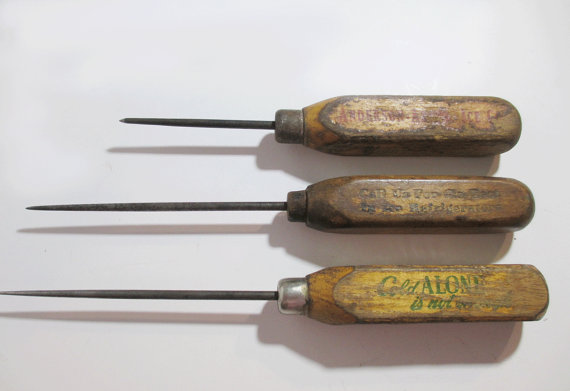
Ice picks...get it? I know...the Florida Panthers aren't the only ones who are going to have a rough year, Dear Reader.

Ice picks…get it? I know…the Florida Panthers aren’t the only ones who are going to have a rough year, Dear Reader.

The WTYKY Season Preview

The hockey season is about two weeks away, which means that barring a last-minute Ron Hainsey signing, most teams have set their lineups and will be about as good in two weeks as they are now. That means we can safely embark on the soon-to-be-embarrassing exercise of season predictions.

I’ll be honest with you—these new divisions make it pretty much impossible for me to wrap my head around who is a playoff team and who isn’t, so we’re going to just do a reverse-overall-standings split into three groups of ten, while pausing along the way to offer insightful or possibly erroneous commentary. First comes Varada’s take then comes James’ then comes Tim Murray in a baby carriage (amazing to picture). Enjoy.

VARADA’S PIXXX:

The Bottom Ten

30. Calgary
29. Florida
28. Buffalo
27. Winnipeg
26. Colorado
25. Tampa Bay
24. Columbus
23. Toronto
22. Carolina
21. Phoenix

I want to say right up front that parity has made a bottom ten finish not as bad a thing as it once was. There’s almost as much distance between tenth last and dead last as there is between tenth last and a playoff spot. So picking somebody to finish, say, fifth last is not really such an awful thing as it appears. (Case in point: Ottawa finishes fifth last a couple of seasons ago, makes the playoffs the next year. Everyone acts surprised, but look at the standings: Ottawa simply wasn’t as bad as finishing fifth last might imply.)

Having said that, Calgary is pretty clearly heading for a long and awful season. Their first line center is Matt Stajan. Their goaltender is Karri Ramo. Their top defenseman is a massively overpaid Dennis Wideman. They’re in a tough division where everyone has gotten better or at least stayed about the same. I don’t think I’m out on a limb here. They’re going to be awful. I hope Mike Cammalleri gets traded soon–he’s too fun a player to languish there. Fun fact: Mike Cammalleri makes $7 million this season!

Putting Toronto in the bottom ten, and below Carolina, is going to simply be discounted as me being a Sens fan, though there’s plenty of analysis out there on just how lucky the Leafs were last season. While I don’t think they’ve gotten much worse, they haven’t gotten much better either despite the additions of David Clarkson and Jonathan Bernier. I think the Clarkson deal is over-maligned; he’s a good player, or least he will be this season. It seems to me that pessimism over the final years of his seven year deal is leaking into feelings about next season. But they also lost two very useful players in Grabovski and MacArthur, and their defense is still questionable. Combine that with the luck factor and they’ll come back to earth hard. And that’s assuming they can actually get Kadri and Franson under contract, the likelihood of which is a total mystery to me.

Winnipeg moves to possibly the most difficult division in the league, and Columbus can’t survive on Vezina-level goaltending again. Maybe this is the year Steve Yzerman gets fired by Tampa. He runs that team the way I play Be a GM mode on Xbox. Which is to say, poorly.

The Middle Ten

20. Anaheim
19. New Jersey
18. Dallas
17. Nashville
16. Edmonton
15. New York Islanders
14. Washington
13. Minnesota
12. Ottawa
11. Montreal

I was as excited as any Ottawa fan to see Vollman of Hockey Abstract pick the Sens to win the Presidents Trophy, and I hope his mathematically-computed prediction holds true—but part of me refuses to tempt the hockey gods by going along with it. I’m too skeptical. Is Karlsson 100%? Will Anderson come back to earth? How is Spezza’s back? We haven’t seen a version of this team without Alfredsson in almost two full decades—how will they adjust to their best two-way forward leaving town? They’ll be good, and I think they’ll make the playoffs, but I don’t think they’re appreciably better than the 7th place team they were last year. They’ll get 10-15 more goals out of Bobby Ryan than they might have expected out of Jakub Silfverberg. That’s not enough of a difference to me to turn them into elite contenders.

I was tempted to pick Montreal much lower, but ultimately a team that finishes bottom three one season and then wins their conference the next season is too much of an unknown to do anything more than stick them in the middle of the league with a big question mark next to their name.

I’m also showing huge improvement for Nashville (though still no playoffs), and that’s not (only) Seth Jones. I just think they’re a good team that underachieved last year.

Other than that, this is the great mediocre middle ground that is your 2013 NHL. Everybody gets a participation badge! Any of these teams could find themselves within a half-dozen points above or below the cut-off line for the post-season. I think Edmonton, Nashville and Dallas just miss. As for Washington, most are predicting that they’re in trouble now that they don’t have the easy Southeast to rely on. Personally, I think they get their act together as a result.

The Top Ten

10. Philadelphia
9. Detroit
8. San Jose
7. New York Rangers
6. Boston
5. Pittsburg
4. Vancouver
3. Chicago
2. St. Louis
1. Los Angeles

I’m more bullish on Philadelphia than perhaps I should be, especially since I’ve also got the Rangers and Pens from the same division in the top ten, but they’re a deep team. The Streit pick-up, though an overpayment, will serve them well. Goaltending is a massive question mark, as always. Anyway, I have Philly anywhere from top ten to bottom ten, but I just can’t see them stinking as badly as they did last year with Lecavalier up the middle and another year for all of their young players. At some point Brayden Schenn is going to turn into a beast. Anyway, I don’t like them so much as I like all the teams in the middle less.

Picking St. Louis to finish higher than Chicago is also ballsy. I just think they’re ridiculously deep at every position, and if Halak is back to 100% health they’ll have their formidable goaltending tandem back as well.

Obviously picking somebody other than the team who set a record for most consecutive wins this year, and then went on to win the Cup, is pretty stupid. What can I say—it’s hockey, and I’m trying to pay lip service to the chaos underlying this game we love. Chicago will play mediocre hockey out of the gate, look tired, be only slightly above .500 approaching the holiday season, and then turn it on and be near the top of the league by the end of the season. And they may very well repeat and win another Cup. But it won’t be enough to catch Los Angeles in the regular season standings.

As for LA, they didn’t make many changes aside from allowing Rob Scuderi to walk, but they didn’t need to make many changes. They have best-in-class players at every position. I was blown away by how well they played last season, making it to the conference finals a season after winning the cup. They’ll eat up Anaheim, Calgary, Edmonton and Phoenix in their new division. Everyone is in their prime, and they have at least another few seasons of scary good hockey in them. They’re my pick for best team in the league.

X Factors

Other than injuries, the new divisional format could be as awkward as a junior high dance. Lots of teams who aren’t used to one another having to play regularly, and seeing every team in your barn at least once also changes the dynamic. Finally, the Olympics will throw a huge wrench in the middle of everything, as it usually does. I’m not picking the Rangers to finish 7thoverall if Henrik Lundqvist tears his adductor muscle in his first game for Team Sweden.

Thanks and now shut down your browser…I mean time for JAMES’ PIXXX:

Well, here we are. This is where I pretend to have my finger on the pulse of the league! *Wipes nervous sweat from brow and types “What happened in the Western Conference last year?” into Wikipedia* Thanks for reading! The best part about predicting hockey is that I feel that completely BSing your picks has about as much credibility as a so called hockey expert’s picks. THANKS ONCE AGAIN FOR READING! Seriously, some magazine / website / webazine picked Ottawa to win the President’s trophy so… *rests case*

The Bottom Ten

30. Florida – This team is the man and the boy in Cormac McCarthy’s The Road. The rest of the league is the Cannibal horde that roams the ashen wasteland that was once Earth. The Panthers are so bad that they bought out Filip Kuba and THAT WAS SOMEHOW A BAD MOVE. These clowns have it all: Leafs runoff like Kris Versteeg and Joey Crabb, iffy at absolute best reclamation projects: Scott Gomez, Jesse Winchester, and oh speaking of whom lots of Sens runoff dudes who couldn’t even hang on a rebuilding team: Bobby Butler, Matt Gilroy. You’ve got your star-ish players who I had no idea were on the team: Tomas Fleishmann, Ed Jovanovski. Last but certainly not least they suffer the annual emancipation of their quality players. This year’s model: Stephen Weiss….I think the only hope this team has is if Jakob Markstrom channels his inner Sergei Bobrovski and bails the big cats out for wins but out of embarrassing blowout losses as well….all season. I saw Florida play in person once last season and to think this team might actually be weaker now is just…wow. Keep carrying the fire Jonathan Huberdeau…one day ye shall be released.

29. Calgary – What can be said that Varada didn’t already say.  I will add the very real possibility of a complete desperation move (due to Matt Stajan being their no. 1 centre) of rushing 18 year old first round pick Sean Monahan into the NHL. You know, just to add that extra clusterfuckocity. I’ve seen way crazier shit happen. So beginneth the first Iggy-less Flames season since 1996 (!) but also of very noteworthy import, Mika Kiprusoff has unofficially retired according to some reports…so…

28. Buffalo – I am not joking I forget this team even exists sometimes.

27. Dallas – Ladies and Gentlemen put your hands together for Buffalooooo Weeeest!!!

26. Winnipeg – The Jets have been hard at work all summer signing players I have never heard of to deals. Congrats Brenden Kichton (?) on his 3 year 1.86 million dollar contract! …is that even a million dollars after taxes? Anyway, enjoy those Western roadies boys.

25. Colorado – I almost don’t know why this team is so bad but they did little to improve. Maybe if the players try to go through the wall for Patrick Roy in his first season behind the bench it could go better. A healthier Landeskog can’t hurt things. A slight jump in standings after an absolutely dismal season.

24. Columbus – ? Uhhh…Ottawa trades Jim O’Brien and future considerations for Jonathan Audy-Marchessault and a conditional pick at some point?

23. Edmonton – Hmmm, the Be a GM Mode of my game keeps saying “Insert NHL defensemen to start game” but I haven’t even touched their roster yet. *blows on cartridge*

22. Tampa Bay – Now I really don’t know what makes this team so terrible either but I have to admit that I love that they are. Nothing like a team you don’t like struggling despite getting the league’s premier goal scorer with the number 1 pick, a bruising 6 foot 6 defenseman with the no. 2 overall and has a player so good he can win the Art Ross at age 38. Sure these guys could still turn out to be the sleeping giants that they are considered year after year or, you know, not. I’m going to say probably not.  Speaking of giants, is Ben Bishop their no. 1 goalie in his sophomore season? Damn! He’s a really good goalie, but uh…no pressure buddy. 45 career games and off ya go! Agree with Varada that I think Steve Yzerman, despite BEING A GOOD NEPEAN BOY and former Raider, might be the most over hyped GM in the league. Whoa he picked Canada’s Olympic team! Wow, definitely not a job most people who play fantasy hockey couldn’t do. How much was that team worth in Cap space I wonder?

21. Washington – This is a team I am just salivating at the chance to watch get dummied. I used to really like watching the Caps but I don’t know, after years of shitting the bus (that’s right) I have grown to love rooting against them. Maybe it’s the years of undeserved entitlement to high seeding at playoff time? I still love Alex Ovechkin. It’s hard to dislike a guy who’s considered Crosby’s rival but was there a less deserved Hart trophy won than his this year? He wasn’t even great for an entire shortened season. It was much representative of the Caps playoff birth. They pulled it together enough halfway through the to make yet another (and their final) HILARIOUS 3rd in the conference finish. As is customary they made a pretty quick exit. It’s just crazy to think Mike Ribiero of all people carried the Caps and then for them to lose him in the off season? Great stuff. Grabovsky was a good pick up but quality forwards have never been Washington’s weak link. There’s been talk the last few seasons of the Caps’ window closing.  With the long overdue dissolution of the South Easy Division prepare to see the beginning of the end of the Capitals as a threat.

The Middle Ten

20. New Jersey – An admitted crapshoot guess. This team annually manages to do pretty well despite my doubts. Even though he is no one’s favorite player the loss of Ilya Kovalchuk hurts everything but the Devils’ pocketbook. Ditto Clarkson. Even at his 73 years young, Brodeur and new partner Cory Scheider serve as a pretty solid tandem on paper. Worth mentioning that Jaromir Jagr is their second highest scorer at the time of this post. A 41 year old top offensive threat and a 41 year old starting goalie: Pray to the groin gods Devils fans.

19. Philadelphia – I am howww you say, not so bullish (inbullish?) on this team. Giroux enters the season fresh off an injury which I think could hurt them out of the gate. Call me “not a Montreal fan” but I do not believe the acquisition of Lecavalier makes your team significantly better. Another weird contract that will come back to haunt them. There’re a lot of bright spots on this team though. I mean, really, it’s perplexing why they struggled so much last season but some times good teams turn sour. Ray Emery I think will be the difference maker for the Flyers but if he goes down or struggles things quickly get very weak in net. Especially concerning when you consider Rayzor wont be playing behind Chicago’s D corps anymore. Could go either way but I’m calling another rough year in the City of Motherly Love.

18. Carolina – *yawns and types “Is there anything interesting one can say about Carolina’s Hurricanes? into Askjeeves.com* Is Eric Staal hurt still? Is Jeff Skinner? That could be bad.

17. Phoenix sorry my bad ARIZONA apologies all around. – Saturday December 21st, 2013, in the second period of a game Mike Ribiero suddenly realizes he is no longer passing to Alex Ovechkin. He nearly thinks “I’ve made a terrible mistake.” After the game he looks up on his smartphone where the Caps sit in the now non-cushioned standings and buys a season’s pass to Phoenix’s Wet N’ Wild Waterpark (which he can use year round). Sens fans remain obsessed with David Rundblad’s development while Kyle Turris continues to score heroic playoff OT winners for the Sens.

16. Nashville – Me: Siri, help me cheat and find me something informative and witty to say about Nashville Predators.
Siri: “I cannot find anything to help you cheat on Natasha Prendehurst.”

15. Toronto – The additions of Clarkson and Bernier are good. The losses of Grabovsky and MacArthur *tents fingers* for absolutely nothing are for sure bad. Phil Kessel is very chubby for a guy who can skate like the wind, Dion Phaneuf make learn good off season do things. The media is already pitting Reimer against Bernier and I am making a giant bowl of popcorn. I think they make the playoffs again but it’s more of a struggle to get there this time/ to do anything. Something-something offer sheet Nazim Kadri already!

14 Montreal – Maybe I’m definitely biased by the banged up squad that Ottawa literally beat down in the playoffs but I do not much believe in this team. If Price falters (which we’ve seen) the Habs don’t have much in the way of a backup in Budaj (which we’ve also seen). There are a lot of quality up and comers for Montreal as we witnessed in the sound out play of Brendan Gallagher, Alex “Im actually American” Galchenyuk and PK Subban. The addition of pain in the ass Dany Brier helps and George Parros will…add…much needed Movember leadership?…I see a down season for the Canadians in a very competitive and physical division but not a disastrous one. They still make the playoffs but will again be in rough shape by the time they get there.

13. Minnesota – Here’s a team that spends eleventy squillion dollars in salary and didn’t even finish ahead of the Binghamton Senators in the league standings last year. Can you imagine the motivation level of a Dany Heatley that knows he’s about to be bought out? He’s going to be ordering Little Caesar’s Hot and Readys to the bench. Yikes. Oh, also, Matt Cooke is a top 5 point getter on this team right now. Seems like these guys will continue to get their heads kicked in by the Chicago Blackhawks.

12. Ottawa – Okay, here we go. Here’s what I have to say about the team that’s hardest to separate from emotionally, enjoy! This year will be another positive one for Ottawa but with a twist: It will be more balanced than we’ve become accustomed to. Not all players will have perfectly healthy seasons and enjoy career years in points nor will they take up an entire floor of the Ottawa General Hospital. Goaltending will be good but human, goals will be more consistent, some players will struggle, coaching will remain great and the Sens will finish in a decent spot. Predictions: Bobby Ryan will work out fine (if your expectation is around 30 goals) as will Karlsson in his return (if your expectation is around 60 points). Milan Michalek will be injured during the Olympics and Pageau will actually live up to the hype and stick with the squad. Another playoff year and I cant wait!

11. New York Islanders – I suppose I’m going to have be fun and pick at last one surprise team so here it is. Since no one is reading at this point anyway, I’m going with the Highliners to make a solid jump after a 27 year rebuild. Their playoff round against the Pens showed that this is a young team with serious wheels and a lot of skill that is slowly coming together. Rick DiPietro’s banishment helps general vibe of their new building. As a Sens fan, I know teams have surprised with less. If they can get some goaltending and conduct the proper cleansing ceremonies they could catch the East off guard.

The Top Ten

10. Vancouver – This team reminds me way too much of the post-cup final Senators. Disciplinarian coach comes in, players unhappy in their roles mixed with heavy media scrutiny. A top 10 finish is admittedly a good problem but with Vineault’s exit and the hasty and bizzare dealing of Cory Schneider I see as this as the start of many hasty and poor decisions. After failing to deliver on consecutive President’s Trophy wins and a string of divison titles I can this resulting in nothing but a tidal wave of pressure from fans and Van city’s notorious media alike. Remember when anything short of capturing a cup was a failure in Ottawa? These guys are deep in that but now featuring an openly unhappy goaltender who’s becoming known for cracking under pressure with no viable backup in place OH! and a complete asshole of a new coach who has no problem throwing his players to the wolves if things go south. You thought Don Cherry was hard on the Sedins? Just wait. I still see them doing pretty well by the merit of their roster but the microscope is really going to be on this squad.

9. San Jose – No fucking idea. Thanks for reading!

8. New York Rangers – Solid regular season, non-surprising playoff exit at hands of lower seed. AKA business as usual. Nickname Idea: The Metropolitan Bed Soilers.

7. Anaheim – No fucking idea 2: I watch YouTube videos of Bobby Ryan about 4 times per week so that’s where I’m at.

6. Detroit – Yeah I know. It’s just a prediction made by an idiot and it still hurts to look at. A good finish…a great one even. Look, they’re a really good team that I think will benefit greatly from their move to the East. Silver lining: Uhh…they’re slowly getting pretty old I guess?

5. St. Louis – If Ken Hitchcock can turn Brian Elliot into an all star goalie all bets are off.

4. Boston – Man, I miss when Boston sucked. I’ve heard chatter that the Bruins are on the decline but I just don’t see it. I hope Ottawa can win a few more against them this year than they have been because hot damn are they a boring team to watch win 1-0 over and over. Remember how last season MacLean was like, “I don’t know, Lehner beat them once…start him every game I guess?” Celebrate the moments of our lives.

3. Pittsburgh – This friggin’ team. Ugh. Marc Andre Fleury has been seeing a sports psychologist which is on some amazing Martin Gerber type shit. Knowing Ray Shero if things go wrong he’ll just somehow manage to trade for Jonathan Quick and Henrik Lundqvist by giving up Deryk Engelland and a 9th round pick because I hate this team so much.

2. Los Angeles – I don’t know much about the Kings (What? Sorry for not watching a bunch of Kings games) but they seem really well built and didn’t change much.

1. Chicago – After their 2013 performance it’s really hard for me to bet against these guys. You know your lineup is scary good when the biggest obstacle facing them is fatigue from having TOO MANY OLYMPIANS on the team.

X Factor: 
The NHL.

On 10 years of Eugene Melnyk

1297270068205_ORIGINAL

Lost amid the hubbub of hacked posts by “random useless bloggers,” acrimonious casino negotiations with the city, and the ongoing and totally unnecessary row over Alfredsson’s departure is the fact that ten years ago Saturday, Eugene Melnyk took over the Ottawa Senators.

It’s just as well that what might have been an occasion for celebration was quietly observed by a few and ignored by most. In the last decade, Melnyk has managed to significantly damage his standing among some hockey fans–or, at the very least, to damage his public image. In his frequent radio and newspaper interviews, he’s prone to utter one after another sensationalist quote, often contradicting himself in a way that seems totally disconnected from how the world sees him and his small market franchise. The interviews are mostly harmless–even entertaining. But if the first nine years of the Melnyk regime were marked by his gradual descent from saviour billionaire to buffoonish personality, then the last year has marked a further fall towards the caricature of a comic book villain, more in line with a Daryl Katz or Jeremy Jacobs.

It’s not just that he’s taken his penchant for bullish overstatement from the realm of sports talk to city council, where he’s thrown his weight around in an attempt to slide the council’s deliberations in his favor. It’s that he, like so many NHL owners, is more than happy to play with the heartstrings of hockey fans to get what he wants. In that he’s not at all unique; he’s not even as bad as some. I’m accustomed to his annual interviews about the possibilities of relocation without strong fan support, conveniently on the eve of season ticket sales. I’m left to conclude that what Ottawa has in Eugene Melnyk is the sort of ego required to amass a $1.5 billion pharmaceutical fortune in the first place.

Melnyk is just another obscenely rich person among many. Give me that kind of money and then tell me I can’t get my way, and I’ll probably seem a bit tone deaf too. But what we’ve observed over these months may be symptomatic of the NHL’s tendency to rely on these billionaire saviours in the first place–these men riding high on whatever entrepreneurial success they may currently be experiencing–over much safer options.

For every Ed Snider and Mike Illitch, there’s a “Boots” Del Biaggio, or Oren Koules and Len Barrie. For every stable fortune, there’s a fortune balancing precariously on a bubble. And so goes the future of each franchise–all of their eggs in one basket, praying the real estate market doesn’t collapse, or the tech surge fade. In some cases, this arrangement ensures years of futility and wasted potential, such as with the Islanders, who are one of the league’s most storied franchises and whose fate is tied perpetually to owner Charles Wang like a drowning man to an anchor.

Perhaps it’s naive of me to suggest, but should the NHL not be doing more to matchmake between diverse groups of investors, those who might not be able to afford a franchise on their own, but who might band together to cover or refinance the weaker links in their network in the event of failure?

I’ve written pretty extensively about how inaccurate I feel the reports are of hockey’s supposed inviability as a product. To reiterate: I think operational “losses” should be thought of as operational costs in light of the underlying value of the investment going up; I think there are multiple, non-hockey related revenues that are only possible because of team ownership, and that these revenues can go unreported; and I think cash flow problems are unrelated to Ottawa as a market so much as liquidity problems in the economy as a whole and Melnyk’s finances in particular. But because we rely on men with big personalities and complex financial problems and aspirations, fans are left to wait for the problems of individuals to be resolved rather than the responsible machinations of investment networks with plenty of checks and balances. It’s no wonder we have so many lockouts.

(And here’s a sobering thought: if the life of the Canadian Tire Center is 30 years, and we’re at about 20, that means opening up negotiations with the city on a new arena in the next few years.)

After all this, I’m left to think about what 10 years of Eugene Melnyk means for Ottawa Senators fans. When he bought the team (and the arena, for a paltry $120 million. The franchise is now worth closer to $300 million), he was effectively saving it from bankruptcy. In a city that has (repeatedly) lost its CFL franchise due to shady ownership, Melnyk signified a new era of credibility. Here was a self-made man ready and willing to buy into our little market, not because franchise ownership was something that self-important billionaires did, but because he believed it was a solid investment. Melnyk has invested in the city of Ottawa, both through charitable deeds and his efforts to rally the charity of others.

At least…that was the image. Ten years later, with all of those deeds thrown back in the city’s face as an increasingly desperate-seeming Melnyk pushes for concessions from city hall, I’m not so sure that narrative is believable anymore. And the next 10 years, if they too belong to Melnyk, could be a lot less rosy than the first.

How can Melnyk fix his image with the public? Staying out of the media would be a good start. He might harbor ridiculous beliefs, like the Senators being the second largest employer in Ottawa, and he’s more than welcome to those beliefs so long as he keeps them to himself. Secondly, Melnyk can embark on a transparent, open dialogue with both city hall and the constituents it represents, rather than throwing barbs around in the papers about the city seeming like a third world country. Thirdly, if he just can’t resist answering Don Brennan and Bruce Garrioch’s emails, he can at least be honest about the money–are we only spending about $50 million on player salaries because that’s the smart thing to do, or because times are tight? Why is the Senators’ debt ratio one of the highest in the league?

Finally: when in doubt, be gracious. Nobody ever faults a person for being polite and professional, even when they’re hiding something. When Alfie leaves town, take out a full-page ad in the Citizen thanking him and every time somebody asks about the circumstances of his departure, simply wish him luck. When someone wants to talk finances, thank the fans for making all of this possible. Maybe don’t hack people’s blogs, if that’s a thing you’re considering doing.

More and more, the sports franchise is becoming a public institution. Quite literally so, now that new arenas are being built with public money. And if that’s the case, it means winning the hearts and minds of us little people, us “random useless bloggers” who also happen to give free publicity and pour thousands of words out about the team we love. Melnyk needs to scrub up, pay a PR person, and win back some of the good faith he started out with ten years ago.

(Watch a video of Melnyk’s first presser as Sens owner here.)

The best (read: worst) turnkey solutions in hockey

collage-perfectsolutions

One of my favorite aspects of amateur (and professional) hockey commentary is how every team is depicted as being one small move away from being a contender. I suppose it’s somewhat dissatisfying to say, “The key to success is the slow, methodical drafting and development of prospects in the context of a strong, puck-possession system coupled with increased spending on complementary talent at strategically opportune times. And luck.”

I’m as guilty as anyone of simplifying. I can remember at one time suggesting that Ottawa needed to go after Steve Yzerman before he was hired as Tampa Bay’s GM. Look at the moves that guy has made! Great, great job, me from 2010.

But hey, it’s July, there’s nothing else to write about, and this blog puts food on my family’s table (they’re dead)…so let’s go! Here are my favorite turnkey solutions to instant success. Favorite because they’re ridiculous.

4) Get a puck moving defenceman…no, wait, get a shutdown defenceman

Defence is a little bit harder to quantify than offense, since it doesn’t lend itself to goals and assists so much as on-ice vision and “hockey sense.” (Which is like spider sense, but with a high school education.) This is especially apparent when armchair hockey experts get involved.

Success requires a delicate balance between moving the puck with a great first pass; driving possession with puck handling skills; a good shot from the point; a good shot from everywhere else that isn’t the point; blocking shots; sound positional play; and consistently putting people on their ass. (This also applies to every single player on the ice who isn’t the goalie.)

But because a defenceman’s skills get codified in this way, it ensures that if your team, say, gets creamed by Pittsburgh, you can always pick one or more of those things and say “we gotta get more of that.”

For this reason, Erik Karlsson can be an absolutely dominant offensive player, and perfectly competent defensive player, but if Ottawa loses an important game you can be sure someone will start looking longingly in the direction of a Hal Gill-type who has the frame and mobility of a dumpster full of Sega Saturns.

There’s a sign hanging on my office door that reads “Ottawa is currently in need of a puck moving defenceman” on one side and “Ottawa is currently in need of a shutdown defenceman” on the other, and I flip it over depending on my mood.

3) Trade for a goaltender

While it’s true that a goaltender on a hot streak can have a transformative effect on your team, getting one is sort of like buying a packet of scratch tickets and standing out in the convenience store parking lot, scratching all of them, one after another.

Does it make sense to lock a guy down for years if he has a solid record? Nope, because he’ll still have a stinky night every once in a while, and single-handedly lose the game, and when that happens, we’ll agree that he actually sucks and is not worth his salary. Is it worth it to do goaltending on the cheap? Nope, because management will be blamed for handicapping their team right out of the gate, unless…they win the cup.

Anyway, there aren’t really any reliable statistics for goaltenders, which leads to us conflating their performances with team factors so that basically we’re just admitting that we don’t know anything. (See: our stupid insistence on saying “this goaltender has X number of wins!” as if it doesn’t matter at all that they’re playing for one of the best teams in the league.) Highly regarded goaltenders can become busts overnight. (See: every highly regarded goaltender the Leafs have ever traded for.) And so goalies become this kind of logical black hole where improving your goaltending will solve everything, but you will never, ever be able to finish improving your goaltending.

Ask Tampa about this one when they give up on Ben Bishop and Anders Lindback in the middle of next season and trade yet more picks for Ryan Miller / Jonas Hiller / Jaroslav Halak.

Ottawa specific example: Sens trade worst-goaltender-in-the-league Brian Elliott for oft-injured and on-the-decline Craig Anderson, and both immediately become amazing.

2) Leadership

Like goaltending, but even less track-able, I have no doubt that adding some veteran leadership is probably a good idea. I just don’t know how much leadership is the right amount. One veteran is probably too little. How about two or three? That’s pretty good. How much leadership is contained in each veteran? The answer is Eight. Eight out of 10 leaderships.

Oh, and be careful, because at some point it becomes “too many voices in the dressing room.” This is also known as leadership poisoning. If this happens, immediately kill one veteran player.

If leadership was a factor that could be cross-referenced to success, you have to think Pittsburgh wouldn’t have been swept by Boston. Brendan Morrow! Jarome Iginla! Sidney Crosby! Paul Martin’s been around awhile, right! How about Detroit? They’re pretty old. They don’t seem to win the cup every year anymore.

Anyway, in Ottawa’s worst season in years, they still had Chris Phillips, Daniel Alfredsson, Sergei Gonchar, Mike Fisher, Chris Neil, Filip Kuba, Jason Spezza, and Alex Kovalev. Now they’re made up of a school bus full of teenagers and they’re fuckin’ awesome. So figure that one out.

And, the number one best (worst) way for a team to instantaneously get better….

1) “Get Tougher”

Nothing contributes to the performance of an NHL hockey team like signing or trading for a player with minimal ability to play NHL hockey, putting him on the roster at the expense of a kid who could probably use the development time, and then playing him six minutes a night. Whatever swagger your team develops as a result of having a tough guy with a funny mustache on it (I’m developing a metric called SWAGFAC to sell to NHL teams) is probably immediately wiped out in the one instance in which he finds himself in a critical situation and the team gets scored on because he didn’t realize that he was holding his stick upside down.

Montreal is probably the funniest, and most recent example of trying to raise one’s SWAGFAC™. They basically got mugged in the first round last year by…who beat them, again? Hold on, let me look it up…hmmm…can’t find it anywhere. And then they went out and signed another tiny, skilled forward in Danny Briere.

BUT DON’T WORRY BECAUSE THEY JUST TRADED A PICK TO FLORIDA FOR GEORGE PARROS.

Parros had two points in 39 games and was a ghastly -15. Is it even fair to look at his possession metrics? They’re not very good! He played less than seven minutes a night, and when you look up his profile on behindthenet, your computer just makes a long, slow farting noise and then crashes.

Oh, but don’t worry, because he had 57 penalty minutes…good for 50th in the league. He had four more penalty minutes than Mike Ribeiro.

I’m picking on Montreal here–and really, when you give up an asset, even if it’s only a 7th round pick, for an enforcer who doesn’t enforce and who can’t play hockey, you kind of deserve it–but most teams are guilty of this at one time or another. Ottawa traded a sixth round pick for Matt Kassian, though at least his possession numbers aren’t horrific, and he’s funny as hell.

———————————————————

So there you have it. Four sure-fire ways to take your hockey team–no matter how putrid and terrible they are at playing hockey–and instantly make them into a contender.

Sign an enforcer. Trade your shitty goaltender for another shitty goaltender. Sign two veterans (or kill two veterans). And have more, or less, of one, or both, of puck-moving or shutdown defencemen. Simple!

And if Ottawa doesn’t do one or more of these things I’m going to be furious.

Okay, so our hearts were torn out. But is our favorite hockey team actually better?

Pittsburgh Penguins v Ottawa Senators - Game Four

There’s been a lot of talk of last Friday being one of the most transformative in franchise history. While it’s definitely, say, top five, I don’t know if it’s up there with the launch of the rebuild; with letting Chara walk; with running the jewels AKA trading Yashin for everything in the Islanders’ cupboard; or with trading Hossa for Heatley. Ottawa lost two top six forwards and gained two top six forwards. Before we assess whether or not Friday was a game changer, we should ask if Ottawa is actually a changed team, and if they’re any better.

Here are a couple of assumptions:

  • It’s easier to predict the performances of Bobby Ryan at age 26 and Clarke MacArthur at age 28 than Jakob Silfverberg at age 22 and Daniel Alfredsson at age 40. The former are in that sweet spot of being in their prime and having a few NHL seasons under their belt. But Silf is a sophomore and Alfredsson may be due for a major regression. The latter’s performances could be all over the place.
  • The Bobby Ryan trade probably would have happened even if Alfredsson stayed, which makes it a Ryan v. Silfverberg comparison, and a (very unfair) MacArthur v. Alfredsson comparison.

On the face of it, the answer to the question of whether the Sens are a better team seems to be yes and no. Alfie’s intangible factors don’t lend themselves to quantification and measurement. Leadership, connection to the community, “being clutch” (if that’s actually a thing and not just creating enough positive memories over many seasons in one market to be thought of fondly in that market) may or may not actually win you hockey games. However, when looking purely at the on-ice skills Alfredsson brought, the unpopular conclusion has to be that he’s actually a replaceable player. Not easily replaceable—he’s an experienced two-way forward who played in all situations and drove possession—but it’s possible. And, when we look at what MacArthur brings, Murray’s done it.

Looking purely at possession stats via behindthenet, Ottawa is pretty clearly better off. Relying primarily at QoC and Corsi Relative, Mac faced stiff competition and tilted the ice in the right direction, though he played two minutes less a night than Alfredsson on average. His shooting percentage has remained near 14% his whole career, too, implying reliability; he isn’t due for a sudden dip. As a one-to-one comparison, and with Alfie’s intangibles removed, MacArthur has better statistics, is younger, and is cheaper. Without being in the dressing room and not knowing how the rest of the team’s performance is affected by the leadership void (again: if that’s a thing), if we’re being unsentimental about all this, then I think it’s very fair to say that Clarke MacArthur is at least a serviceable replacement for Alfredsson as a second line winger.

(As an aside: what Toronto is thinking in paying Clarkson $5.25MM for seven over paying MacArthur $3.25MM for two, I’ll never know. But given the community’s reaction, nobody really knows.)

Ryan, as you might expect, received some favorable matchups in a bid to create offense—but not nearly as favorable as Silfverberg received in his freshman season. Silfverberg is really the X factor in all of this, given that he’s so young and could, any season now, take a step beyond the perimeter shooter that he was in 2012-2013. He shot the puck more than anyone on the Senators not named Karlsson (aside #2: Karlsson is fucking amazing), but had long stretches of ineffectiveness where MacLean kept him on the top line anyway, perhaps for lack of options. Without Silfverberg stepping forward, Ryan is pretty clearly an upgrade in every conceivable category except salary.

And speaking of salary, Ottawa does end up spending about $2MM more of it, though the possession boost between Ryan and Silfverberg is very significant. If you treat the MacArthur / Alfredsson swap as a wash (Mac is younger, cheaper, and has better statistics, but doesn’t have the intangibles), Ottawa pays a little bit more, easily upgrades on Silfverberg’s 19 points in 48 games last season, and is still spending less on salary that almost every other team in the league. My nutshell conclusion here is that, at this point in time, Bobby Ryan and Clarke MacArthur at $8.35MM is better than Jakob Silfverberg and Daniel Alfredsson at $6.4MM. Obviously this changes as Silfv develops, Noesen becomes an NHLer, and Anaheim uses that first round pick. But that’s the snapshot.

Of the other X factors here, I think the biggest is whether Ottawa will use the (relative) cap savings of having these two cheaper scorers to go out and spend on another veteran player and silence the intangibles crowd. There are some enticing names still out there, and Ottawa could still leave the free agency period up a forward instead of swapping out two for two. If we’re really concerned about what ephemeral leadership qualities we lost when Alfredsson and Gonchar walked out the door, then Murray could always throw some money at Brenden Morrow. Won’t Jagr play for anyone who pays him? Hey, even Milan Hejduk is available–he won a cup, right?

Not quite the weekend grab-bag

So, this is a thing I found on the internet.

So, this is a thing I found on the internet.

A little pre- and post-‘Free Agent Frenzy’ grab bag, anyone?

Save the players from themselves

What is it going to take before hockey players cast a suspicious eye in the direction of the Philadelphia Flyers? How can anyone seriously believe that the contract they sign there will be worth the paper it’s written on? Sure, Vinny Lecavalier got a full NMC out of his five year deal with the Flyers, but that won’t stop them from pressuring him into a trade or buying him out when the next flavor of the month comes along. Not to mention that the team’s near-constant wheeling and dealing comes at the expense of any semblance of stability, planning, or development. Lecavalier could have gone almost anywhere in the league, and like so many players before him, he was convinced by the Flyers of all people that this time everything will be different. Meanwhile, the last sucker who bought that line will get sent down to the minors to make room for Vinny.

If I’m the NHLPA, I look into making some sort of resource available to my clients whereby anonymous surveys of market and ownership are shared with the full membership. Maybe the Flyers organization truly is an outstanding place to work, but the optics remain terrible. Players who make a commitment to that team are repeatedly burned by an ownership that overreacts to every development. The only way the management’s behavior will change is if the resource on which they depend the most–players–collectively say enough is enough….

…but at the end of the day, I guess that’s just the cost of doing business with a large market team like the Flyers or Rangers. If you’re a 20-something kid getting paid millions, you probably want to do it in a major American city on a team where money is no object and the goal, year in and year out, is the Cup. You just have to pray you’re never caught on the outside.

Anyway, I’m looking forward to 2015-2016 when Brad Richards and Vinny Lecavalier are both playing together on the same team, probably for John Tortorella in Vancouver, and the Flyers have just signed Jason Spezza to a 7 year deal paying him $10MM per.

Melnyk’s money

The object of my offseason affection Grant Clitsome has signed a deal to stay with the Jets. My idea to go after Clitsome went over like a lead balloon with you readers, but I maintain that there’s potential there as a low-cost alternative to Sergei Gonchar. Clitsome signed for three years and just over $2MM per, which was probably more term than Ottawa would have liked to give out anyway. I’ll be watching his numbers this year to see if my prediction bears out.

Murray is going to have to find some other low cost players like Clitsome if he wants to improve his club, because everywhere else, we’re reading about how Ottawa’s ‘internal cap’ of $50MM will keep them from pursuing any high end free agents, and may even be challenging what should be a slam-dunk re-signing of Danny Alfredsson.

Look: if Melnyk doesn’t have the money, he doesn’t have the money. There’s no trying to will funding into existence if it isn’t there. Also, my comments about how if there’s any year that Ottawa should be a cap team, it’s this year weren’t meant to imply that Ottawa should go after, say, Vinny Lecavalier. Throughout the rebuild I’ve preached restraint, and I remain a fan of good value. There are a number of intriguing players available by trade, players who have potential, are relatively low cost, and wouldn’t take a massive package of prospects to land. However, Murray has to have the green light from its billionaire owner to spend. Not a lot more–just what we need to add some scoring punch up front.

But it has to be asked: if this team can’t spend more than $50MM on salary every year, why is that? I’ve written over and over again that it’s not at all clear to me how revenue on this team works. I get that we’re not New York or Toronto, and don’t have an insane television deal–but then, that describes most of the teams in the league, and we keep hearing about record revenues. Ottawa remains a top ten team in ticket sales, with an average ticket price, average merchandising sales, and one assumes an average TV deal. If a team operating in those conditions simply has to be the third lowest spending team in the league just to break even, then I think we deserve to know how that works. We suffered through two lockouts to establish cost certainty for owners. Now that we have it, we’re hearing even more about sacrifices. If that’s the way it is I’ll understand, but let’s get a little bit of transparency around here. Give the fans some credit. They can understand these things.

As for Alfie, I’ve been a lonely voice in the woods on this one: I’ve felt for a long time that he should probably play elsewhere. Not that I want him to, but just that his best bet to win a Cup before he retires is probably with another team. Let’s be honest – it’s probably not going to happen elsewhere either. He’s lucky to still be so effective at his age; this is beyond his last chance to make a push. But with Melnyk looking through his couch cushions for change just to be able to re-sign Eric freaking Condra or pay Alfie something resembling market value, I don’t think any of us would really blame him for checking out all of his options.

The draft and the media

Too bad I’m a hockey news junkie, because this cycle of hype and nothingness is getting old fast. TSN talked up the draft for days in advance, promising an unprecedented number of moves, and they weren’t halfway through the first round before they were hyping this Friday’s ‘FREE AGENT FRENZY.’ Yes, it will be quite a frenzy for the services of…Mike Ribeiro and Ryan Clowe.

As for the Senators, drafting a safe player who projects as a third line center isn’t the worst thing you can do at 17th. It’s the Zack Smiths of the hockey world that make it go around. But Curtis Lazar doesn’t help the Senators for at least a few seasons, nor is it a swing for the fences. I know every manager was asking for something insane to move up (seriously–why on earth would anyone trade Erik Karlsson to draft another player who is only potentially as good as Erik Karlsson?), but with Toronto showing it possible to get a good (not great) player in Bolland for later picks, you wonder what was actually on the table if the 17th was in play. But once again – it all comes down to money.

How long before we see teams try Kickstarter campaigns to bring in that puck-moving defenseman or backup goalie they need so badly? “Hey fans–you want us to sign David Clarkson? Pony up!” Maybe Melnyk can pass a collection plate around during exhibition games and have a pre-recorded message from Alfie begging for change on the jumbotron.