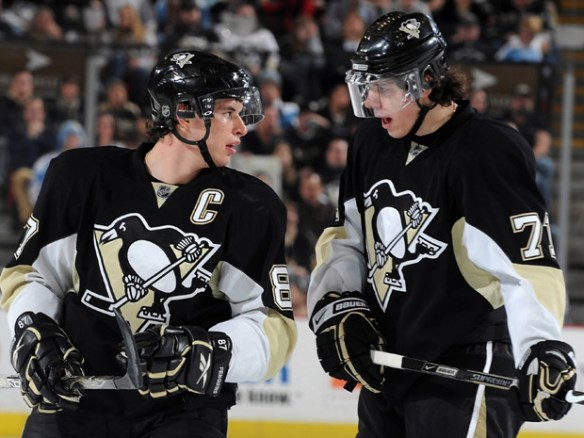
Silfverberg in. The Time For Practicality Has Passed. The Rangers Must Be Destroyed

Actual rendition of Silfverberg wearing Golden SEL Championship Helmet

Okay, I had my chance to question the logic of playing a rookie in admittedly the most important game of the entire season. I had my chance to point out how Mark Stone, having been in Senators practices for a week or two, is different from a jetlagged Silfverberg. And I’ve also had my chance to point out that Stone was doing JUST FINE so why muck with it? All that’s bunk now. Time to get on the train.

LET’S DO THIS.

GO SENS.

I HAVE A 4:00 TELECONFERENCE.

WHO BOOKED THAT SHIT. 

Playing Jakob Silfverberg in this series seems like a pretty terrible idea to me

I won’t recount Silfverberg’s many enticing qualifications. Let’s just say that he looks like a hell of a prospect, far better than that “top nine forward” designation most prospect tracking websites have carved out for him. When it comes to this team needing some offensive punch against the Rangers, Silfverberg is as likely a candidate as Mark Stone, Mike Hoffman, or anyone else to contribute. Add to it that Silfverberg has been playing playoff hockey for weeks already, and I admit it: he could make an immediate impact. And it would be a great next chapter to his storybook year.

But here’s the thing: I don’t want to break Jakob Silfverberg’s brain.

Winning a playoff series would be pretty cool, but there are much bigger goals for a franchise, and helping their prospects reach their maximum potential is right up there. Silfverberg has the potential to be a top six forward for this team for years to come, and his development should take precedent over the slim potential that he will enter a pivotal playoff game in a pressure-cooker environment and make a difference.

Silfverberg isn’t here to win us one Game Seven. He’s here to help us win many Game Sevens.

My greatest fear isn’t that Silfverberg might not be as effective as, say, Jesse “I-won’t-lose-you-a-game-but-I-won’t-win-you-one-either” Winchester on the first line. My fear is that a mistake hurts the kid’s confidence and, very likely, turns this city’s acerbic and sort of shitty media against him. Imagine if a defensive gaffe leads to the series-losing goal, or he steps out onto the ice and Mike Rupp or Brian Boyle paste him into the boards. What then?

This is a player, after all, who said no to the NHL to spend another year in the SEL. He shouldn’t play unless he feels ready. And without a training camp, some exhibition games, and a chance to test himself against an NHL defence—not only the Rangers incredibly stingy defence, but any NHL defence—how can he know?

In any case, the playoffs are enough to make veterans look star-crossed. Putting all of our eggs in the Silfverberg basket isn’t only a bit unrealistic, it’s also sort of unfair.

How bad has Jason Spezza been?

Sung to the tune of Nickleback's "Photograph" - "Look at this Spezza hat / It's been signed by Antoine Vermette / I admit that doesn't make much sense / but then again I gotta pay the rent."

To read the Ottawa papers, the Senators are tied through four games against the Rangers because a few pluggers have stepped up in the the absence of Daniel Alfredsson and the relative invisibility of Milan Michalek and Jason Spezza. It’s been the role players providing clutch scoring. To the naked eye there’s been an almost night-and-day change in the play of Jason Spezza.

I’m not breaking any news when I say that Spezza had a great regular season. So great, in fact, that the consensus among Senators blogs seems both that he is only second to the emergence of Erik Karlsson as the reason for the team’s bounce-back year, and that he’s the team’s captain-in-waiting.

Spezza stayed healthy, missing only two games all season long (only the second time he’s played at least 80 games in his career); he finished fourth in league scoring, putting up more than a point per game; he bettered his 82 game campaign by 11 points, and went from a -14 to a +11 when comparing the two seasons.

But what made Spezza so effective during the regular season was his ability to drive puck possession. The same creativity that is now causing some of us to tear our hair out was, when employed with confidence, a central driver to the team’s offensive zone dominance. Spezza’s relative CORSI during the regular season was a +6.0, which is the best among centers on the team (not including Mike Hoffman’s one NHL game), and third best on the team behind Daniel Alfredsson and Erik Karlsson among players with more than 15 games played. (Interesting side note: in his 15 games, Rob Klinkhammer scored a better relative CORSI than Spezza. Food for thought?) Spezza is key to a Senators team that finished fourth best in the league in offensive production.

In the playoffs, through an admittedly small sample size of four games, you would expect to see a reversal of these figures. His performance has been marked by his occasional, if optically horrible, tendency to use the no-look pass to teammates who can’t quite keep up or have no idea that it’s coming. His incessant giveaways would seem to diminish the team’s ability to attempt shots on net. But the figures imply otherwise.

His 13.5 relative CORSI is the best on the team for centers, almost double that of Zach Smith. Kyle Turris, game four OT hero and new King of Clutch, is quite a bit worse, almost even at a -1.0. Spezza’s rating is good for third on the team, behind Chris Neil and Chris Phillips, among players who have played in all four playoff games.

It’s also worth noting that Spezza’s faceoff percentages have been great, occasionally touching on the unreal. In game four, he won over 61% of his draws, and in the game three loss he won an incredible 86%. (That was the only game, I should note, in which Spezza played less than 20 minutes.)

Spezza is probably still going to drive you crazy. Each terrible pass seems to wipe from memory all of the little things he’s doing right. But even when he’s overthinking and making open-ice passes to nobody in particular, he’s the underlying engine on this team’s puck possession and shots towards the net. Looking at the team’s mostly even CORSI, you could maybe make the argument that MacLean should depend on a few of his pluggers to put less pressure on his top center. But then the team’s even CORSI might be precisely because MacLean isn’t playing his pluggers quite so much.

If Spezza settles down a bit and starts making smarter plays—starting, I would suggest, by using that nasty shot of his more—he could turn into a force in this series. Having just played in what was his 50th playoff game, you’ve got to think that if he isn’t settled now, he’ll never be. But even if we haven’t seen Spezza’s best yet, he’s been fundamental to the team’s success so far.

Oh, by the way: the only player with consistently better CORSI? Daniel Alfredsson. Get well soon, captain.

Reader polls: the lazy man’s hockey blog post

With so many important games, and most of these games decided by one goal, needless to say we’re in no condition to write anything coherent after most game nights. We’re in a constant state of anxiety, with drinking of both a celebratory and medically necessary nature occurring throughout. So let’s open this up to you, our readers. Help us pick up our own slack.

My question: whose stock is rising the fastest in these playoffs? Whose is falling the fastest?

For example, I was on the fence about bringing Matt Carkner back this offseason. But after his three playoff games I’m ready to give him a letter on his jersey. My skepticism about Kyle Turris has been well documented, but a sick snipe in overtime has a way of chipping away at one’s convictions. Meanwhile, the new baby must be keeping Spezza up at night, because he’s looked awful for long stretches, and Michalek just scored his first goal of the playoffs last night.

WHAT SAY YOU?

P.S. love this clip. You did the team proud last night, Sens fans.

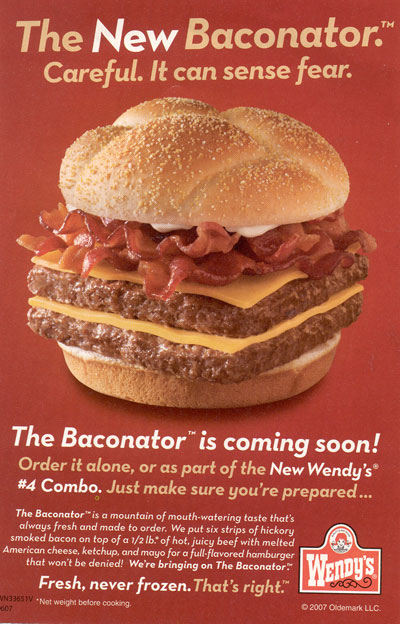
Postgame Reaction: Baconator Edition

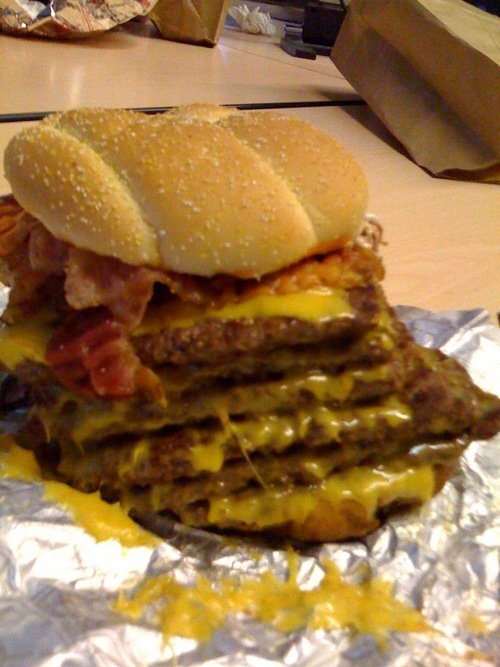
The day began with your typical playoff excitement: you’ve got tickets, and you need only suffer through the interminable work day before you get there. The day ended with a Baconator and poutine. These two points headed towards each other with fatal inevitability, like two rogue planets on a collision course. I feel terrible this morning.

1)      That was a great game, even if we lost.

If Ottawa plays like that for the rest of the series, they’re going to win more games than they lose. Outshooting, playing physical without necessarily getting wacky, and driving puck possession all night long. Keep it up, bozos.

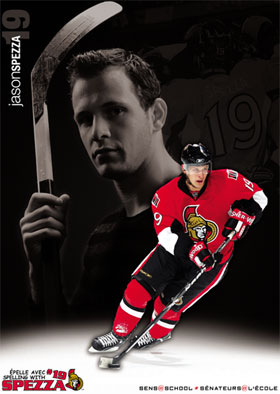
2)      What the fuck is wrong with Jason Spezza?

The overwhelming majority of offense from the Senators this season has come from Jason Spezza, Milan Michalek, Erik Karlsson, and Daniel Alfredsson. With Alfie out of the game, there’s just no way this team can win without Michalek, and to a much greater degree Spezza. Let’s give credit to the Rangers D, but Spetsnatz is trying way too hard out there. The version of Spezza that hucks passes blindly across ice has reared its ugly head. He’s one step ahead of his own brain at all times. He doled out giveaways like he was campaigning. He also took three minor penalties. I hope he comes back to earth in time for this series.

3)      Eating a Baconator is like eating a bag of salt.

I am humming with excess electrolytes.

4)      Bobby Butler did not look out of place out there.

Butlah had some beautiful chances. He also shoots the puck, unlike every single other Ottawa Senator.

5)      Why is Jesse Winchester on the first line?

I mean, he looks good. Defensively responsible, good along the boards. He’s not losing you any games. But I don’t know that he’s an improvement over Colin Greening, who is now playing with Zack Smith and Chris Neil. Spezza looks like he’s got a head cold or something, but he’s got enough natural talent to shine through occasionally. Michalek had a solid game, even if it couldn’t translate. But when you’ve got Winchester in the mix—he of 11 career goals in 233 games—the play would often grind to a halt. Not sure if Game Three of the playoffs is where you want to start experimenting with your lines.

6)      It’s confusing when Captial Tickets calls Game Three of the series Home Game One, and Game Six of the series Home Game Three

Thank god for scalpers.

Best of five series starts tonight

You may see a few of these in the stands tonight if those last 300 tickets don't get sold.

I don’t have much information in this post, I just wanted to take a moment to acknowledge that it’s the first playoff game in Ottawa since April 24th, 2010. And that Torontonians don’t know what this feels like. 

They were handing out free t-shirts downtown. I tried to get one but it’s Ottawa, so a lawyer making $117,000 a year snatched it out of my hands before asking the guy if he could have three more for his kids. I tried to push him in front of an OC Transpo bus, but it’s OC Transpo, so it was late and the guy just got up and walked away. Nearby, a man with an oversized novelty puck hat stared into the middle distance while waiting in line to get coffee, and I thought, “Man, I fucking love the playoffs.”

Needless to say, excitement is in the air. Roughly 57% of that excitement is generated from the notion that someone might actually get killed tonight, especially if the Rangers are losing the game and want to, ahem (puts on Don Cherry voice), SEND A MESSAGE GOOD BEAUTIFUL BOY THAT’S THE WAY.

Anyway, Sens will look to take advantage of the fact that the ice at Scotiabank Place isn’t butter, that the linchpin of the Rangers attack Carl Hagelin is out serving his three game suspension, and that Jason Spezza hasn’t really played yet and so should be well rested.

The WTYKYs crew will be in attendance. If you can guess which ones we are you’ll win the opportunity to buy us a beer.

GO SENS.

Strange times for Senators fans

Last night’s game represented something surreal for Senators fans, or at least for this one. For years Ottawa was the skilled team who seemed to crumple in the playoffs against grinders, the team who couldn’t create that sense of family that you sensed other teams built around. In a sense, Ottawa has rarely seemed like a team that liked each other any more than your average group of co-workers.

So to hear Chris Neil talk about how this team is a family, and how Carkner’s mugging of Boyle (in response to Boyle’s mugging of Karlsson) meant the world to the room, is a conflict for a fan like me. It’s bittersweet. It’s one of those moments that justifies all of the loud-mouthed analysts and square-headed bullies who insist that this game is best played by a bunch of good ol’ Canadian boys engaging in the pro sports equivalent of a bar fight.

It’s not that I don’t enjoy the occasional fight, though most of the time I use them as an opportunity to check the out-of-town scoreboard. But the degree to which these playoffs have turned into pure spectacle is both entertaining and thoroughly weird. Personally, I’ve spent the entire season speculating on dry rebuilding models and sustainable franchises. I assume that there are systems used to build hockey teams that are complex and nuanced, that this sport isn’t really a Good Ol’ Boys network of old school mentalities and enforcers in suits. But games like last night’s seem to imply otherwise. Maybe the best way to be competitive really is to goon it up.

During Don Cherry’s first intermission rant, he went into an incoherent string of his usual cliches. I have no idea what his point was, but at one point he just started saying “all these Swedes and Finns in their visors.” I suppose his point was that at the end of the day it was Matt Carkner, he of Winchester, ON, drafted 58th overall way back in 1999, and making close to league minimum, that supposedly made the difference. Cherry’s cache in the hockey community was enforced.

Never mind that Ottawa ended up having to kill off a five minute major, something that just as well might have resulted in the game being out of reach before the first period was half over. But that’s not the narrative. The story that sticks is that Ottawa responded, took control of the series, and are heading back to Ottawa with the split and all the momentum on their side. That Chris Neil scored the OT winner, and that Jason Spezza looks positively lost out there, only seems appropriate given the romance accorded this Ottawa team’s newfound emphasis on getting wacky.

So, yeah: strange times for Sens fans. Those of us who remember the stacked, skilled teams of yesteryear shitting the bed against vastly inferior Leafs teams look at the result of last year and can’t help but think we’ve lost some bit of the respectability we once enjoyed. We just might win more games as a result.

A Tale of Three Rebuilds: Toronto, Edmonton, Ottawa

Edmonton won the 2012 draft lottery yesterday, the same day Brian Burke used his exit press conference to exhibit his typical stubbornness and unwillingness to modify strategy. On the same day Edmonton earned the right to select first overall for an almost unprecedented third year in a row, Burke insisted that the draft was no way to rebuild. Responding to what the press referred to as the “Pittsburg model,” Burke shot back that Pittsburg won a lottery for one of the best players in the world—they had dumb luck and nothing more—and that that was the only factor in their sole Cup win.

It got me to thinking about the approach to rebuilding employed by these three Canadian teams – Toronto, Edmonton, and Ottawa – because they seem very different, and yet only in degrees relative to an underlying assumption about the effectiveness of the draft.

First, check out James Mirtle’s waaaaay old blog post about where picks in the draft end up. He has an even older post, which I can’t find, in which he breaks it down by picks inside the first round. I’m drawing from a shitty memory, but if I remember right there’s a disproportionately high number of top five picks who end up regular NHLers—not necessarily stars, just bona fide pros—after which the percentage drops precipitously.

Which informs my assumption about the “Pittsburg model”: it’s absolutely real, but needs to be employed fully to be effective. Meaning, you have to really, really suck for it to work. The draft can work if you’re Detroit and you exploit a system (Sweden) before anyone else in the league, or if you get lucky. Otherwise a rebuild through the draft is comprised of two parts: 1) tanking badly for a few years in order to obtain those few franchise pieces to build around, e.g. M-A Fleury, Crosby, Malkin, Jordan Staal; and 2) making trades and key signings once that core is obtained to complement and enhance the team, e.g. Gary Roberts, Marian Hossa, James Neal, Chris Kunitz, Paul Martin and Zybnek Michalek. While I’ll admit that no approach guarantees a team the Cup, this one seems the most reliable model for obtaining a core who will play with each other in their prime, and on affordable entry-level and/or RFA contracts, enabling other UFA signings. Three to five years of poor regular season performance, if your team can afford it, seems like a sure way to buy yourself double that time of playoff contention. Pittsburg have won their Cup, and their core will remain in their prime for another half-dozen years.

Edmonton seems the closest to replicating this model in textbook fashion. They haven’t escaped withering criticism from one of my favorite hockey bloggers, Tyler Dellow of MC79 Hockey, and he’s right to be concerned. They certainly give Dellow enough ammunition, what with their propensity for messing up minor elements of the CBA, mismanagement of key prospects, and their inability to negotiate a fair market contract for mediocre players. There’s also the small factor of totally imbalanced system development, with little to no defensive depth for a team top-heavy on offensive talent.

 It’s also difficult to ignore that Edmonton hasn’t just been bad, they’ve been far and away the worst team in the league since the lockout, and that not all of those years have been strictly rebuilding years—they were just years in which the team thought it should compete, and didn’t. Concern that their management team will not be able to make key acquisitions to complement their core when the time is right, or negotiate long term deals for their future stars, is valid. But the fact remains that the Oilers are so bad that they can’t help but fall ass backwards into a playoff team. Their multiple first overall selections are talented enough to escape even the Oilers’ inability to develop players optimally. They’ve consistently selected high enough to obtain those can’t miss building blocks. A few key defensive signings, a GM and coach who know what they’re doing, and even two or three of their later round picks panning out to provide depth to their raft of high-end franchise players, and the Oilers are set. They’re at the point where the team has to start showing improvement, but it could be a lot worse: they could be Calgary or Toronto, two markets who for years have been unable to admit their situation and are stuck in purgatory as a result.

Brian Burke on Pittsburg: “They got a lottery. They won a god damn lottery and they got the best player in the game. Is that available to me? Should we do that? Should we ask the League to have a lottery this year, and maybe we pick first?”

There are a few dozen levels on which this quote is confusing, and not only for its arrogance (truculence?) and stubbornness. First of all is the “Is that available to me?” question, which implies the draft lottery as a method of rebuilding a team isn’t available to Toronto when of course it is. Burke has repeatedly demonstrated an unwillingness to avail himself of provisions in the CBA that are commonly used, be it long-tail contracts, offer sheets, or the draft. More importantly, the implication is that unless the team gets the first overall pick and a generational player is available, that there is no value to the lottery. I have to admit, this isn’t totally unfair. While Pittsburg drafted Malkin and Staal second overall, there are as many cautionary tales (usually Columbus picks like Filatov and Zherdev) as there are success stories.

Nonetheless, Burke’s comments are weirdly nonsensical. “Should we ask the League to have a lottery this year, and maybe we pick first?” is a good one, as he doesn’t need to ask the League to have a lottery: they had one, and Toronto had the chance to win it and pick first. Burke almost seems pissed to not have the choice to opt out of the opportunity.

I’ve already written about how Toronto is having trouble conceptualizing a rebuild without adhering, at least a little bit, to building through the draft. If you don’t draft, and the UFA market is thin (which every GM worth a dollar saw coming as a result of the salary cap and teams locking up their young talent to long term contracts), all you’re left with is trades. True to form, Burke announced that trades would be his primary route this offseason. He will once again swap out components of a bottom-ten team for similar components, and will probably finish in the bottom ten next year as a result. I’m left to conclude that Burke’s strength—his principled approach and unbending willpower—are in this case the franchise’s greatest weakness. Toronto will never rebuild properly until they have a GM who doesn’t get up in front of the media and say things like, “I’m not a patient person. I was born impatient, I’m going to die impatient.”

Which brings us to Ottawa.

If the comments on this and other Senators blogs are any indication, we Sens fans are feeling pretty damn good about our pipeline. We have pedigree in Zibanejad, Filatov, Turris, and Cowen, and we have surprising, even dominant performances from Stone, Silfverberg, Lehner, Bishop and Noesen. There are also plenty of X factors in the system, promising players who might put it together. These are combined with a young franchise player in Erik Karlsson hitting his prime and realistically able to play for the Senators for the next decade-plus. In this way, Ottawa’s drafting and development is probably closer to, say, Los Angeles’, a team with a strong system despite rarely tanking all the way, than it is to Edmonton’s or the New York Islanders’, two teams who always seem to be in the bottom five and have been unable, as yet, to show improvement in the standings.

I’m optimistic, too, about how well Ottawa has seemed to do with only one draft off of which to launch a rebuild. The logic goes that if this team can make the playoffs as currently constructed, and has at least a couple quality NHLers on the way, that it will only improve, even with the impending retirement of the team’s heart and soul player, Daniel Alfredsson.

Except that I still think the goal of any rebuild has to be to win the Cup, not simply improve. How close is Ottawa compared to their fellow rebuilders? How close will they be after the 2012 draft? How about five years from now?

Like Los Angeles, Ottawa is on track to develop into a bubble team. Hopefully this means more years in the playoffs than out, but it also doesn’t quite mean an extended period of genuine Cup contention. The assumption is that this year’s unexpected playoff appearance is indicative of a franchise further ahead in its process, which I think is simply untrue. A team that chose not to sell off many of its key veterans—Chris Phillips, Daniel Alfredsson, Sergei Gonchar and Filip Kuba, primarily—combined with a Norris-worthy season from Karlsson and some late-game heroics in the early going, results in a team that can eke into the eighth seed for the right to play a team who finished 17 points better than them in the standings. Subtract a few of those veterans as they get older or retire; have Karlsson play at a human level; and have the incoming rookies play like rookies. What you have is a team that traded in a valuable year of drafting and development for what will most likely be a brief, if awesome, appearance in the playoffs.

There are a lot of angles at which to look at the problem: is Melnyk right when he says things like this team needs to get to the second round to break even, and so they can’t survive a few years without playoffs? Does it make sense to re-sign Bryan Murray when he’s clearly in his final contract and will most likely not want to spend it managing a basement team? Are Senators prospects like Matt Puempel 2011’s Angelo Esposito? (Remember that highly regarded prospect?)

Most of all: what does the fan base want? Three to five years of terrible hockey in exchange for a decade of contention, or one year of terrible hockey in exchange for five years of exciting if totally unpredictable bubble team games. Both are completely reasonable choices. I actually agree with the statement that “anything can happen in the playoffs.” I just want to make sure we’re in them more years than not.

I hate to say it, but as much as Edmonton or the Islanders look like a joke now—as much like a joke as Pittsburg back in the day—they are both much closer to winning a Cup than Ottawa is, despite Ottawa being in the playoffs in 2011.

As always, it could be worse: we could be Toronto. Let’s hope it never comes to that.

Would you or would you wouldn’t not you not really? Jarome Iginla Edition

The nicest man in dodge?

Unsurprisingly, reports have Jarome Iginla once more contemplating a trade out of Calgary. This has been a news story every April, given the Flames have found themselves out of the playoffs for the past three years running. But with only a year left on his contract and the Flames finally looking like they’ll embrace a rebuild, this is probably it for the aging power forward. It’s hard to wrap your head around him in another uniform, but it’s probably going to happen.

At $7MM a year, there won’t be many teams able to take on Iginla’s salary, and unless Calgary is looking to do a “halfie” rebuild—part veterans and part younger players in return—there will be few suitors. Those with the cap space don’t often have the financial means. Those with the means and the space may not have the picks or prospects.

Ottawa could be one of those few teams in the sweet spot. They have the cap space, even after signing Karlsson to whatever he’s gonna get. One thinks they have the money, considering the playoff and All-Star revenue from this year, the buy-outs coming off the books this season, and the fact that Alfie’s salary decreases by about three million bucks next year. They have the prospects to send back in exchange, and a low enough first round pick not to miss it too much.

But is he even any good these days? The numbers aren’t in dispute, even as Iginla has aged: he’s scored more than 30 goals and more than 60 points every single season since 1999-2000, and often playing without a number one centerman. He’s one season removed from a 43-43-86 season. And, let’s all say it again: only one season left on that deal.

The X-factor here is Alfredsson. Would the likelihood of a trade for Iginla increase or decrease if Alfie retires this year? They’re both right wingers, and so Iginla could step in and fill the vacuum of skill, tenacity, and leadership if he’s gone. If he’s not, it may not make sense to have so much money loaded up on the right wing, but then again maybe Iginla would be more likely to accept a trade to Ottawa with the Captain around.

Everyone’s offseason crush is going to be Zach Parise, and I absolutely think Ottawa should be in on that mad bidding war, but I know the odds are slim. What say you? In the absence of younger impact players, would you be willing to part with the picks and prospects to trade for Jarome Iginla?

WTYKY’s Actual First Round Preview

A marked contrast to our jumped-the-gun preview of Ottawa’s series against Boston, Ottawa has an actual chance in their first round match-up against the New York Rangers. The Boston Bruins and specifically Tim Thomas had Ottawa’s number in addition to stunning regular season numbers. New York, despite finishing better in the standings and winning the President’s Trophy, finished worse than Boston in most categories, both offensive and defensive. More importantly, they also finished worse than Ottawa in a few key categories.

Ottawa has a fight on its hands, but for the first time in the history of the modern franchise it has the chance to play the first round upset, and gain even more respect from a league that’s underestimated them from day one.

Offense

Ottawa’s got a goals-per-game of 2.96, good for fourth in the league, which compares to New York’s 2.71, which is 11th.

Ottawa’s powerplay is 11th at 18.2% compared to New York’s surprisingly pathetic 23rd place 15.7%.

Ottawa also outshoots New York 31.4 to 28.5 per game.

Their faceoff percentage is almost exactly the same, 50.1% to 50% in favor of Ottawa.

When comparing Ottawa to Boston, Ottawa only had an advantage on the powerplay. Against New York, their offensive advantage is much more pronounced, as they lead in every category. This will be particularly interesting to see against Henrik Lundqvist, who has been the regular season guy for New York but has never been that guy in the playoffs, and has had trouble against Ottawa.

New York’s offense looks great on paper, with elite scoring and two-way forwards throughout the lineup. Players like Callahan and Dubinsky are supposed to make their hay in the playoffs. One hopes that the pressure and “win-now” mentality gets to New York’s nine million dollar Brad Richards and seven million dollar Gaborik. If they don’t produce, and produce easily, they’re going to face some uncomfortable interviews.

Ottawa gets the most out of its league minimum rookies and sandpaper third liners, with key scoring from Colin Greening, Eric Condra, and Zack Smith. Those role players will need to help out Jason “Not Considered Elite for Some Reason” Spezza and Erik “Can’t Win the Norris Trophy Because He Doesn’t Play on the Penalty Kill” Karlsson. A player like Nick Foligno can prove his worth heading into a contract negotiation by being Ottawa’s Callahan.

Defense

The two teams’ defensive prowess is the exact opposite of its offensive matchup, with New York having better defense and goaltending in pretty much every category.

New York’s goals against per game were third best in the league at 2.22, while Ottawa is a terrible, terrible 24th at 2.88.

Likewise, New York’s penalty kill is fifth best in the league at 86.2% compared to Ottawa’s 20th at 81.6%.

New York’s shots against per game is sixth best in the league at 27.8 compared to Ottawa’s bruuuuuuuuutal 29th at 32 per game.

So, not unlike their potential matchup with Boston, Ottawa is going to need to outscore New York to overcome their own defensive deficiencies. It’s just not so dire as Boston’s impossible, invincible late game lock-downs. For example, New York is only 16th in the league when leading after the first period compared to Boston’s first place, and New York is eighth when leading after two periods, compared, again, to Boston’s first place. All of this leads to the possibility that Ottawa can pull off their cardiac kid routine.

New York has great young defenders Del Zotto and McDonagh (WHAT THE FUCK, MONTREAL), shutdown defence in Marc Staal, and seems-like-a-good-guy Dan Girardi.

Ottawa has several promising young defenders—Cowen, Karlsson—and the ghosts of several players who were once quite good in Kuba, Phillips and Gonchar. Together they might become a super ghost capable of turning in some great games.

Once again, New York looks better on paper, but that hasn’t quite translated to regular season victories against Ottawa.

Baconator

Ottawa faces a similar situation to what they would have faced against Boston, except the volume is turned down ever so slightly. They face a world-class goaltender, a solid defensive system, and depth two-way forwards. For some reason, they’ve just ended up on the winning side of the ledger, where against Boston they’ve come out stymied and frustrated.

The powerplay still needs to get its mojo back, and Ottawa will need the Craig Anderson who steals a game or two compared to the one who allows a goal from center ice.

But most of all, Ottawa needs to take advantage of the crushing pressure on New York to be a Stanley Cup champion like RIGHT NOW. Ottawa’s been in New York’s shoes before. A pesky team who can score goals and occasionally get hot can be the fly in the ointment to what is otherwise a dream season. If Ottawa can steal a game against New York on the road—especially game one—they can then sit back and allow the New York media to go into hysterical mode and eat the team alive. Let Tortorella lose his head and scream at his boys while MacLean says lots of Zen things about building a foundation and how this is all gravy.

Every non-Ottawa publication is going to pick New York in five or six. But we know better: Ottawa has a real chance of pulling this thing off.