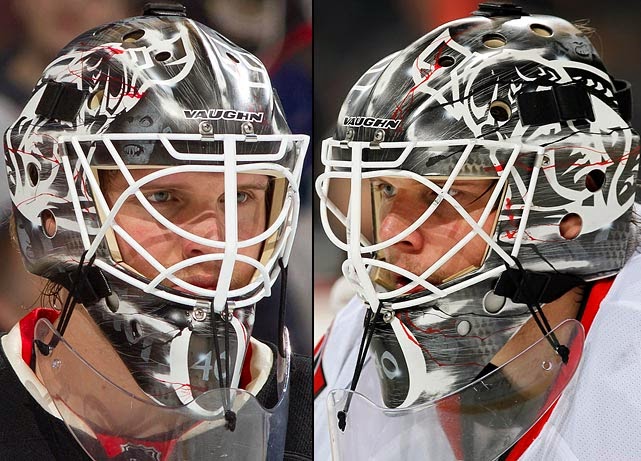
Sens Spend Money on Infrastructure, Not Players. What Does It Mean?

If you have a working Twitter account, you’ll have noticed that the Senators organization rolled out Whe Welcome Wagon for social media folk and traditional media alike yesterday. The Sens wanted to showcase the new renovations that have been made to the Canadian Tire Centre. The CTC now has more Tim Hortons, food by Farm Boy, and you can now put your poutine in a wrap/burrito in what must surely be an affront to both God and nature. Poutine is not a sandwich; that’s one of The Ten Commandments. There was also some discussion of the “Enhanced security measures” which are most likely to solve a problem that never existed at a cost to some fans who will now feel even more uneasy attending games, but that’s a story for another time1. These renovations and additions come fresh on the heels of parking lot paving, new lighting systems, and a new jumbotron.

The Sens have been remarkably consistent with infrastructure improvement rollouts for the past few seasons. Whether it’s the new lights, or the parking lot paving, or TV screens in the concourse, the improvements are always modest, announced with a press release, and then mocked a bit on The Twitters because “Haha, who announces a new television outside of section 316? That’s classic small town Sens doing small time stuff!”. I will admit to my own culpability in maintaining this pattern, but I only tease because I love2.

On the real though, I’m inclined to let the Sens talk up their sexy new box seats as much as they damn well please. It was only a few season ago that there was a prominent blogger who was going hard in the paint regarding Eugene Melnyk’s finances and the overall fiscal health of the Senators organization in general. When you consider how much these financial concerns have rooted themselves in the consciousness of the fanbase, one can hardly blame the org for hitting the general public with a soft #actually every time they invest money into the off-ice product. Whenever I read a Senators press release that says something like “Parking Lot 6 is being paved”, I interpret that as the Sens saying “Oh really? Would a broke organization do THIS? *makes it rain all over a pavement roller*“.

In light of this, I think it’s time to stop thinking of the Senators as a Budget Team, and time to start thinking of them as A Team with A Budget. While still in the bottom half of spending league-wide, the Sens now spend more money on salaries than five (5) teams, and are closer to the salary cap then they are to the cap floor. They are not a cap team and they don’t look like they’ll even try to be a cap team for the foreseeable future. However, maybe, just maybe, it’s time to stop looking at every single hockey personnel decision from the perspective of The Almighty Internal Budget. Every time a prospect signs a contract that could have been worth more money, there’s always a reaction that’s something like “Sens are lowballing their prospects again. Hope the fact they cheaped out because of the budget doesn’t cost them later.” Every time a team that is not the Sens makes a trade, there’s always a reaction along the lines of “Sens probably didn’t have the money to make the Boychuck/Saad/Hamilton/Sharp trade work, so they didn’t go for it.”

To this I say “Gotta hear both sides”. Hell, the Sens spent $15MM on renovations this summer alone! That’s like 2.3 Erik Karlssons (or 2 Bobby Ryans, if you prefer). Little improvements to The Gameday Experience show that the Senators are probably not incredibly tight against their operating budget unless you genuinely think Paul Maclean’s contract getting picked up by Anaheim was the difference between Lot 9 getting paved or not.

All this to say that if you enjoy griping about the Sens personnel decisions, please continue. Second guessing professionals is one of my favourite pastimes. I do it all the time on airplanes and in hospitals. Just keep in mind that it’s getting harder and harder to argue that money is the predominant driving factor behind why the Sens didn’t trade for Nick Leddy or offer Mike Hoffman more money.

If management screws this up, it’s gonna be because who they put on the ice, not because of what’s in the corporate bank account.

1. I’m aware that the Sens likely had no choice in whether or not to adopt this league wide protocol. I still think it’s bad for everyone. The Sens have to invest money to solve a non-existent security problem, the CTC’s ingress will become more congested than it already was due to the increased time it will take to get through screening, and a number of already marginalized fans will be forced through even more hoops in order to watch the team they love. Please read Andrew’s post for his thoughts on this matter. These security measures are a net loss any way you slice it. That is all I have to say on this.

2. I swear this is the reason.

9 Pithy Observations of Questionable Importance from the 2015 Rookie Tournament

While I was putting in work in London last weekend, I figured I might as well watch some games while I was in the area. This was my first opportunity to see a number of Sens prospects in person, and I have some thoughts which I will now share.

So without further ado, let’s play Eye Test!

1. Who was there was just as notable as who was not.

While Ottawa still sent a good percentage of their prospects, they still weren’t playing with a full deck. Nick Paul was held out due to injury, and Mikael Wikstrand was forced to withdraw midway through the first game against Toronto. Freddie Claesson wasn’t on the team for reasons I can’t be bothered to look up. Players such as Colin White, Kelly Summers, Miles Gendron, and Quentin Shore were held out for NCAA eligibility reasons. Consequently, Ottawa filled out the rest of their roster with players on amateur tryout contracts. This is obviously a win-win for everyone, but it also means given that Thomas Chabot and Marcus Crawford is unlikely to be a pairing we ever see again. Grains of salt for everyone!

2. Thomas Chabot is pretty decent.

It took me a while to come around on Chabot. Chabot’s a perfectly adequate defender in his own zone, but didn’t blow me away at any point. Then with the Sens Rooks down a goal late in the game against Toronto, Chabot took off on an end to end rush that resulted in the tying goal. Chabot would go end to end a few more times against Pittsburgh, always looking dangerous when he jumped up into the rush. What I liked most about this was that Chabot wasn’t just a free-wheeling downhill player; he was obviously picking his spots very carefully. He’s no Ceci or Karlsson i.e. the type of defensive prospect who can jump right in at the NHL level at contribute right away, but there’s lots to like already and I’m looking forward to watching his development.

3. Gabriel Gagne was the surprise of the tournament for me.

Most of what I’d heard about Gagne could have been summed up in two adjectives: big and lazy. The day he was drafted, I heard someone tell Ian Mendes “To watch him play, you’d think he’d scored his 35 goals by accident.” Check out this post by The 6th Sens to see what other sick buzz Gagne was getting. Based on this, I expected a big lumbering forward who just parked himself in front of the net and waited for rebounds to enter his stick swinging radius. What I didn’t expect was his speed. There’s a big difference between being a fast skater and looking like a fast skater (Just ask Colin Greening), and Gabriel Gagne looks fast. He was not afraid to take people on, beat people to pucks, and go hard into corners. If that’s what Gagne looks like when he’s lazy, I can’t wait to watch him when he tries.

4. I don’t get the Ben Harpur hype.

I’m just going to come out and say it: I don’t see what the Sens see here. Harpur looked big, slow, and took bad penalties. He’s probably the player I have the lowest opinion of following the tournament. I’d like to see a Freddie Claesson call-up well before I see a Ben Harpur call-up.

5. Tobias Lindberg reminds me of Jakob Silfverberg and I’m not just saying that because all Swedes look the same to me.

Having watched Tobias Lindberg thrive in the OHL last year, I was really looking forward to seeing him in person. As my favourite part of the Puempel-Dzingel-Lindberg line, he did not disappoint. I thought his game was very reminiscent of Jakob Silfverberg’s. He didn’t have speed that would blow you away, but he was very solid at both ends of the ice and showed off his lethal shot and quick release in overtime against Toronto. Any Ottawa fan worth their salt loves them some Swedish prospects, and Tobias Lindberg will fill that Silfverberg shaped hole in anyone’s heart who still misses Jakob even though we have Bobby Freaking Ryan on the team now.

6. Matt Puempel has just the slightest whiff of Dany Heatley about him.

One of the wisest things about hockey I’ve ever heard was “The difference between a good Dany Heatley game and a bad Dany Heatley game is two goals.” Basically if Dany Heatley wasn’t scoring, he wasn’t helping your team win. That line was constantly running through my head as I watched Matt Puempel. Puempel would be out there, playing solid, but not really stepping outside his lane or doing anything special. Then suddenly the puck would be in the back of the net and #26 was celebrating. Insofar as “having a nose for the net” is actually a thing, Matt Puempel does appear to possess that trait. Away from the opposing net, Puempel looked good but not exceptional.

Keep in mind that Puempel spent time on the penalty kill, so I wouldn’t want to give the impression that he’s deficient in his own zone. He was obviously one of the stronger defensive players on the team or the coaching staff wouldn’t have put him in that position. Still, one might worry how he’ll look if he’s on a line with Zack Smith and Chris Neil during the preseason. I would put him on a line with Mika Zibanejad and Bobby Ryan just to see what happens.

7. Filip Chlapik did not impress-uh-me much.

I’m already on a pretty big hater grind when it comes to the Q. Sure it’s the league that produced Sidney Crosby and Mario Lemieux, but it’s also the league that produced Alexandre Daigle and Marek Zagrapan. Whenever someone says, “This QMJHL prospect looks super skilled.” what I hear is “This prospect looks super skilled in a league where defense and goaltending are just hypothetical constructs.” This is not to say that I don’t believe good players can come from the Q because that would be ridiculous. However, I do know a lot of people who really wanted to draft Sean Couturier over Mika Zibanejad who don’t believe that anymore.

What does this have to do with Filip Chlapik? Well, I can’t say that he stood out to me. On the other hand, his wingers, Max McCormick and Francis Perron, both had huge tournaments (4 points in 3 games) so he must have been doing something right. Also he’s only 18 so maybe I should just chill out and rag less on a guy playing his first games in a Sens uniform.

If I were to sum my impression into one headline it would be “Area Prospect Will Require Some Years to Develop”. Call me, Ottawa Sun.

8. William Nylander is a menace to society.

Nylander was the best player I saw all weekend. He looks poised to fill The Phil Kessel Memorial “I Can’t Believe We Have To Play This Guy Again” Role on the Leafs for years to come. I can’t wait until they run him out of town.

9. 3-on-3 overtime is like the Wild West.

There is so much open ice during 3-on-3 play. Every rush either feels like an odd-man rush or is an odd-man rush because one of the wingers got stuck low when the puck went the other way. I can’t wait to watch this in the NHL. Each overtime will be assured two things: it will be very fun, and it will not last very long. Sounds like my wedding night, basically.

Merit Badges and Hockey Media

(Content warning: post and links discuss harassment, assault, sexual assault, rape, racism, sexism, and homophobia)

On the last Sunday in August, with an otherwise unremarkable slate of MLB games, Jake Arrieta threw a no-hitter and Jessica Mendoza was the analyst breaking down the action in the Sunday Night Baseball booth. Mendoza replaced former pro Curt Schilling, whose recent ill-informed twitter rant against Muslims resulted in his suspension for the remainder of the 2015 season.

That Mendoza is female and has no professional experience is groundbreaking. That we continue to evaluate what makes good play-by-play callers, analysts, and panel members based on how bloody their sock was when they forced a seventh and deciding game, if they won a championship at the highest level, or how funny their post-game interviews were, is not. It’s the same system that also erases Mendoza’s considerable playing credentials (softball gold in Athens in 2004 and silver in Beijing in 2008). It’s gatekeeping, pure and simple, and when it comes to NHL coverage, it’s designed to keep women, people of colour, and LGBTQ folks out and to erase the intersection of these identities in sports.

The elevation of the former player-turned-analyst (the variations of this include former coaches and general managers) in hockey media is tired and damaging. The blogging community and advanced stats movement has done much to discredit the worst aspects of this kind of analysis. But as the stats movement gained acceptance, many who rose to prominence replicated some of the worst aspects of the eye-test crowd.

Many of us believe we live in a meritocracy. That some combination of hard work and talent leads to success. That there are no barriers to what you can achieve if you want something bad enough. That more of these success stories happen to involve white, straight, cis men is mere coincidence for many of us. We believe this in part because we see this narrative playing out in hockey. We’re constantly reminded of can’t miss, generational talents like Wayne Gretzky, Sidney Crosby, and Connor McDavid or late round picks who worked hard to overcome some deficiency in their game, body type, or personality to succeed at the pro level. Less time is spent considering the inequalities in the system. What we talk about in more hushed tones is how economics – the price of minor hockey, equipment, and travel – culls the list before other factors enter into the equation. We celebrate advancements in the women’s game and the successes of programs like Title IX but overlook that female athletes – at every level – have less access to elite coaching, facilities, and medical care.

That the fans watching NHL hockey see generational talent on the ice and extrapolate and apply the same level of excellence to the analysts and panelists who explain, examine, and evaluate the game is equally problematic. There are barriers preventing many from accessing the game. Some of those barriers are in the booth and in the studio. The discriminatory ways some men who are paid to cover hockey act creates accessibility barriers for many who want to love the game.

Many fans persist in believing that those who are paid to talk and write about the games we watch are the most qualified to do so is verging on willful ignorance.

There is a place for former players, coaches, and GMs in sports analysis. Having played and worked in the industry they can provide unique insight into the mental strain of a losing streak or the ins and outs of the trade deadline. They can speak from experience on a variety of topics and some of the best analysts in the game have impressive NHL credentials. TSN’s Ray Ferraro provides among the best combination of an anecdotal player’s perspective with knowledge of current analytical trends. He also had over 400 goals in the NHL. There are others. But these broadcasts lack balance. How much of this perspective do we need? Regional and national broadcasts are full of former NHLers playing the role of analysts. Stars and scrubs, Hall-of-Famers and journeymen, All-Stars and healthy scratches, what matters is that these men once made it to the NHL.

It is a closed club, taking care of its members.

We rely so heavily on the former pro type precisely because of who it leaves out; hockey is still the whitest of the major North American sports and professional success remains elusive for women. The most prominent female voice on NHL broadcasts is Cassie Campbell-Pascall’s. For those watching in Canada, she is likely the only woman you will see and chances are it won’t be in the booth for a marquee matchup nor will it be at one of several intermission desks chalked full of former player analysts. While she saw limited duty in those roles for the CBC, she works as a reporter before games and during the intermission for Sportsnet. And yet on any given night when she’s on the broadcast, she’s the most accomplished former hockey player on screen. Sportsnet stars Glenn Healy and Nick Kypreos had long careers and won a Stanley Cup together with the Rangers in 1994 as the backup goalie and bit player respectively. P. J. Stock was a journeyman NHLer who played 235 games at the NHL level over seven seasons. Kelly Hrudy had a productive, if average, 15-year career in the league. This should not be read as a disparagement of these playing careers; on the contrary, making the NHL proves these men were among the very best male hockey players in the world at the time.

Rather, that when it is a question of hiring men to be on air talent, the parameters are malleable, the qualifications varied.

On the other hand, Campbell-Pascall’s playing résumé lacks only professional experience. She is, quite simply, one of the most decorated athletes in international hockey. She is the owner of 7 world championship medals, including 6 straight golds (1994 to 2004), in addition to 3 Olympic medals. She is the only player, male or female, since the 1998 Winter Olympics (when NHL players first played and women were first allowed to compete in the sport at the Olympic level) to captain her team to two straight Olympic gold medals. No other player has won two golds as captain let alone consecutively. Simply put, she has a playing record no other woman can match.

This is the standard that has been set for female former players who want a whiff of this type of post-playing career.

It will be at least another six years before we find out if another woman meets this criteria and should she achieve this legendary status, she’d still have to meet traditional standards of feminine beauty and female sexuality. While there is some variety in the masculinity presented on NHL pregame and intermission panels it’s still limiting and restrictive. These gendered restrictions are magnified for women. The varied way women present is not represented in sports media and those deemed too masculine never have a chance. There are lots of reasons past women’s hockey greats never got a shot on NHL or international broadcasts not the least of which is not everyone wants to make the move to broadcasting once they’re done playing. But some former players are erased because they’re black, or too masculine, or a lesbian.

Success continues to be defined by male achievement.

Success in hockey is further defined by white, straight, cis male achievement. That this is the norm is unquestioned. That those definitions will change to suit the needs of the hockey establishment is predictable. We ask why TSN, NBCSN, and Sportsnet don’t have more women as panelists, analysts, and play-by-play announcers and the responses usually revolve around issues of qualification. What we don’t ask enough is what qualifies men to be on these programs. What we don’t ask enough is why these networks don’t invest more time, training, and money in female broadcast talent. What we don’t ask enough is why we let these networks off the hook. Rogers winning the national NHL contract in Canada was an opportunity to employ more diverse on-air talent but it wasn’t taken. Too many of us gave them a pass, believing that after a few seasons of having the national contract women would just sort of magically appear, as if Sportsnet hasn’t had years to cultivate and promote female talent.

Mainstream broadcasters are failing fans. It’s problematic to have so many white, male, former pros on broadcasts because it creates a situation where there’s a lack of diversity: of opinion, perspective, and experience. Representation matters. Seeing women in the game and as part of hockey broadcasts helps create space for female fans and roles for women in hockey. It makes a difference.

The blogosphere created an opportunity to shake up the longstanding conventions of hockey media. Networks like Yahoo and SB Nation provided platforms for a plethora of new voices and the analytics movement coincided with this rise to prominence. But hockey blogging on mainstream sites such as Yahoo, SB Nation, and Bloguin operates from the perspective of white, straight, cis men. That’s not to say that there aren’t talented writers offering diverse perspectives at those sites just that those perspectives are not appreciated, supported, or cultivated across those networks and by those networks. In terms of diversity, the promise of the blogosphere has yet to be realized.

Blogs and analytics promised accessibility and knowledge. The two factors that are supposed to level the playing field. Advances in statistical analysis were supposed to make up for not having 40 years of experience watching the game. Ideally, anyone who reads advanced stats primers and with time, moves on to more intermediate pieces, should be able to participate in this new conversation. There has been a lot of good. Our collective understanding of hockey has been improved, expanded, and enriched because of the groundbreaking and thoughtful work of bloggers and stats folks. We have numbers to point to that indicate all third liners are not created equal. We’ve got graphs that illustrate that the title defensive defensemen is a bit euphemistic and that Marc Methot looks pretty good on his own merit. Fans and those in the game alike are understanding the game in different ways and have new language to talk about hockey.

These are all good things.

Yet I worry that the conversation about analytics in sports generally, and in hockey specifically, is the latest appeal to male authority. That the way we talk about advanced stats in particular is the most recent way of enforcing male regulation over the dominate dialogues in sports. In our search to wrestle control of dominant hockey narratives from establishment higher authorities like the Cherry-Healy-Milbury talking heads, we’ve found a new truth and installed another patriarchal order. We have new hockey experts and some use their knowledge to dismiss and control as effectively as mainstream hockey media uses their connections to enforce certain conventions. As if searching for the one “right way” to talk about hockey isn’t in itself an appeal to male authority. We think the stats movement is so new, so fresh, and so different that we don’t question enough whose voices it has given prominence to.

There are important voices in the stats community whose excellence extends beyond their ease with spreadsheets. Good men and women who will discuss, debate, and reflect on the issues facing the game beyond the numbers. But there are others, so many others, who never discuss issues of racism, sexism, homophobia, and transphobia in the game, online, and in our hockey media. There are valid reasons for deferring, there are valid reasons for staying quiet. But too often this silence is reflective of something else. You don’t have to look hard to find stats authorities mocking people on hockey twitter for being “upset” but never addressing sexism in hockey. You can probably think of more than a few examples of prominent stats men who belittle and insult women online, disregard valid critique, and participate in the erasure of the work done by female stats bloggers and female hockey bloggers more generally. Some are deliberately inaccessible in their writing and think the most pressing issue in hockey is that their work isn’t universally accepted and appreciated.

Because so many believe we live in a meritocracy we have elevated many new voices because they possess superior, analytical minds. We have new authorities.

But in too many ways, the underlying framework remains the same. It’s easier for many fans to see and identify discrimination when an abrasive, physical, former player type says something offensive like Curt Schilling or Don Cherry. It’s much harder for us as fans to admit that stats bloggers, whose work we admire, sometimes say the same things. That their entry into the conversations about the game is intellectual and not anecdotal further shields paid stats bloggers from legitimate criticism about failings on issues of equality. Because they should know better we expect that they actually do. Advanced stats are just like any other power structure and we need to look at who controls the narrative.

The analytics movement is failing where the talking heads failed before. There is still a refusal to talk about the most difficult issues in the game, a preference to keep mainstream topics about the on ice product. The problem is when the analytics movement gained the official seal of approval, when bloggers started to be hired by NHL teams, newspapers, and media outlets, expectations were raised.

I expect hockey media (traditional media as well as paid bloggers) to not shy away from issues of violence, racism, sexism, homophobia, transphobia, sexual assault, mental illness, substance abuse, as much as I expect them to tweet every detail about ongoing labour negotiations and shot suppression rates. Both are part of the game. Both are part of your job.

But too often those in positions of authority obfuscate when a difficult and complicated issue such as sexual assault or domestic violence comes up. It’s the “Patrick Kane situation,” the “Voynov circumstances,” and the “Varlamov incident”. Change starts with using clear and precise language.

They got away with it for a long time. Players and media alike.

Many fans in the silent, and not so silent, majority agree with paid hockey media’s take, with paid hockey media’s cowardice: hockey is supposed to be an escape and we should just talk about the game.

Two incidents in the past two days highlight both the problem and potential ways forward in hockey media. On Wednesday ESPN/TSN insider Pierre LeBrun wrote about how the Los Angeles Kings handled Slava Voynov’s assault conviction and two drug possession cases during the 2014-15 season. Except he didn’t. He started with this instead: “The NHL is not accustomed to headlines involving arrests and court dates.

That’s normally for other sports leagues.”

In reality, the NHL is quite adept at handling headlines involving arrests and court dates. The league has always been able to bury this type of controversy. After the initial breaking news, the NHL keeps assault and rape out of its popular talking points thanks to accomplices in hockey media like LeBrun. Insiders need access to management and players, and staying quiet about the criminal behaviour of NHLers keeps the cliché post-game quotes and trade rumours coming. The NHL Media Tour went this week in preparation for the upcoming season and it took several minutes for anyone among the assembled media to ask Commissioner Gary Bettman about the biggest story of the offseason: Patrick Kane’s rape investigation. LeBrun and his colleagues are more than happy to promote the NHL as the last bastion of good guys in professional sports. When talking about how LA’s “tight-knit” community rallied from these “distractions”, LeBrun deferred to Drew Doughty, neglecting to mention the defensemen’s own prior rape investigation. Doughty’s distortion of the Kings organization was in keeping with the tone established by LeBrun: “Because we are such a good organization and do have a very good image, it’s unfortunate”.

What’s unfortunate was how deliberately deceptive LeBrun was. What’s unfortunate is how full of shit Doughty was.

What’s unfortunate is how many examples we have of this behaviour. Beat reporters obscuring the truth, players falling back on their “team first” training. We get more examples every week. Just ask Jonathan Toews and Duncan Keith.

What’s truly unfortunate is how the real victim, not Slava Voynov, not Dean Lombardi, and certainly not the Los Angeles Kings, continues to be an afterthought, so frequently erased.

It is a closed club, taking care of its members.

Yesterday, noted numbers guy Rob Vollman tweeted about a piece he’d written for ESPN where he asked a “panel of prominent hockey numbers guys to rate this year’s summer signings”. And he meant “guys” literally: of the 28 prominent hockey minds surveyed, all were men. To Vollman’s credit, when asked why he didn’t included any of the numerous female stats bloggers in the community he addressed the issue immediately and admitted he asked only one and should have done more to address the gender imbalance. This is a good start but must be followed with concrete action.

Paid hockey media can continue to close its eyes and cover its ears but writing about and discussing issues of discrimination in hockey is only going to increase. The voices demanding necessary change are not going away, but are gradually swelling and your mute button will only work for so long.

A familiar refrain from men in positions of power in the mainstream media or at prominent blogging sites is a variation of “there aren’t a lot/any good writers who are …” or an exasperation at where to find writers who aren’t white, male, straight, and cis. For those making such statements success continues to be defined by male achievement and male standards. There are many terrific female hockey bloggers, one needs to look no further than the collection of talent behind the soon-to-launch The Victory Press, a site for excellent writing on women’s sports. There are skilled writers of colour covering hockey as well as tremendously capable LGBTQ bloggers. If you’re a site manager, editor, or prominent hockey voice and can’t find diverse voices you claim to seek, you’re part of the problem.

The problem is you.

Maybe your site is poorly moderated. Maybe your decision makers are sexist, racist, homophobic, or transphobic on twitter. Perhaps you post insensitive or offensive editorials, with little thought and no follow up on why your work is problematic. Maybe you’re a stats writer who’s worked hard and achieved mainstream success and is now more interested in maintaining the status quo then listening to the legitimate criticisms of the biases inherent in your work. There is a tendency to separate issues of representation from issues of discrimination or outright abuse. But the lack of women, people of colour, LGBTQ folks, and their intersecting identities in mainstream hockey media helps perpetuate discrimination in the game.

If you want to have a diverse site or diverse contacts you must be actively involved in and committed to creating inclusive environments. Women, PoC, and LGBTQ folks are tired of being left hanging by those with more power in the hockey community. Who wants to write for an editor that won’t have your back when an important piece draws the ire of those who want to keep online hockey spaces the stronghold of white masculinity? Who wants to visit a site that posts offensive material and exploits female labour? Not me.

The stats community still occasionally spars with the more traditional eye-test crowd. But both are oblivious to their similarities. Far too many in each group are working to keep hockey media a white, straight, cis male preserve.

Posted in Uncategorized | 1 Reply

The David Legwand All-Stars

One development in sports coverage in the past 25 years is the increase in fan and media access to players. With the social media explosion, fans now have unprecedented access to their multi-millionaire heroes and can really get to know players and their personalities. Bobby Ryan bought an RV! Clarke MacArthur bought a tiny motorcycle! Cody Ceci is very trusting! Who doesn’t have things in common with these people? Little off-ice moments such as this are how a player as otherwise marginal as Kaspars Daugavins can become so beloved by the fanbase.

But still, some players slip through the cracks. This is likely by design. Some guys just want to go to the rink, be a professional, and go home. They aren’t in this to make friends. Nobody embodied The Milford Mantra of being neither seen nor heard more than David Legwand. Remember that big moment David Legwand had this season? Me neither. In fact, the only thing I remember about Legs (???) is when he loomed up from out of nowhere in the middle of a “We made the playoffs!” celebration video. That’s it. David Legwand was The Grey Man in Ottawa. He wasn’t good, he wasn’t bad, he was just sort of…there.

So here’s a salute to The David Legwand All-Stars: Players who are completely unmemorable for whatever reason. Let’s do some internet research and see if we can learn a thing or two about them today!

Goalie

Alex Auld

Stats in Ottawa: 57 GP, 18-22-9, 2.66 GAA, .906 sv%

Representative YouTube Highlight:

Life Comes At You Fast Wikipedia Page Excerpt: Initially, Auld was expected to be the undisputed starter in Florida. However, the July 25 signing of Ed Belfour introduced some competition, and Belfour eventually won the job as starting goalie. Controversially, in October, Auld was hospitalized while ‘horsing around’ with Belfour, with suspicions that Belfour had assaulted him.

There are lots of ways of being a memorable goalie. You can be very good. You can be very bad. You can be part of a terrible trade. You can be part of a trade that’s terrible for a different reason than the other one. You can get hurt at the worst possible time. You can get hurt all the time. You can have a very controversial mask. You can have the least controversial mask. Somehow Alex Auld did none of these things.

Forwards

Andreas Dackell

Stats in Ottawa: 401 GP, 65 G, 115 A, 104 PIM

Representative YouTube Highlight:

Life Comes At You Fast Wikipedia Page Excerpt: After acquiring Bill Muckalt from the New York Islanders the Senators traded Dackell due to his more expensive contract. He was traded to the Montreal Canadiens during the 2001 draft for a seventh round pick.

As a defensive forward, Andreas Dackell was the Erik Condra of his day. He was also Swedish. Basically if Andreas Dackell played for Ottawa when Twitter was around, he’d be Top 3 in popularity. Instead he’s simply remembered as The One Who Wasn’t Magnus Arvedson. As always, timing is everything.

Bruce Gardiner

Stats in Ottawa: 181 GP, 22 G, 32 A, 146 PIM

Representative YouTube Highlight:

Ok, actually that does seem pretty memorable. My bad. I’ll take the L on this one.

Life Comes At You Fast Wikipedia Page Excerpt: On May 4, 1986, Gardiner, who was 14 years old at the time, helped rescue two men and two boys from possible hypothermia on the Mattagami River along with some friends. On December 11, 1987, he was awarded the Medal of Bravery. The story was later reenacted on the television show Heart of Courage.

Players Who Surprisingly Have More Games Played as a Senator Than Marc Methot:

Bruce Gardiner
Peter Regin
Ricard Persson
Dean McAmmond

Perception of time is weird.

Vaclav Varada

Stats in Ottawa: 117 GP, 12 G, 27 A, 84 PIM

Representative YouTube Highlight:

Life Comes At You Fast Wikipedia Page Excerpt: He was later traded to the Ottawa Senators for Jakub Klepiš before the 2003 trade deadline in an attempt by the Senators to become a tougher and gritty team, en route to the Senators’ first Eastern Conference championship series against the defensive-minded team, New Jersey Devils.

Vaclav Varada did most of his best work with the Buffalo Sabres, thus making him the original Robin Lehner.

Defense:

Curtis Leschyshyn

Stats in Ottawa: 200 GP, 3 G, 23 A, 78 PIM

Representative YouTube Highlight:

Life Comes At You Fast Wikipedia Page Excerpt: Leschyshyn is an avid cyclist and cycles 40–50 miles a day.[citation needed] Leschyshyn has been a participant on Battle of the Blades.[citation needed]

200 games played! That’s the same number of games as Mika Zibanejad. Yet, Leschyshyn’s main claim to fame is the time I rhymed his name with “incision” to win a freestyle rap battle in the Ottawa Underground Battle Rap League (OUBRL).

Lance Pitlick

Stats in Ottawa: 228 GP, 11 G, 25 A, 190 PIM

Representative YouTube Highlight:

What I’m taking away from this highlight reel is that Lance Pitlick liked to hit dudes in the head a lot. Also: is Lance Pitlick the most surprising former NHL player to have a highlight reel?

Life Comes At You Fast Wikipedia Page Excerpt: This biographical article relating to an American ice hockey defenseman is a stub. You can help Wikipedia by expanding it.

I think we’re done here.

10 Other Things the Ottawa Senators Should Bring Back

Yesterday word leaked from our friends at the Ottawa Sun that Martin Havlat, off-injured, 30-something sniper, might be offered a PTO with the club. He began his career to much fanfare with the Senators and Havlat still seems to have a few eggs in the “he was my favourite player” basket judging by twitter reaction. It’s unlikely Havlat sticks and unlikely he has much to offer based on his last couple of seasons but it’s a no risk move that has the potential to benefit the team. With that in mind, here are ten things the Sens should consider bringing back, some of the serious variety:

Bodycheck magazine. Revel in the full 90s glory. Hard to pick a favourite cover, but I’m going with Steve Duchesne wearing sunglasses and holding a surf board.

The pizza promo. Who doesn’t want a slice of tasty Pizza Pizza? Should not be used as an excuse to get rid of the last minute burger promo.

Win and you’re in. Think Andrew Hammond, with the 20-1-2 record, has the upper hand here.

Rihanna.

Sens Mile. Make it season long. Force Ottawa to have much needed debate about tempting fate and municipal overreaching.

Eric Gryba’s beard. I miss it so much.

Old jerseys. This one, not this one.

Daniel Alfredsson.

Trading away a second round pick at the deadline.

And of course, this guy.

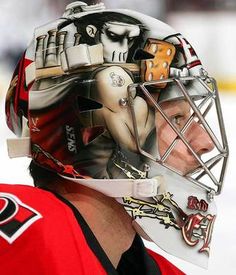
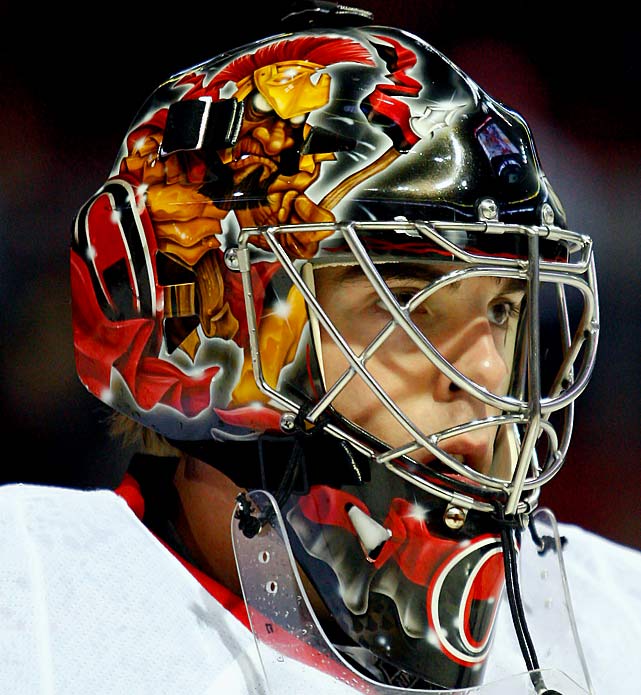
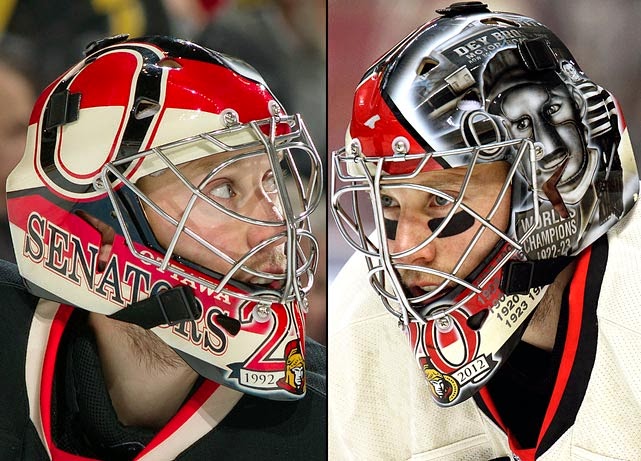
Masked: A Visual History of Ottawa Senators Goaltending

(Content warning: racism, rape related to discussion of Ray Emery masks)

As hockey fans debate the latest symbol of NHL uniformity – the Adidas jersey deal and the renewed possibility of ads appearing on sweaters – I’ve been thinking of one of the most enduring symbols of player individuality: the (painted) goalie mask. Beginning with a few small, marker lines – meant to represent a stitch – drawn on Gerry Cheevers’ simple, white mask in jest, it became the most iconic of all goalies masks. As someone who played in the NHL in an era when some goalies still didn’t wear masks, it also became a statement about player safety.

As more and more goalies had their masks painted by hand and then airbrush, and as the protective gear evolved from face-hugging fiberglass, to helmet-cage combos, and finally to fiberglass/carbon fiber-cage combos, a rich tradition of mask painting emerged.

While mask artwork has been evaluated on its relative merits, I think there’s something to be gained from exploring the goalie mask history of a team’s netminders. What follows is a visual chronicle of Ottawa Senators goaltending (players who have played 20 or more games in a Sens uniform), but it also creates a type of visual Sens history.

Early Years: 1992-1996

Looking back at the buckets Peter Sidorkiewicz and Darrin Madeley started with in Ottawa’s inaugural season and you’d be forgiven for thinking Ottawa played its first games a decade before, in the 1980s. The retro Cooper helmet-cage combos, black for Madeley, white for Sidorkiewicz, started appearing in the 1970s and were popularized by Soviet goalie Vladislav Tretiak. Synonymous with the high-scoring, less than stellar goaltending of the 70s and 80s, they were the perfect choice for goalies who would replicate those bloated GAA totals from earlier eras.

petersidorkiewicz

While Madeley played most of his games with the Sens the following season, Daniel Berthiaume was relied on to back up the All-Star (yes) Sidorkiewicz. Berthiaume’s contribution to the Senators’ mask history was a DIY (at least I hope it was) effort. Painted all black, it featured a small logo decal on each side on the top of the mask. The whole effort probably cost less than $4 at the dollar store.

berthiaume

Of note from the first season is Sidorkiewicz’s early adoption of the centurion theme. Like the main Senators logo, Sidorkiewicz’s mask featured a stylized Imperial Gallic helmet. Painted to appear he was wearing a Roman centurion mask it set in motion both a very specific aesthetic look as well as the mask-within-a-mask tradition other Sens goalies would wear in the future.

PeterSidorkiewiczOttawa

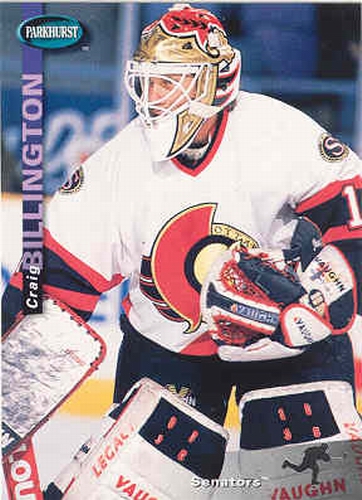
The 1993-94 pairing shows continuity with the inaugural season, in players (Madeley) and looks (Craig Billington). Billington wore an early variation of the centurion mask-within-a-mask. Like Sidorkiewicz, Billington’s mask featured the black fringe (seriously, what are those three black wings coming out of the red crest on the 2D logo supposed to be? A cape? Fringe?), from the main logo and a prominent laurel motif.

billingtonos90

Another Madeley mask might be the most interesting from this early period in that its stylized linear design seems more suited to the 70s and 80s and a different team. Except for using the appropriate colours, it doesn’t reference the team and reminds me of the lid Felix Potvin sported around the same time with the Leafs. It makes it look like Madeley wanted to join the Calgary Flames, which was probably preferable to playing goal for the Sens in 1993-94.

5078-340Fr

The following (shortened) season, Don Beaupre joined the fold and was between the pipes for most games. He was already the owner of a truly iconic mask from his time with the Washington Capitals, the team Ottawa acquired him from. Featuring a stars and stripes design along the jaw line and cheek/ear covering, the top of Beaupre’s Washington mask featured a graphic rendering of the U.S. Capitol Building. He applied the same thematic template to his Senators mask, creating the first truly iconic cage in Senators history. The top of his mask featured a gold, graphic rendering of the Parliament Buildings, the first Sens reference to the buildings/Peace Tower since the wordmark logo from Terrace’s expansion pitch, some five years previous. The Parliament Buildings/Peace Tower motif would be used by several Sens goalies, including the recent, never worn (thankfully because he was not good) Alex Auld heritage mask. While the expansion bid wordmark logo featured the Peace Tower with a Canadian flag, the Beaupre mask introduced the maple leaf to Ottawa’s visual repertoire. In fact, the Peace Tower/Maple Leaf alternate logo that featured as a shoulder patch from 2000-2007 and is still in use as a decal on Ottawa’s home and away helmets, owes as much to the iconic designed introduced by Beaupre (and taken up by Damian Rhodes) as it does the original wordmark logo.

donbeaupre

Perhaps it’s fitting that this bad, early period should end with Mike Bales. Not only was he quiet poor in net, his mask ushered in a particularly terrible design theme: the cartoon, full-size Roman soldier. While’s Bales’ graphic is more realistic than later incarnations, it features a soldier riding a rearing horse that just makes me think of this guy.

Bales

Golden Age: 1996-2007

Damian Rhodes joined the Senators for the 1995-96 season, but he came into his own with the club as the team made its initial playoff pushes in the late 1990s. Rhodes’ mask built on the aesthetic design of Beaupre’s but with slight modifications. The maple leaf background is more prominent and stylized; the leaf has veins and curves. The reference to the city is streamlined, with only the Peace Tower as the central focus above the cage. Along with Beaupre’s mask, the Peace Tower and maple leaf design featured on Rhodes’ mask was the look for Sens goalies as the team became respectable.

6a2926a18ea8896c9eca08d7a2acdccf

A counterpoint to Rhodes’ design was Ron Tugnutt’s look in the late 1990s. This is the most generic mask in Sens history. Its generic quality reminds me of this. Curtis Joseph wore it. But Tugnutt loved the “team colour splat” design. His mask is a great example of how the move toward airbrush paint jobs generated a bunch of designs in the 90s that shouldn’t have been allowed to see the light of day.

0e4d53ef788e6e8f800f3e083e2889d8

When the Sens shuffled goalies at the 1999 draft (Rhodes out, Patrick Lalime in), the reward for Ottawa fans was one of the best masks in team history. Lalime’s iconic Marvin the Martian mask was similar to the early Sidorkiewicz and Billington cages, with the top featuring a centurion mask. But Lalime modified that tradition and the result was terrific. His mask differed in that Marvin’s enraged eyes were popping out from under the centurion helmet. The original cartoon, developed in 1948 by Chuck Jones, was appropriately dressed as a centurion (with a pair of Chuck Taylor’s), based on the depictions of the Roman God of War, Mars, from antiquity. Lalime’s mask changed Marvin’s colours slightly to fit better with Sens colours and gave him goalie equipment. Unlike many Looney Tunes villains, Marvin the Martian was “clever and competent” as well as “incredibly destructive and legitimately dangerous”. Trying to destroy the world with his Illudium Q-36 Explosive Space Modulator, inevitably he was foiled by Bugs Bunny. So a perfect metaphor for a goalie who was unbeatable against the Flyers in the playoffs but was constantly thwarted by the Leafs.

year11week08

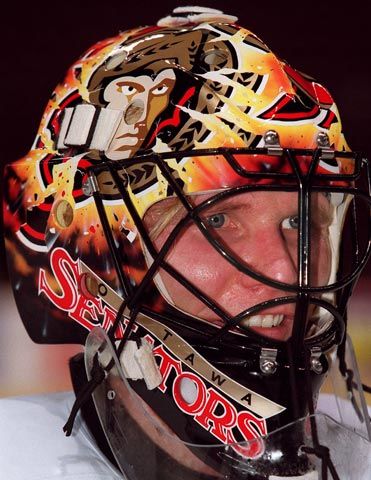
That brings us to Jani Hurme. This mask could not be more 90s, which means it was already outdated by the time he busted it out in the early 2000s. Another airbrush, graphic disaster, Hurme’s mask featured a fractured and splintering Senagoth logo (the first time that logo appeared on a mask in this series), and is quite clearly a reference to the ongoing financial woes and general instability of then-owner Rod Brydon. That or Hurme’s save percentage.

1302128951030_ORIGINAL

Martin Prusek is up next and there are things that need to be said about his mask. Important things. For starters, wearing the helmet-cage combo in the early 2000s was more than a little eclectic. Still, there were guys at that time who could pull it off, and Prusek wasn’t one of them. The cage and helmet didn’t seem to fit properly, and the helmet seemed to pop up on his head. Basically, he made Tommy Söderström look like the height of fashion. He doubled-down on bold choices by picking a Roman motif not utilized by anyone else in franchise history: the Colosseum. Aesthetically, the Colosseum might work on a mask but Prusek took the decidedly unaesthetic approach. I can’t be sure, but it seems like the thinking was: “my head is round, so is the Colosseum. I will wear this building like a crown around my head”. Sure. Now it’s possible it was some sort of comparison of arenas: of gladiatorial games and hockey games. But if Martin Prusek had posted a .911 save percentage in ancient Rome, he would have stayed in the provinces and never made it to the big show in Rome.

prusek

After another playoff loss to the Leafs and an NHL lockout, two new goalies emerged. Dominik Hasek was a living legend when he joined the Senators and his Cooper helmet-cage was his standard look (the Sens seem to have a disproportionate number of goalies who went this route). Hasek started painting his helmets while in Detroit and continued the practice in Ottawa. His final days with the team have been dissected before, but not enough time has been spent discussing his subtle work for Ottawa Tourism. Until he left for the 2006 Winter Olympics, Hasek worked tirelessly to promote Ottawa as a sunny, warm, weather destination by featuring a sunburnt, centurion on his mask. You’re welcome, Kanata.

PHILADELPHIA - DECEMBER 22:  Goaltender Dominik Hasek #39 of the Ottawa Senators in action against the Philadelphia Flyers during the NHL game at the Wachovia Center on December 22, 2005 in Philadelphia, Pennsylvania.  The Flyers defeated the Senators 4-3.  (Photo by Len Redkoles/Getty Images) *** Local Caption *** Dominik Hasek

PHILADELPHIA – DECEMBER 22: Goaltender Dominik Hasek #39 of the Ottawa Senators in action against the Philadelphia Flyers during the NHL game at the Wachovia Center on December 22, 2005 in Philadelphia, Pennsylvania. The Flyers defeated the Senators 4-3. (Photo by Len Redkoles/Getty Images) *** Local Caption *** Dominik Hasek

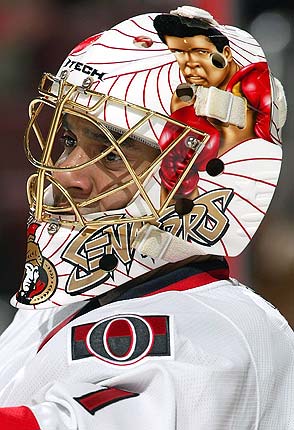
Ray Emery’s masks are possibly the most talked about in Sens history. Nominally related to the team, they generally feature a team wordmark or small logo but focus primarily on Emery’s love of boxing. I think that’s a great thing actually. From the beginning, goalie masks have been an assertion of individuality. When Gerry Cheevers began the painted mask tradition it was also an assertion of individuality. Some of the most iconic masks in NHL history (Cheevers, Gary Bromley, Gilles Gratton, Curtis Joseph, Curtis Sanford, and Gary Simmons) had little to do with the teams they played for. Some designs, like Ed Belfour’s Eagle design from his time in Chicago or Patrick Lalime’s Marvin the Martian design from his time in Ottawa, become so associated with the goalie that he adapts it to fit the colours and style of successive new teams. However, in 15 years of Sens goalies, Emery was the first to have an individualized mask whose primary focus wasn’t a centurion or city-related imagery and without significant references to team iconography. Even Lalime’s mask was a play on the centurion theme. Emery’s cages were a needed burst of individuality and the fighter theme translated well to hockey.

OTT-Emery-Front

Emery also had the most controversial mask in team history. While some goalies shop out the bulk of the design and thematic work to the artists who paint the masks, it’s fair to say Emery was more involved in the process than most. In 2006 he debuted a mask featuring former heavyweight champion Mike Tyson. Emery wore the controversial mask for just one game before Sens management stepped in. After a meeting with John Muckler, Emery retired the mask. There were several instances of the Sens objecting to Emery’s behaviour and Stacy L. Lorenz and Rod Murray’s article “The Dennis Rodman of Hockey: Ray Emery and the Policing of Blackness in the Great White North” in Commodified and Criminalized: New Racism and African Americans in Contemporary Sports elaborates on the racial overtones of management’s objections. Where I disagree with Lorenz and Murray is the argument that the Senators only acted because Emery is black and used the fact that other organizations allowed goalies to wear masks objectifying women (most notably John Grahame in Tampa Bay) as proof. The Sens can’t stop goalies in other organization for having masks with objectionable material. While Emery’s race may very well have been a contributing factor to Muckler’s objection (the authors make a convincing case it was a factor in other clashes between the goalie and management), so too was public outcry. Simply put, having a mask celebrating a boxer who is also a convicted rapist is deeply problematic given the issues we still face in hockey culture and is deeply offensive to many survivors who watch the game.

06-ray-emery-ottawa-senators-mask-294nm-030209

Contemporary Period: 2007 to present

Martin Gerber entered the fold after the 2005-06 season. I guess it’s telling that it’s really hard to remember the mask he wore during his first season in Ottawa. Brought in to start, he ended up backing up Emery during the season the Sens when to the Final. He started the 07-08 season trying to reclaim his starting job and wore a black mask while awaiting a paint job on his primarily cage. The black mask endeared him to Sens fans and earned him the nickname “Darth Gerber”. Gerber even proved he got the joke, when he unveiled a Darth Vader mask to start the 2008-09 season. Sens fans didn’t see much of the mask as Gerber’s poor play led to him losing his starting gig to veteran Alex Auld and newcomer Brian Elliott and he was eventually placed on waivers.

RbPZsu7

Alex Auld’s masks were boring and derivative which is more charitable than I can be about his play. Auld’s look featured the mask-within-a-mask centurion helmet that made its first appearance in the inaugural season. Ugh.

alex-auld

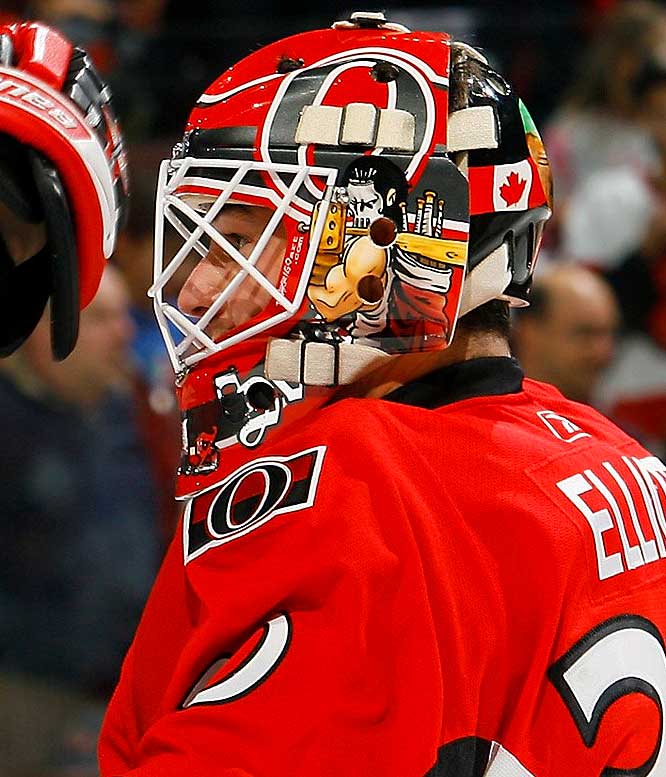
Elliott had two main masks while playing for Ottawa, a white one and a red one, both featuring the cartoon character Casey Jones from the Teenage Mutant Ninja Turtles universe.

6243d292c00c81640f1671abafb89847

Elliott’s red version stands out because he adopted the Heritage O secondary logo which had been featured as a shoulder patch on the home and away jerseys up to that point. A number of factors contributed to the Heritage O logo gaining in popularity among Sens fans and while Elliott’s mask is not at the top of that list, it helped push the O from afterthought to the attention of fans.

brian-elliot

It would be easy to forget Pascal Leclaire and the most memorable thing about his mask was when he wasn’t wearing it on the bench, took a puck to the head and suffered a broken cheekbone, part of a string of injuries which sadly cut his career short. His injury history was legendary but his mask was not. Leclaire’s mask was one of those centurion caricatures that’s silly and thematically boring. Like Elliott, Leclaire also adopted the Heritage O logo as part of the design of his mask.

ottawa-pascal-leclaire

Sorting out the final days of the Elliott-Leclaire tandem resulted in the Sens using six goalies in 2010-2011 season and the only one to see significant playing time in addition to that duo was Craig Anderson. Anderson’s Sens masks have all been a variation of masks worn in Colorado and Florida. The left side of the mask features a Rat Fink-inspired centurion driving a corvette, the right a Sens logo and team wordmark. A maple leaf/leaves have also been a feature of his Ottawa masks.

140410152807-ottawa-senators-craig-anderson-single-image-cut

His heritage masks strongly link the current team with the original Ottawa Senators, a link that’s been suggested since the expansion franchise was awarded, and has been rejuvenated over the last four years with the heritage jerseys.

140410152803-ottawa-senators-craig-anderson2-single-image-cut

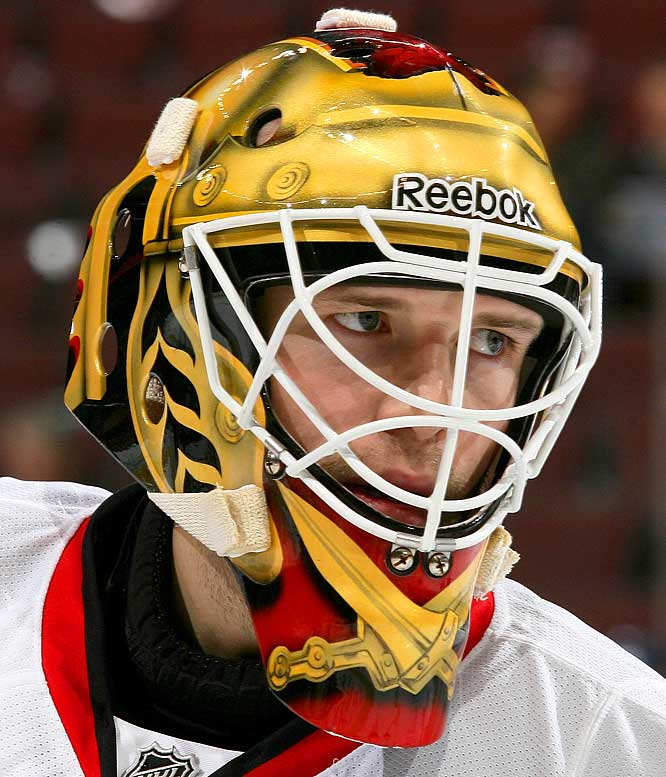
Robin Lehner’s mask looks like the face covering you’d wear to slay your enemies while driving through Valhalla on a motorcycle, blood running down your face.

140410152811-ottawa-senators-robin-lehner-single-image-cut

Ben Bishop wasn’t in Ottawa for very long, but long enough to become part of the fan base’s revisionist history and to personalize a mask. It’s an unremarkable black and white design but is notable for including the alternate side profile logo that’s an update of the original 2D logo. While ostensibly part of the team’s visual landscape since 2007, it’s rarely if ever used but appears on Bishop’s mask.

hi-res-7156292_crop_north

Finally, we come to Andrew Hammond’s Hamburglar mask. Along with Lalime’s mask, it’s the most iconic in team history. Featuring Alfred E. Newman in the Hamburglar’s costume, it’s noticeable, fun, and different. It also shows how a mask can help create a fan favourite. No doubt the strong play of Hammond during the streak was the most significant factor to him being embraced by the fan base. However, the mask and nickname led to burger tossing, much burger eating, and general revelry.

andrew-hammond-nhl-buffalo-sabres-ottawa-senators-850x560

At its most basic level, painted goalie masks are an expression of a goalie’s individuality. But they’re also an extension of team identity and can push, however subtly, boundaries of iconography, marketing, and codes of behaviour. A mask can be as forgettable as the player wearing it or help foster affection for the guy standing between the pipes. A mask can chart the visual and aesthetic history of a franchise and connect fans to that chronicle. A mask protects, creating an additional boundary between goalie and opposition. But it also connects fan to goalie, because the paint shows something of the person behind the cage.

Posted in Uncategorized | 1 Reply

Your Ottawa Senators…as Movies

A message from James:

Dear Reader, 

This summer I asked a WTYKY alumni and Hall of Famer to revive a post he did for our humble blog back in the day (Mom Slang for several years ago) where he compared our (mostly) BELOVED Ottawa Senators to popular movies. For those of you newish to our site his name is Pete. Despite his retirement from the glitz and glamour of a small market hockey team blog that actually loses money, he is still a MUST follow on twitter even though several of his jokes are 2 smart 4 me 2 understand. Find his criminally underfollowed account here. 
Get in there and become part of Pete’s Online Entourage early and often and one day when he’s throwing out the first puck at a Nepean Raiders Atom C House League tournament you can lean over to your friend B and be like, “B, I was THERE, I was on his wave before he was throwing out the first puck at his son’s house league tournament when he was just doin’ computer jokes. Also, B, when did they start ‘throwing out the first puck’ at these things?…Also, B…B! Are you listening to me? Yeah, do you think it’s weird that you and I are spending our Saturday watching an Atom C House League tournament at the Walter Baker Sports Centre when neither of us know any of these kids or their parents? We should be doing what REAL men do: Playing Call of Duty San Andreas on Xbox live getting called the N word by mega agro 14 year olds on our headsets. It’s our basic human right. That’s why our ancient ancestors gave The Kaiser what’s for back in the Great War.”   
……………..what in the Jesus Ekman-Christ was I on about? Oh yeah, Pete wrote a guest post, please enjoy it responsibly. 

TAKE IT AWAY PETE!: 

Hey Sens fans, it’s time once again to look at this year’s projected roster and their cinematic comparisons. Join me won’t you? We’ve got Mike Holmes and Jackie Chan, the man who invented the Muppets, fake French movies, fake English movies, Scientology jokes and John Lithgow. (Kisses tips of fingers) “mmm perfection!” (then screams at tips of fingers) “Let’s goooooo!”

Disclaimer: Amount of fact checking done for this post: zero to little

Zack Smith, Mika Zibanejad, Colin Greening, Alex Chiasson, Cody Ceci, Mark Borowiecki, Patrick Wiercioch – Toy Soldiers
I also would have accepted The Lost Boys or Boys on the Side. Screw it we could make up a movie for the group, call it “The Unpronouncables: Featuring Zack Smith”. Have a script on the hood of my car by Monday, I hear Shannon Tweed is already attached.

Mike Hoffman – Payback
Only Mel Gibson is super chill and not at all upset that the Sens owe him money. He’s just bummed you guys haven’t gotten a chance to toss his sweet new bee around before an extended super smash bros sesh.
Booster Juice flavour that encapsulates Mike’s arbitration saga: A cardboard cut-out of Jose Bautista that has a crudely made speech balloon saying employees must wash hands.

Curtis Lazar – House Guest
God please tell me Phillips calls his house guest Curtis Lazar “Blazer”. Remember Sinbad? That man could act, he starred in 2008’s classic “Cuttin Da Mustard” (a real, no foolin movie) He doesn’t just get work, dude is work!
Favourite board game at the Phillips house: Fireball Island

Jean Gabriel Pageau – Le Film Jambon
One of those French movies that is only funny to French people (even after translation) It’s like French cinematic culture is either overwrought emotionally void psychodramas or nonsensical romps where a crazy ass Quebequois family/hockey team/group of erotic book store employees embark on a journey of self discovery before one of them dies. (Who just googled “Le Film Jambon”?)

Clark Macarthur – Holmes on Homes
Seriously, dude has a super kind face and those sick mitts would look good peeling away rancid vinyl siding to reveal that your fly by night contractors forgot to erect walls for your carport (why did you let them put siding on your car port? You are dumb and should be shamed publicly on a tv show that secures funding from the federal government… but old Grizz has you covered)
My reaction upon learning Holmes on Homes is not a movie but in fact a TV show: “Drama is drama son”

Milan Michalek – Capital Gains: The Movie
According to IMDB there is no movie in existence called Capital Gains. So my hastily cobbled together film production company/team of immigration lawyers are set to begin pre-production on the story of a lazy headline writer attempting the longest con of them all… love? (in this case the love shared between a man and a headline)
Player who should take the Capital Gains headline with them when they retire: Milan Michalek, fortunately dude is never retiring and mobile web programmers couldn’t be happier.

Bobby Ryan – Cool Runnings
The Olympic underdog story that just wasn’t meant to be. I can see the scene now where Brian Burke explains to Bobby that’ll take more than belly fire to make the American Olympic hockey team – In all honesty I’ve never seen Cool Runnings and rather than guess I substitute scenes from Simpsons episodes instead.
Memorable Dialogue: Doug E. Doug plays a character named Sanka Coffie and no one questions which is the more remarkable name? (Sees you can check dialogue on IMDB… meh)

Kyle Turris – Titanic
Why did old ass Rose throw the heart of the ocean overboard? There’s a stack overflow post about this somewhere. Why do I feel like Kyle Turris’ fascinating chain holds magical powers? Can we give him the nickname “The Talisman”?
Achewood column that references Titanic and not much else: This one

Mark Stone – Marked for Death
Lotsa layers here so keep up here my babies, “Mark-ed” as in being targeted. Sorry I suppose I should be giving you guys more credit. Speaking of not giving the audience credit, I think my favorite part of Segal movies is where each character he plays has some weird backstory where the movie from that point forward unfurls as a redemption quest. He was a chef that played by his own rules… That is exactly the type of chef I want making me dinner, those are the best chefs! Anthony Bourdain didn’t get where he is today by not bending an attackers arm completely in the other direction with the sound of a chicken bone breaking added in post. But why redeem? In this new age of reason, why does a steely eyed martial arts master, part Inuit former navy seal turned sous-chef turned Jim Henson imagine-a-torium employee need redemption at all? It’s like if elaborate plot points subtly revealed that Jackie Chan has a fear of intimacy? No, he’s just Jackie Damn Chan. Humanizing Steven Segal is in no one’s best interest.
Memorable Line: After killing the bad guy and his twin: “I hope they weren’t triplets” Daaaaaaam Son!

Jared Cowen – Harry and Hendersons 
Oh, gentle wood ape. Only someone with Lithgow-ian level thetans can understand you. What are the chances the Sens just walk Jared to the back of Rexall place and tell him to go. If John Lithgow shows up on the dad’s trip pretending to be Ermangandillo Prince (Shane’s Dad, btw) you know it’s going down. Also if this year’s Dad’s trip includes a stop in Edmonton, well that just sucks.

Craig Anderson – The Hand that Rocks the Cradle
If he had hair he’d cut it like Andrew Hammond. “Hey guys you like the Hamburglar but are you ready for the Chicken Hawk?” (Grilled, not fried). That is much funnier if I don’t have to explain the reference so I won’t.

Andrew Hammond – The Holy Mountain
Hockey is a strange sport, if the molecular properties of water don’t allow for less density when solid as opposed to liquid and the friction caused by a steel blade doesn’t create a thin layer of liquid thus allowing for rapid movement. Then we wouldn’t have a seemingly career minor leaguer set a record for consecutive non losses and find the team owner a new liver (seriously try and convince me that run didn’t literally save Euge’s life) Oh the movie, right… watch the trailer for this absurd masterpiece that does an expert job of capturing the essential human emotions of “huh?” “wha?” and “ew”.

Chris Phillips – Horizon, Mystery of Easter Island
A documentary on Netflix about the Moai of Rapa Nui. (They’re not heads and it’s not Easter Island) This is almost too easy, giant heads, slow, mysterious and have given tons of money to CHEO (ok don’t want to totally dump on the guy since he’s a good dude and puts his name on pretty good beer.

Chris Neil & Mark Methot – A Night at the Roxbury
Oh you wouldn’t watch a buddy comedy starring these two? Like fun you won’t! Neiler’s muffler franchise is on the rocks if he doesn’t make it big as a sports agent he’ll lose the respect of his father (Carla’s skeevy ex from Cheers) but his pursuit of success blinds him to the fact that his brother Marc almost made the Canadian Olympic team once.

Erik Karlsson – Karate Kid
Karate Kid feels like the easiest movie to reboot for these modern, more socially inclusive times. Let me just say I wholly support the premise of a golden-haired Swedish Elven God finding himself tormented by bullies and pushed too far. A metaphor for the deconstruction of cultural stereotypes in martial arts movies our hero goes on to learn patience and discipline at the feet of a Master Russian Sensei G. (Sergei rhymes with Sensei, fwiw).
Memorable Dialogue: When Samuel L Jackson says “Hang on to your butts” in Jurassic Park (does it have to be from the same movie?).

The WTYKY Guide to Summer Cocktails

thumb

Here’s the thing about summer . . . it isn’t over yet. And when you think about fun summer moments, you usually picture a fun summery drink in your hand, don’t you? What with our western culture constantly emphasizing mindless drinking over genuine emotions and honest conversation? So let your friends at WTYKY help your summer go out with a bang – put down that stale Bud Light, drop that flask of Silent Sam, seal that jug of the blood of the unrighteous – by putting some Sens-themed jazz in your glass! Try our summer cocktails . . . with a twist! Get it?

The Colin Greening
2 oz gin
1 egg white
3 dashes orange bitters
½ oz simple syrup
½ oz lemon juice

Combine all ingredients over ice in a Boston shaker and shake vigorously for approximately five minutes, or until the egg white develops into a stiff foam. Strain into a highball glass, top with soda water and garnish with an orange wheel, then throw the drink away.

The Clarke MacArthur
2 oz Hpnotiq liqueur
1 oz dark spiced rum

Stir Hpnotiq with ice and strain into a martini glass. Note its bright blue colour with disgust. Slowly stir in dark rum until the drink takes on a reddish-black colour. Nod with approval. Garnish with a lime wedge and tell everyone how smart you are.

The Jared Cowen
1 lb mixed fruit (preferably sugary, e.g., apples, berries, melons, grapes)
1 oz champagne yeast

Mash all the fruit in a bucket and mix in the yeast. Leave under your basement stairs for at least six weeks before sampling. If mixture is foul and unpleasant, put it back and try it again the following year. Repeat annually until bucket is empty.

The Chris Phillips
1 caplet Robaxacet (Extra Strength)
1 oz Canadian whisky
1 pint Big Rig Gold

Drop the Robaxacet into a shot glass full of whisky and then drop the shot glass into the beer. Chug gingerly.

The Mike Hoffman
1 ½ oz premium tequila

Ask your bartender for a high-quality, aged tequila (it should say “extra anejo” on the bottle). Take a sip, then proclaim loudly that it’s too old and you’re not paying full price. Ask the bartender for a second drink and look confused when he says you won’t be able to afford it.

The Andrew Hammond
28 oz vodka (1 bottle)

This isn’t a cocktail but really more of a challenge. You’ll need 23 shot glasses and a few friends. Line up the shot glasses on the bar and fill each with vodka. Tell your friends you can consume at least 20. Ignore their doubts, drink rapidly, and feel awesome. Don’t worry about the hangover later.

The Bobby Ryan
2 oz grenadine
2 oz cream liqueur (e.g., RumChata)
2 oz blue curacao

Carefully pour ingredients into a chilled old fashioned glass in order, creating distinct red, white, and blue layers. Garnish with a small sparkler and American flag toothpick. Enjoy while trying not to think about your ex leaving you.

The Curtis Lazar
1 oz grenadine
½ oz lime juice
6 oz Sprite

Stir the grenadine and lime juice with ice in a Collins glass, then top with Sprite. Garnish with a maraschino cherry.

The Erik Karlsson
1 ½ oz gin
3 oz tonic water
1 slice cucumber

Say to yourself, wait a minute, isn’t this just a plain old gin and tonic? Then remember how much you always enjoy a really good gin and tonic, and how you underrate them only because they’re just consistently excellent. Resolve to make a gin and tonic so unique and so exceptional that it can’t be ignored. Resolve to make the Erik Karlsson of gin and tonics.

Sell your car and buy a ticket on the next flight to Stockholm. Get in an airport cab, hand the driver the rest of your money, and say, “Norr.” Watch him in the rear view mirror as he nods solemnly. Twelve hours later he will drop you at the side of an abandoned mining road, 25 miles north of the tree line, and utter his first and only words to you, “Du måste gå resten,” before turning around and driving away. Begin walking, until the road gives way to tundra, until the tundra turns to permafrost, and until the permafrost fades into ice. Build a fire with anything you can collect and fall into a shallow, dreamless sleep. When you awake, notice the robed and wizened man standing nearby, pointing silently toward the mountains. Climb. After several hours, when you are frostbitten and snowblind, you will see, on a distant peak, a small juniper bush growing impossibly out of the rock and snow. Collect its berries, then distill them with grain alcohol in an artisanal copper pot still.

Travel south until you reach a road, where the cab driver will be waiting for you. He will drive, wordlessly, back to the airport where he will hand you an envelope. Inside will be a one-way ticket to Bolivia. When you land, walk through the airport until a burlap sack is thrown over your head and you are hustled, at what feels like the point of a rifle, into the bed of a pickup truck. When you are unhooded hours later around a rebel campfire, earn the trust of your captors by telling the only Quechua joke you know and graciously chewing the coca leaves they offer. Trade your watch for a knife. When the military storms the camp that night, killing rebels all around you in a hail of gunfire, stagger into the darkness of the jungle with the only other survivor, a 15-year-old boy named Paucar. Realize he is bleeding badly from his leg. As he dies in your arms at sunrise, mop his brow while, with his final breath, he whispers directions to the nearest airstrip. Wander the jungle for hours, sobbing and chewing fistfuls of coca leaves. Just as delirium begins to set in, find yourself in a small grove, beams of sunlight breaking through the jungle canopy to illuminate a lone cinchona tree. Using your knife, strip its bark, then grind it into a fine powder to extract its quinine. Mix with artisanal sparkling water.

Find the airstrip and barter your knife for passage in the hold of a cargo plane. When you finally make your way home, write a best-selling account of your ordeal. Watch as publishers fight to give you a seven-figure advance for your second book. Buy your car back. One night on your book tour, at a bar in some dark, snowy city like Grand Forks, drink that fifth Scotch and soda and muster the courage to talk to the woman sitting next to you, silently nursing the same glass of white wine for three hours. Move too quickly. Buy a colonial farmhouse in Maine. Watch her start a mail-order heirloom seed company while you spend 12 hours a day in the attic, chain-smoking in front of an old Remington typewriter as you realize you have no new ideas for your second book. Frequently refer to the process as a “difficult birth” and laugh bitterly. When she comes upstairs one day and tells you not to worry so much, scream at her about who’s actually paying for those seed packets and throw your ashtray through the dormer window. Watch her leave through the hole in the glass. Do the Andrew Hammond by yourself, then crawl into bed and sleep for a week. Wake up and notice that all her things are gone, except for a small packet of non-GMO Longfellow organic cucumber seeds. Plant them behind the gazebo and start writing a novel about a man who comes to terms with his life and ultimately burns down a Maine colonial farmhouse. When you’re finished, harvest a single cucumber. Cut a ¼-inch slice using an artisanal paring knife.

Combine ingredients with ice in a tumbler and stir. Enjoy.

Posted in Uncategorized | 1 Reply

Whose Masculinity is this Anyway? Identity, Violence, and the Real Crisis in Hockey

(Content warning: post and links discuss harassment, assault, sexual assault, rape, racism, sexism, and homophobia)

Yesterday was both a blemish on major North American sports and an utterly predictable series of events. Within the span of about an hour Thursday morning, the Tampa Bay Buccaneers launched “an embarrassingly sexist” program aimed at helping female fans understand the complexity of football with tips about fashion and play clocks. The official Vanderbilt Football twitter account tweeted an offensive and ill-conceived promo for its program claiming, “We are RELENTLESS, TOUGH, AND INTELLIGENT, and WE DON’T NEED YOUR PERMISSION”. The sexual assault overtones are clear; they are made worse when the program’s recent history with sexual violence is known. At about the same time word broke of Chicago superstar Patrick Kane’s involvement in a rape investigation in New York.

There was appropriate concern and pushback against these developments online as well as predictable, disappointing, and harmful support for Kane and dismissal of the Bucs’ and Vanderbilt’s actions. Those content to bury their heads further in the sand sang the familiar and flawed refrain of “this is society’s problem”.

Conventions, rules, and pedagogy in sport did not develop in a vacuum. Rather, sporting traditions have always grown out of the values of and challenges faced by the cultures creating and codifying sports like football or hockey. Hockey is like the internet in that it reflects, not exists separately from, our culture. Consequently, it is the flimsiest of defenses that suggests “hockey doesn’t have a problem with violence against women, society does!”
No.

That’s incorrect.

Violence in sport is socially constructed.

Both hockey and the society which created it, and maintains the sport’s practices, have a serious problem with violence against women. To suggest otherwise is to blatantly ignore the reality that we are presented with on an almost daily basis.
As fans we have a tendency to want to limit the scope of hockey’s domestic violence and sexual assault problem. So we try to limit the discussion to player actions we deem criminal and ignore the everyday sexism we see in the game, in the way teams treat female fans and employees, and jokes on social media that fall flat. We eviscerate the Los Angeles Kings and Dean Lombardi for being terrible, which they are, and we take the Nashville Predators to task for being appalling, which they are, and we’ll add Chicago to the list now, but we will refuse to see this as a league-wide problem. We’ll ignore that it permeates various levels of the game and is endemic to the sport. It makes it easier to keep watching and talking hockey if every team, and by extension, fans, aren’t complicit. It makes it easier to root for your team when you only object to rape culture and violence against women when it’s a player from a rival team in the crosshairs. The team I cheer for is complicit and so is the team you cheer for. No team has a moral high ground here.

We’ll continue to take our cues from the commissioner who says hockey doesn’t need a comprehensive strategy for addressing and dealing with violence against women; that most in the sport are good guys who would never participate in such violent actions. We’ll cross our fingers and believe it, even with all the mounting evidence to the contrary.

Somewhat lost in the shuffle yesterday was another Canadian sports league taking action. The CFL released a comprehensive and victim-centred violence against women policy. Created in partnership with the Ending Violence Association of Canada the program doesn’t relegate victims to the sidelines which happens frequently in other leagues. It’s not perfect but it also illustrates that pro leagues can lead on this issue and change the cultures of their sports if they just make an effort. The more proactive a league is, the harder it becomes for its fans to deny the realities we keep seeing in the games we love.

There are many who want to stop these incidents. But the culture won’t change just by throwing the book at Slava Voynov, Mike Ribeiro, or Patrick Kane. The culture won’t change if we continue to refuse to centre the victim in discussions of violence and rape. The culture won’t change if we don’t take sports media to task for writing bullshit, reputation repairing pieces. So far, sports fans, and hockey fans in particular, have been unwilling to examine their own complicity in the culture of the game which permits such treatment of women. Further, we are collectively unwilling to look at the ways in which hockey itself promotes and relies on a masculinity rooted in rape culture.

Earlier this spring comedian Amy Schumer’s sketch “Football Night Lights” made waves and was widely celebrated not just for its stance on rape culture in sports but for clearly articulating the fictional community’s complicity in that culture and how football itself speaks the language of rape. The coach, played by Josh Charles, tells his team football isn’t about rape; rather that “It’s about violently dominating anyone that stands between you and what you want! You gotta get yourself into the mindset that you are gods, and you are entitled to this!” The message is clear: victory on the field requires both physical prowess and domination; players must force the opposition into submission. In this landscape, women are treated as trophies, the spoils of victory, and subject to a similar domination.

Yet there’s been a failure to apply what’s articulated in “Football Night Lights” to hockey. Hockey players are encouraged to play hard, dominate in the corners, and beat their opponents into submission. In hockey, players and teams are frequently reward for using violence during the course of a game. Typically mocked as simple sports clichés, we hear the language of domination from players, coaches, and analysts as well as read it in newspapers and blogs. We don’t bat an eye when this language crosses over into more explicitly sexual language. How often have you heard Jim Hughson or Gord Miller talk about penetration when describing a player like Kyle Turris or Henrik Sedin enter the opposing zone? Objections to this word and similar phrases in hockey are usually met with dismissal; “this is hockey,” the refrain goes, not sex or rape (the distinction between the two remains murky to many). To paraphrase Pitch Perfect, a zone entry is not a good enough reason to use the word penetrate. As hockey fans we’re aware of how suggestive the language of the game can be, but rather than question what’s at stake when using sexual language to describe a sporting event, we treat it as a joke and use hashtags like #hockeyporn to keep the laughs going. But we rarely reflect on the homophobic nature of the humour or how it naturalizes the pairing of violence and sex.

We talk about hockey this way and use such sexual language because of the type of masculinity we celebrate in the game. Hockey praises a masculinity that is still based on conservative notions of toughness and dependent on strength and aggression. The game’s ubiquity and popularity in Canada means it’s the dominant expression of masculinity in this country. It’s typified by people like Nick Kypreos and current players like Chris Neil, and celebrated by personalities like Don Cherry. Steeped in whiteness, it uses subtle, racially-motivated language to police behaviour and maintain the status quo. Players like Evander Kane, P.K. Subban, and Josh Ho Sang are considered controversial because they have “personality,” confidence,” and are “outspoken”; coded language highlighting how uncomfortable hockey’s traditional, white masculinity is with difference.

Hockey has a code which also maintains and rewards this kind of conventional tough masculinity. Hitting and fighting are acceptable performances of aggressive masculinity (despite the physical dangers and the fact that fighting is always penalized) while more benign transgressions, like diving (which generally injuries no one), are treated as stains on the game. Those who dive are described in feminized language as soft and delicate. European players are often described this way in contrast to the proper masculinity of celebrated Canadian boys who play the game the “right” way. I’ve always found the consternation surrounding diving in sports like hockey and soccer to be over the top, but that it’s characterized so vehemently as duplicitous is important. Cross-checking is cheating, hitting from behind is cheating, and sucker punching a player is cheating, yet diving, more than any other infraction in hockey, causes the toughness crowd to lose their composure. It’s because diving is seen as lying, cheating, and fraudulent and those who dive are feminized. Think about that. Think about the language used and the response from hockey fans when players embellish or are perceived as faking an injury to gain an advantage like a power play.

It can’t be surprising then, that the majority response to women who have been raped or physically abused by hockey players is to disbelieve and discredit victims, to slander and shame women. It’s the same language.

I’ve been thinking about my masculinity a lot lately. It’s a component of my trans identity and I can’t dismiss it simply because of the numerous examples of toxic masculinity around me. Yet I’m a product of a patriarchal society and I can see how a masculinity based in toughness is appealing. Following convention when it comes to identity can provide someone like me with security and safety and that’s desperately needed for trans lives. But for me, the cost of inclusion is simply too high, namely increased complicity in the toxic masculinity and rape culture of sports like hockey.

One of the things you become acutely aware of if you’re trans is how much of gender is performance. The same is true of masculinity. We often evaluate masculinity in terms of crisis and fragility. The emergence of organized and codified sports like hockey at the end of the 19th and start of the 20th centuries are sometimes discussed as a response to the feminization of men in the late Victorian period. Similarly, we talk about the fragility of modern masculinity in the face of the erosion of traditional gender roles and the loss of breadwinner status and therefore embrace contemporary examples of tough, aggressive masculinity, like hockey, football, and MMA. But the real crisis is not masculine identity but the violence against women which continues to plague the North American sports landscape.

I don’t see the panicked actions of a fragile identity. I see a deliberate digging in. It’s a limiting mindset for men and sidelines all who don’t fit this particular expression of identity. What I see in the masculinity typified by hockey, in its players and many of its supporters, is dangerous. It is a concerted effort to maintain the hierarchical power they have always enjoyed and abused. It extends to the stands and bars and pubs where fans watch this performance of tough, aggressive masculinity. It continues off ice for players and team personnel.

That women continue to bear the brunt of this assertion of power remains tragically predictable.

10 Years Later: Hossa for Heatley

This month marks the 10th anniversary of the Hossa-Heatley trade. While Yashin for Chara and the pick the Sens used to draft Jason Spezza will remain the greatest trade in team history, Hossa-Heatley is perhaps the most important, franchise defining move and subject to considerable revisionist history by Sens fans.

It’s not that people weren’t excited about the trade at the time, far from it. While a vocal minority panned the move, Heatley was young and exciting and certainly a big ticket winger on the same level as Hossa. Hossa was beloved in the capital, fans chanted his name after every goal. He was one of the team’s most exciting players and a big contributor during the 2003 playoff run to the Eastern Conference Finals. But the P.R. machine got to work quickly; conventional xenophobia emerged in reaction to the move – Hossa was a soft European who couldn’t handle the tough play of the NHL playoffs while Heatley was a gritty Canadian kid. It was easy to paint Hossa as greedy, the stereotype of the mercenary European player still fresh in the minds of Sens fans after several rounds of contract disputes with former captain Alexei Yashin.

Heatley didn’t exactly fit the gritty Canadian player mould either. He scored more from the hash marks than the crease, and came with his own considerable baggage. He had asked for a trade out of Atlanta earlier in the summer, troubled by his responsibility for an accident in September 2003, in which Heatley drove too fast, crashed his car, and his passenger and teammate Dan Snyder died as a result. But just as quickly as Hossa was painted as greedy, Heatley’s past was glossed over by many Sens fans. He was Ottawa’s first true Canadian star. Spezza would quickly join Heatley, but didn’t have a breakout season until paired with the winger, and Wade Redden, who would have his best season statistically in 2005-06, was overshadowed by Zdeno Chara. Ottawa’s best, Yashin, Alfredsson, and Hossa, were all Europeans who had strained and difficult contract disputes with the organization in the past. Players negotiating with the tools available to them has for a long time been characterized as greed by fans and media alike. If playing the game right means measuring a player’s toughness on the ice, then playing for the love of the game and eschewing monetary concerns is how to play it right off the ice in conventional Canadian hockey mythology. In contrast to Yashin, Alfie, and Hossa, Heatley had starred for Canada at the previous three World Championships as well as the World Cup in 2004 while recovering from serious knee and eye injuries. There was the prospect of cheering a Senator wearing the red maple leaf for Canada at the Olympics in 2006 with his arrival. He was also under contract for three more seasons. He was different in key ways that generated excitement and allowed fans to quickly move on from a summer of debating the merits of Hossa and the dollars he deserved.

Looking back, the money can’t be overlooked.

Hossa was frequently credited with being not only a great two-way player at the time of the deal, but Ottawa’s best player period. One of the top wingers in the league at the time, he matched the play of upper end comparables like Jarome Iginla and Vincent Lecavalier. The eventual deal the Sens and Hossa agreed to (3 years, $18 million) before reaching arbitration was fair in terms of his ability and what he was worth, but would prove difficult to accommodate in the new, salary cap world.

With the Senators hovering around the $31 million mark in salary and the newly instituted cap set at $39 million, Ottawa was right up against the upper limit with the Hossa deal. Had the case been decided in arbitration, the award could have been even higher and the team risked losing him as a UFA 12 months later. It wasn’t a salary considered in isolation either. Then Senators GM John Muckler had an eye on the following summer when star defensemen Wade Redden and Zdeno Chara could both walk as UFAs and winger Martin Havlat would need a new deal. The situation might have been even trickier had Sens captain Daniel Alfredsson not signed a 5-year deal after the 2003-04 season. Signed before the 2004-05 lockout, it was subject to a 25% rollback when play finally resumed the following season. After a lucrative $7.5 million signing bonus, Alfie was set to make just $4.66 million in 2005-06. Had Alfie signed another short term deal in 2004, he might have been deemed expendable in the post-lockout world as the Sens struggled to get both star wingers under contract. Had the Sens kept Hossa after signing him to that three year deal ten years ago, Alfie, signed long term and to an affordable deal for a star player, might have been appealing trade bait.

While the salary cap put teams on equal footing in terms of spending, it disproportionately affected good teams with young talent coming out of RFA years and moving toward UFA status. Teams like the Senators. Not only did the lockout wipe out a year of contracts for players like Hossa, it wiped out a year of RFA status, a year of team control. It was hard to plan long term with the looming lockout. While the league was pushing hard for a salary cap, what it would be set at was unknown and salary rollback wasn’t guaranteed. Further complicating the matter for the Sens was the team’s recent bankruptcy. Financial trouble had hounded the team since its early days and became acute in the years leading up to 2003. During the last few years of Rod Brydon’s ownership, the Sens often stuck to short term deals, affording the team financial flexibility in times of ownership and CBA instability. Simply put, it’s hard to lock up your young stars to affordable or near affordable deals when you can’t afford to pay them in the first place.

This trade has received a lot of retroactive criticism, but I wonder if it would be seen as a good bit of business, perhaps even prudent, if it was a move Bryan Murray had made this summer. I wonder how the move would be viewed today had it been made in the climate of analytics and a decade into the salary-cap era. At that point in their careers Hossa and Heatley were pretty close in terms of point production, but Hossa would have likely come out on top of the Corsi battle. Still, Heatley’s projected production at the time, in combination with the fact that Heatley’s cap hit was $1.5 million less than Hossa’s each season through the course of Hossa’s deal (which is the same amount the Sens saved on Hossa’s deal in real dollars each season by trading for Heatley), and some might conclude that Heatley might have been the better value in the restrictive early years of the cap system.

What pushes the deal over the top in the short term is that in addition to trading sniper-for-sniper, the Sens were able to offload Greg de Vries. The veteran defenseman was coming off a down year and was due to make $2.28 million in 2005-06 and was under contract until 2007. While that might not seem like a lot now, he was making more than every Senator not named Hossa, Alfredsson, Redden, Chara, or Havlat. In other words, he was making a lot for a defensive defenseman who failed to impress as a deadline pickup in 2003-04. With Hossa and de Vries in the lineup, it’s likely depth contributors like Chris Kelly and Christoph Schubert, as well as rookie standout Andrej Meszaros, would have been stuck in the AHL due to budget constraints/de Vries’ spot in the lineup. It’s always going to be difficult to give up a player of Hossa’s calibre, but to bring back a younger player with similar point production and strengthen your depth all while shedding salary isn’t a bad way to get out of bind.

If it’s hard to remember where the Sens were at in August 2005, those first two seasons with Heatley in the lineup seem equally distant. For all the longing for Hossa you hear now, things were considerably quieter when Heatley notched points in his first 22 games as a Senator (besting Hossa’s previous franchise mark by nine games), on the way to back-to-back 50 goal seasons and a trip to the Stanley Cup Final. While Hossa put up similar numbers in Atlanta, it’s not like the Senators missed out on a terrific trade return when he was shipped to Pittsburgh at the trade deadline in 2008. It’s possible Hossa wouldn’t have jumped around so much if his faith in the negotiating process hadn’t been shaken by the Senators, but it’s also clear he wanted to win a Cup. After falling short with Pittsburgh in 2008, he signed a lucrative one year deal in Detroit that didn’t work out and led to a mammoth 12 year/$63.3 million deal with Chicago in 2009. The Hossa everyone regrets missing out on is the elder statesman Hawks version, with three Cups to his name and part of a modern NHL dynasty. That’s fair, he’s been a big part of Chicago’s golden age. What it illustrates the most though is Hossa’s legacy in the NHL is defined by his time Chicago now, his Ottawa years more footnote than main story.

It was always going to be tough to sign and retain that early-to-mid 2000s core in Ottawa. A perfect storm of bankruptcy, maturing talent, and a new (and by today’s standards, restrictive) salary cap, was always going to leave at least a few players on the outside looking in. That Heatley didn’t have the longevity of Hossa is clear. That the Senators gave up the best player in the deal is also clear. What might have been a win in the short term has been a loss long term. But keeping Hossa would have also altered the story as well and the results likely wouldn’t have been the fairy tale ending he’s enjoying in Chicago.