Roundtable of Death: Duchurris Edition

matt-duchene-avalanche-ftr-090617-getty_rvs6aq7my4g81eqvpz7pr5iwm

As we all know by now, on Sunday night the Ottawa Senators completed a three-way trade with Nashville and Colorado. Kyle Turris ended up a Predator. Matt Duchene ended up a Senator. Three picks and three prospects ended up…an Avalanche? I’ve never thought about this before, but it’s weirdly hard to personify that team’s name. “I’m super happy to be…an Avalanche” doesn’t really work. You came here for the hard-hitting analysis. We’re bringing it.

Varada wrote:

Look, I like Turris a lot. I loved watching him play, and he’s had his share of big-game moments. He’ll be missed. But I’m shocked – SHOCKED – by the degree to which some are spinning this as a loss for Ottawa.

I think there’s a tendency to look at assets in a vacuum. How much is a first-rounder worth? Let’s give it a number. Then let’s add up all the numbers of all the assets and produce a score. Ottawa gave up four things and got one thing, so that’s a loss, etc. There are two issues here. The first is the way we routinely overvalue picks and prospects. The second is the way we ignore context.

There are some surprising parallels here with the Zibanejad-for-Brassard deal. They had a player due a contract whose market value would be multi-year – enough so to carry them into the middle of what would be Karlsson’s next contract. You can commit to that deal and then hope to hell you can get Karlsson done, or you can clear the decks for Karlsson and fill in other players around him. Having Duchene, Brassard, and Karlsson all up at once is helpful. They can fill around Karlsson or, if he leaves, they have the option to launch a rebuild.

With Turris, they could go into next year with Turris on a long and expensive deal, or go into next season without their top-line center and maybe get a 2nd rounder for him at the deadline instead. Neither of those is an enviable choice. So instead, they looked to include Turris with other assets to get a player who is at least as good, if not better, and in a league where it’s notoriously difficult to get a deal done, they pulled it off while dumping salary and without losing any of their best prospects. That’s commendable. To me, it’s hard not to see turning your 28-year-old center who’s not interested in re-signing into a 26-year-old center with arguably a higher ceiling as a win, and yet it seems hard for some to see it that way. Remember when we thought Noesen and Puempel were future cornerstones? I guess all I can say is that we’ll check in with Shane Bowers in a few years and see where this deal is at.

Honestly, I don’t understand the deal as much from Nashville’s perspective, and they’re receiving routine praise. They gave $36M and six years to Turris, a 2nd line center, and gave up two prospects and a pick in the process. They could have waited until the deadline, or even the UFA bidding period, when better centers like Tavares might be available, to fill that need. I know they went to the Finals and are trying to win now, but they’ve taken on possibly more risk than Ottawa here. They better hope that Turris can contribute at 34. As some have pointed out, they probably could have thrown in a 1st rounder and just gotten Duchene.

Colorado, meanwhile, receives a wing and a prayer. Girard could be something, but a 5-10, 160lb offensive defensemen doesn’t set my world on fire unless he turns out to be the second coming of Karlsson, who is a Magical Freak (and Mind Freak). A 1st that’s top-10 protected, two depth prospects, a couple of later picks AND they have to eat a $1.5M AHL goaltender who they don’t even want to come to Colorado, straight up lending him to the team they just acquired him from… It’s a deec return – six things for one thing is, by my math, definitely more things. But let’s not act like they got Chabot. They did not get Chabot.

Every team got what they’re looking for. Nobody got robbed. I know that makes it less interesting but, don’t worry: Bergevin will probably make another trade soon. Price straight up for Lundqvist?

James wrote:

It’s funny that after a year of “Announce Duchene” not-so-jokey jokes on The Sensphere, the day after one of the biggest blockbuster trades in recent franchise history goes down AND THEY ACTUALLY GET HIM the conversation seems to be mostly centered around Kyle Turris’ new contract with Nashville. Additionally, that it has a particular bent on speculation surrounding Dorion’s inability to reach a deal with number 7’s camp on an extension. It makes sense but frankly, I’m a bit shocked at the lack of “Holy fuck, Dorion just landed the most coveted player on the market!” Am I the only one who’s actually shocked this thing even happened? I would have thought the Habs tepid performance coupled with Marc Bergevin’s inability to be good at his job meant he was going to outbid everyone for Duchene out of sheer desperation. Dorion actually managed to pull it off and get us the new toy we all asked for on Annual Gift Day.

I mean, it’s understandable to react negatively given the full scope of the trade. No one wants to lose a beloved player even in the process of trading for a very good one. Still, in the melancholy haze of parting ways with a guy who made huge contributions to the culture on and off the ice [seriously do any Sens fans even dislike Turry? Your boi is LIKED], I hope Sens fans don’t lose sight that the Duchene trade has the potential to be one of pretty significant consequence. And I say that as someone who owns a Kyle Turris jersey! (Note: If you see me in my Turris jersey at CTC gone off my 5th shot of Ducce in the second intermission respect my agency and approach me like an ursine manimule).

K, here’s where shit’s about to get pizzadelic on that ass: You know what this trade reminds me of? Heatley for Hossa. Uh oh, I can actually feel every eye reading this watering up with blood of Mother Gaya, but hear me out. Those of us who were in our late 40s at the time of the Heatley for Hossa (RIP Gregg DeVry) swap can harken back to a time before Hossa was a Stanley Cup Champ and general playoff hero and Heatley was scoring machine with all the talent in the world desperately in need of a change of scenery. Back then I was bummed to lose Hossa’s reliable brand of hockey you can set your watch to, but that sadness was quickly overshadowed by the fact that a DEEC Sens team desperate to make some REAL-REAL noise in their window of goodness just picked up a player with a dynamism to his game (dynamism = insane shooting ability) that’s hard to come by. Sure Dany (sic) Heatley sells timeshares in Baden-Baden now but NO ONE missed Hossa when big homie was doing NUMBERS with Spezza and Alfie. The team with Heatley also got as deep into the postseason as our beloved team ever has. It wasn’t perfect but it was damn fun and great while it lasted.

Turris is one of my favorite players because he plays a game pretty much without flaw. He is extremely competent at nearly all aspect of the game. Shootouts, faceoffs, d zone exits, clutch play, consistent play. Like I said, I love him. The thing I can’t stop thinking about is how the Sens just upgraded their speed and scoring power at centre without surrendering their three blue chip prospects; Chabot, White n’ Brown. Sure they gave up some stuff. The promising Shane Bowers and a first and a third were surrendered but does anyone seriously think a deal like this goes down by trading away Andreas Englund and future considerations? With Duchene, I cant help but keep thinking about that dynamic element of his game. Even if Duchene turns out to be “extremely fast Kyle Turris” that…sounds amazing?

What I think I like most about this trade is that after a surprise run to the Conference Final last season it’s a bit of a “Fuck it, let’s get wild while the times is a-gettin’” move. I don’t know what the team is going to look like in future but honestly, when we have one of the best players on earth in his prime on the roster for a good price it’s probably time to do something bold like this.

Luke wrote:

Sorry for holding up this Roundtable guys, but it’s taken me a few days to separate what I think from what I feel. Acquiring an Olympic-calibre player for whom I have been very publicly clamouring at the cost of losing a near-legendary team fixture who is beloved by the community is some very Wishing-On-A-Monkey-Paw type shit. Add to this the unusually public nature of the trade negotiations and the fact that this deal went from dead to extremely alive over the span of about 48 hours, and one can see why it would take a minute to recover from the emotional whiplash.

That said, this trade has not been without foreshadowing. For one thing, Kyle Turris’s name had been floating around in trade rumours for a few months now (One rumour I heard was that Turris was all but on a plane to St. Louis before Robby Fabbri’s knee disintegrated), so we’ve all had some time to get used to The Idea of trading Kyle Turris. Additionally, Ottawa’s been connected to Matt Duchene for nearly two years. None of this came completely from left field. Yet, somehow when Ottawa traded the player they’d been quietly shopping for the player for whom they’d been publicly lusting, it felt like a shock. I think I know why this is: Bryan Murray never would have done it.

The Bryan was always fiercely loyal to His Guys, sometimes to the detriment of the organization’s long-term potential. Giving a declining Kyle Turris, a community pillar who is good on the ice but not elite, a 6+ year contract to keep him in Ottawa well into his mid-30s is exactly the sort of move no one would have blinked at three years ago. However, it is also the sort of move that would have done nothing to improve the team on the ice, and if there’s one thing we can say about Pierre Dorion, it’s that he’s always looking to improve his team.

I gotta say this for Pierre Dorion: every move he’s made has improved the team in the short term. Even a trade I hate, Burrows for Dahlen, immediately allowed Guy Boucher to ice a better lineup. It is virtually undisputed that Matt Duchene is an upgrade over Kyle Turris, so shout out to Pierre Dorion. He did it again; the Senators are better today than they were yesterday.

And now we must ask the question, that everyone else is trying to answer: Yes, the Senators are better today, but at what cost?

First off, I want to put a bracket around the Andrew Hammond + 3rd Round Pick part of the trade. As far as I’m concerned, Andrew Hammond was a salary dump, and the 3rd round pick was what it cost to make it happen1. This means that as far as Ottawa is concerned, the business end of this trade boils down to Turris + a 1st round pick + Shane Bowers for Matt Duchene. Advantages for Ottawa include Top 10 protection on the 1st round pick in case they accidentally win the draft lottery, and the fact Shane Bowers isn’t even the most hyped-up prospect Ottawa drafted this year. A charitable reading of this situation, therefore, is that Ottawa traded an expiring contract, a safe low ceiling prospect, and a pick they’d have used to draft a safe low ceiling prospect, for an immediate upgrade at 1C and an extra year of the 1C’s contract.

Just how big is that upgrade? Well, it’s hard to say. Many people have pointed out that over the past three years, Turris and Duchene have had nearly identical production on a per minute basis over the past three seasons. However, only one of those players have had to spend significant time on a line with Matt Nieto, Mikko Rantanen, Mikhail Grigorenko. If Duchene can find the sort of form that got him selected to Team Canada during a 70 point 2013-14 season, Ottawa will quickly forget the name of Shane Bowers and 2018 1st Round Pick. No doubt this is what Dorion and Boucher are hoping for.

Another question I have seen asked is “Why trade an expiring contract for a contract that’s going to expire next year?”. It is my contention that that Duchene’s contract that expires in 2019 is a feature, not a bug. Let’s take a look at CapFriendly. That sure is a lot of contracts expiring in 2019, isn’t it? If, theoretically, you had a player who you needed to sign at any price, wouldn’t it make sense to have a lot dollars available the year he was due to start a new contract?

Hmmm…Hmmmmmmmmm…..

source

Essentially, I believe that this season is a dress rehearsal for Ottawa’s 2018-19 season. As a team that is ostensibly not a Cap Team, Ottawa has to pick their spots. A 2018-19 season where they have Derick Brassard and Erik Karlsson on team friendly contracts, Colin White and Thomas Chabot on ELCs, Matt Duchene, Alex Burrows, and Ryan Dzingel on expiring deals, and Mike Hoffman, Mark Stone, Zack Smith, Bobby Ryan filling out the Top 9 is as close to Going For It as Ottawa can possibly get. Acquiring Matt Duchene is a sure sign that the Senators consider their window open. By getting at least two years of Matt Duchene instead of seven of Kyle Turris, the Senators have improved their short-term prospects while simultaneously maintaining their long-term financial flexibility and ability to keep Erik Karlsson in the organization.

One Closing Thought: I think some people may be upset that Ottawa was so willing to part ways with Kyle Turris, and the fact that a 6 year contract was never proposed by either side may indicate that neither Dorion or Turris were serious about getting a deal done at any cost. However, the opportunity cost of signing Kyle Turris is not signing Matt Duchene. Many highly sought after UFAs stay with the organizations they were just with. Every off-season there are just as many Joe Thorntons and Steven Stamkoses as Patrick Marleaus and Kevin Shattenkirks. If Ottawa can have success over the next 20 months, don’t sleep on Dorion’s ability to get a deal done that could keep Duchene here long term. At worst the acquisition of Matt Duchene pushes Ottawa’s Cup Window open just a little more, but at best it’s a move that will positively shape the franchise for years to come.

1. It’s been amazing to me listening to the media talk about the possibility of Sakic flipping Hammond for more assets, as if Ottawa hasn’t been trying to do that themselves for the better part of a year. Maybe he’ll be able to pull it off, but I doubt it. Either way, it’s not our problem anymore so who cares? *puts finger up to ear piece* Wait, Andrew Hammond is still in Belleville? Well, I guess it is still our problem! In that case, good luck in future endeavors Joe Sakic and, by extension, Andrew Hammond.

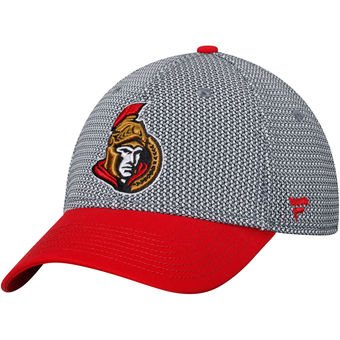
The Unforgivable Atrocity That is Your Official Ottawa Senators Hats

The “Where There Was Only One Set of Footprints”:

1

Luke’s Review: First of all, this hat’s curve is definitely illegal. Secondly, the main thing I want to say about that Lifetouch School Portrait lookin’ ass faded NHL logo in the background of the hat’s front panels, is that if I ever have to use the phrase “the background of the hat’s front panels”, you fucked up your conceptual design. It’s a hat; you’re not Vermeer reinventing the principles of composition.

Varada’s Review: You know what I like about sports? The reminder that my favorite team amounts to a premium mediocre franchise opportunity for shitty billionaires. I wonder why there are so few six-year-olds who ask for merchandise with the league logo on it for Xmas?

Chet’s Review: You guys are clearly too cynical for astrology but I’ll just point out that when the Sens logo transits across the NHL’s every 12 years or so, as this hat illustrates, it’s a good time to evaluate your life and take the leap on some major changes. I feel like that’s what the wearer of this hat is going to do when he comes to.

The Montage:

IMG_1449_clipped_rev_1_large

Luke’s Review: Look at this monochromatic disaster. It looks like something that was created as part of a movie tie-in for Fantastic Four: Rise of the Silver Surfer. Also, the only thing worse than the 3D centurion logo is the second, much larger 3D centurion logo made of heat transfer vinyl that will definitely start flaking off roughly 7 nanoseconds after it leaves the Sens Store.

Varada’s Review: This hat looks like it should appear in an in memoriam reel during the Oscars.

Chet’s Review: *yelling at ice lasers* FOCUS

The Jammies:

1615509_GS_Snapback_44.99_large

Luke’s Review: This hat looks like it’s worn by children whose parents keep them on a leash when they’re at the mall.

Varada’s Review: Is this hat wearing pants? Is a person wearing a hat with pants excused from wearing human pants?

Chet’s Review: Party in the front, business in the back, logo we don’t really use anymore in the middle. Is this whole exercise just rating hats the Sens are trying to clear out before next year, when they have to be packaged up with those Dodgers and Falcons championship t-shirts and sent to a country where they don’t really care who won your league’s title because they’re too busy establishing democratic government? Cool, cool.

1515604_29.99_OTH_Spokes_OSFA_large

Luke’s Review: Pinstripes are a classic design element, but not so classic that they can’t be ruined by a logo made of granite countertop samples and superfluous red trim. The pinstripes are Ewan MacGregor and this hat is the Star Wars prequels.

Varada’s Review: All I can think of when I look at this is “Hello my baby / hello my honey / hello my rag-time gaaaaaaaal.”

Chet’s Review: This hat looks like Babe Ruth’s underpants.

The Canada’s Aging Fleet of Aircraft:

11

Luke’s Review: “You’re wearing a hat? I don’t see it! All I see is the Sens logo floating in the middle of your forehead! No seriously, where’s the hat?”

Varada’s Review: Putting your corporate team logo on the front and the flag on the side on a hat marketed to patriotic people seems ill-conceived.

The Craig Anderson:

10

Luke’s Review: This hat is actually kinda cool if you think looking like you’re re-entering the Earth’s atmosphere face first is kinda cool.

Varada’s Review: Even the logo on the front looks sort of miffed to be included in what amounts to a toddler’s idea of what looks cool.

Chet’s Review: These are speed holes. They make the hat go faster.

The 3D Magic Eye Poster:

9

Luke’s Review: There is not a single design element of this hat that isn’t completely hideous. This is the Sens hat we’ll all be wearing in the future when we’re living in a fascist police state.

Varada’s Review: You remember when DC killed Superman, and they brought back some other Supermen, one of which…WAS METAL? And his name was STEEL? No, I don’t remember that either. Never mind. Carry on.

The THX Surround Sound:

8

Luke’s Review: How many times are we going to fuck up a hat by cramming in too many (i.e. more than one) design elements? You can design a hat that says “OTTAWA SENATORS” or you can design a hat that has a big ol’ O logo on it, but under no circumstances should you just paste the O logo on OTTAWA SENATORS text because if you do this, you’ll have a hat that says OTTA=0=TORS. This hat is like putting peanut butter on smoked salmon.

Varada’s Review: If you showed somebody this design on a computer screen, and they didn’t know what the Ottawa Senators were, they would have questions. So how did this get from a computer screen and into production? Wait a minute…do the designers of these hats own computers?

Chet’s Review: When you want to hit the club but bring your screensaver with you.

The Eye of Agamotto:

7

Luke’s Review: Glow-in-the-Dark Mini Putt lookin’ ass hat.

Varada’s Review: Predator-vision lookin’ ass hat.

Chet’s Review: Your Char Broil InfraRed GrillZone (TM) is ready to incinerate your steak lookin’ ass hat.

The Discount Upholstery:

6

Luke’s Review: Official Hat of Dads Who Have To Wear The Stuff Their Kids “Bought” Them On Father’s Day.

Varada’s Review: I’m just curious to know what’s on the side. If the front is this shameful, then I need to know what they’re so ashamed of that they won’t even show it.

Chet’s Review: Is this hat… medical? Is this a… medical hat?

The Eric Gryba:

5

Luke’s Review: Sometimes I look at a hat and think, “Who is this for?” I know who this hat is for. This hat is for Eric Gryba. 6 out of 10.

Varada’s Review: The people who wear this hat who wish they were in the military could hang out with the people who wear that military hat from earlier, who also wish they were in the military, and they could talk about how Trudeau wants to tax cell phones or whatever conspiracy theory the Rebel sold them this week.

Chet’s Review: At least this is a full camo hat. This is the hat you wear when you need to go undetected, like when you’re skulking up to the window of your own house to see your partner enjoying a crisp glass of chardonnay with someone in a cooler hat.

The Medieval Times:

4

Luke’s Review: This is the only hat on this list that I find physically painful to look at. This looks like something a trust fund baby would wear on a golf course before driving home drunk.

Varada’s Review: While this hat is extremely ugly, it gets points for being very good for straining pasta.

Chet’s Review: This hat is like you’re at the cottage, trying to point the rabbit ears on a 1980s Zenith TV, and you hit just the right angle for a second and, through the static, you catch the faint sound of… danger flutes. But that scenario is still cooler than this hat, even though in both you’re completely drunk.

The Gas Station Knock-Off, But, Like, It’s Real:

3

Luke’s Review: “What if the 2001 MTV Video Music Awards were a Sens hat?”

Varada’s Review: As with almost all of these hats, you could imagine this approaching acceptability and then they just fucking ruin it. Greyscale hat with black brim? Ok. White logo with red outline. Fucking pushing it, but fine. DIAGONAL LOWERCASE ‘SENATORS’ IN A FONT IN WHICH THAT WORD HAS NEVER APPEARED ON A SURFACE THAT NEVER DISPLAYS TYPE??? This is like making an intricate meal and then, because you can’t just leave well enough alone, you add one last dash of paprika and all you taste is paprika.

Chet’s Review: Whenever Senators isn’t on screen, all the other characters should be asking, “Where’s Senators?”

The Gladiator Who is Worried About His Finances:

2

Luke’s Review: This hat is nearly good, but for some reason the role of 3D Centurion Logo is being played by Fred Armisen.

Varada’s Review: That they didn’t fuck up the brim or cap and I still wouldn’t wear the logo of my favorite team really draws attention to the fact that the Sens have one of the worst logos in the NHL.

Chet’s Review: This is like if a hat was your dad watching you change a tire.

The Actually Only Good One of the Lot and It’s Sold Out:

1615503_GS_Sniper_44.99_large

Luke’s Review: Classic logo on a plain background. The tuxedo of Sens hats, if Tapout made tuxedos.

Varada’s Review: “Gongshow” bwahahahaha

Conclusion: It’s a bad sign when all of your team’s official headgear is getting  aesthetically dunked on by blogger merchandise.

WTYKY Podcast, Episode 4: “Man, You’re Asking the Wrong Guy” *sound of beer opening*

podcast image

In this latest episode of an Ottawa Senators podcast, Varada and James discuss the Montreal Canadiens, Edmonton Oilers, and New York Rangers. (Oh, also Ottawa’s weird 5-2-5 record and how much Cody Ceci sucks.)

All music by Don Caballero.

Download on iTunes

WTYKY podcast, episode three – “it’s friggin sports, man”

podcast image

Recorded following Ottawa’s killer 6-0 win over Calgary and before their killer 6-1 win over Edmonton, James and Varada talk about the Sens’ early-season success, Calgary getting gassed-up by critics, Turris’ next contract and, weirdly, Buffalo.

Music: Akron/Family, Ava Luna, Beach Fossils, Black Lips, Boyhood.


Listen on iTunes

It’s Time for the NHL’s Apoliticism to End

Throughout my time as a sports fan, I’ve managed to compartmentalize hockey and politics. I’m not an apolitical person. I have opinions. I vote. I volunteer for a political party. I donate to causes. And up until recently, I’ve been able to maintain the illusion of hockey as a closed system.

Two teams comprised of players of varying skill take part in a game contained within static rules and yet affected by haphazard degrees of chance. Anything can happen, and yet the outcome is rarely in dispute. A bouncing puck can make the difference between immortality and becoming a footnote in the history books, and yet the score, when all is said in done, is unchangeable, objective, statistical fact. The political and economic conditions at the time are beside of the point.

This sentiment has become irreconcilable with reality in the age of 45, He Whose Name Will Not Appear On This Blog. Reality demands that we not retreat into fantasy. This presents a problem for hockey, whose featureless visage promises uncomplicated enjoyment, a workmanlike disinterest in activism.

In other words, hockey is a kind of reality television show. The biographical details of players and their long road to the NHL are subsumed into the primal story of apolitical competition. The Cup is a largely arbitrary award handed out to the team that was both good and lucky. Hockey games – especially in the age of parity – emphasize the drama of what’s happening right in front of you, not the world at large or of history.

But now that there’s a reality television star in the White House, everything feels at the same time deeply meaningful and meaningless. The boundaries between our compartmentalized politics and entertainment are breaking down. Hockey, which is good at making meaningless, arbitrary competition feel meaningful, should know how to operate in this space. It should, in other words, know how to roll with it. Instead, it’s fumbled its way through the last week. It’s insisted that hockey is never about politics, and in so doing has emphasized the part of its personality that is stodgy, traditionalist, and anachronistic.

Of course, hockey has never been truly apolitical. The You Can Play campaign attempts to reduce homophobia in hockey. The dispute over public financing of arenas has cropped up again in Calgary. A number of NHL players have been accused of sexual harassment and assault of women. Don Cherry used Coach’s Corner for years to espouse conservative perspectives, often lightly tinged with xenophobia. As in all things, we see both the machinations of money, power, and marginalization and the need to identify those machinations using political speech.

And yet the NHL seems to insist that one can simply choose to be apolitical. Beyond its players’ involvement in charitable foundations and projects for causes already enjoying broad support, the culture of hockey seems to emphasize the cohesion of the unit and almost militaristic deference to Team. Hockey, one might argue, requires a greater degree of serene coordination than baseball or basketball. Its players are either not allowed or have never been encouraged to publicly express opinions about important causes for fear of disrupting team harmony. Maybe they don’t have opinions.

This kind of featureless, apolitical vessel for hockey itself is no better personified than by Pittsburgh Penguins captain Sidney Crosby, a player whose talent relative to hockey makes him the sport’s LeBron James but without any of the personality. This profile of Crosby describes a person whose life is defined by his utter dedication to playing hockey. He goes home to Nova Scotia in the off-season. He watches sports. He spends his free time getting kids into sports. He took a college course about World War II but found there was too much writing. He hangs out with his parents. He works out. He practices. In this way, Sidney Crosby maintains hockey’s preference for stolid obedience, a kind of ‘aw shucks’ blue collar sensibility that insists on remaining, as Crosby repeatedly puts it, “grounded.”

But the past year has destabilized the apoliticism that hockey players enjoy, and even a 10+-year veteran like Crosby looked uncomfortable. The league was broadly exposed to criticism this last week as the defending champion Penguins visited the White House amid an ongoing dispute between 45 and African-American NFL and NBA athletes. Crosby was exposed to questions of whether his team’s attendance at a White House ceremony was a tacit endorsement of the administration’s highly divisive attitudes and policies. Crosby’s statement served to extend rather than resolve that debate:

“From my side of things, there’s absolutely no politics involved” […] I can’t speak for everyone else, I just grew up under the assumption that that wasn’t something really bred into sports (and) different things,” said Crosby, a native of Nova Scotia, Canada. “Everyone’s got their own view. That’s how I kind of grew up playing hockey. I wasn’t surrounded by that or didn’t have any examples, so I kind of understood it and stayed out of it.”

Many hockey journalists were satisfied with Crosby’s assertion, allowing us as it does to return to the status quo of a new season getting underway. It’s telling, also, that the Sportsnet article from which this quote is pulled made a point of pointing out that Crosby is from Nova Scotia as if to say “why should he have opinions about American politics? What’s happening is happening down there.”

Others, however, found Crosby’s quote a fitting example of white privilege, that to assert that something is apolitical is to describe’s one’s luxury not to have to think about politics. This, despite Crosby’s hometown of Cole Harbour experiencing race riots in 1989. (These were referenced in the 2015 film Across the Line, about a black hockey player in Nova Scotia.)

I admit to thinking that it’s unrealistic to expect Sidney Crosby to do much more than try to win hockey games when he’s clearly been socialized to only care about winning hockey games. But that he can be both the spokesperson for a professional sports league in the process of a White House visit and be completely bereft of opinions about a racially-charged dispute between professional athletes and the President is weird and alienating and maybe says something about this sport we love. Sidney Crosby doesn’t need to be all things to all people, but his behavior was a reminder that some hockey players are disinterested, privileged white men unmotivated by anything other than hockey. For some fans, that will be enough. For others, it’s not anymore.

Would it have been difficult for the NHL to spend some time covering politically-involved players and charitable activities in the run-up to the White House visit? I suspect it would have. That’s because, for the NHL, it would have been unprecedented to feature that as a characteristic of the league.

In this way, the NHL might learn from the NBA, who’s getting better at allowing players, coaches, owners, general managers and the journalists who cover them to both have an opinion and be able to play the game they love – at the same time! It’s difficult to imagine a hockey coach feeling comfortable holding forth with political opinions the way, say, Gregg Popovich does. It’s difficult to imagine a respected hockey journalist offering an opinion on race. My Twitter feed is a surreal mix of 45-induced protest and hockey commentary. The hockey commentary often feels strangely untouched by politics. That’s because there’s a perception in hockey that that’s not our thing.

Ultimately, the measure of the league’s maturity is not whether it goes from quiet conservatism to vocal progressivism, but whether it’s confident that it can tolerate and survive the expression of a diversity of ideas. It’s time for the NHL to grow from a league of boys who either aren’t allowed or are unwilling to speak to a league of men with the courage and interest in joining the world. If it doesn’t, fans will begin to see hockey the way hockey sees itself: as featureless escapism.

The WTYKY Podcast Returns: MacArthur, Training Camp, and Salt

ultralargepodcastimage

James and Varada return at long last to discuss what it’s like to be a hockey fan in California; the life and times of the soon-to-be best landscaping boss in Canada, Clarke MacArthur; the wide array of quality salts on offer from Draglam Salts; how when you look at our expectations of Curtis Lazar, Colin White is probably fucked; and weird Vegas odds.

Music: the Oxes “Half Half Half,” Pumice “Eye Bath”, Quest for Fire “I’ve Been Trying to Leave,” Oval “Ah!”

The Romantic Allure of Fatalism

By all accounts, the Ottawa Senators have had a pretty nondescript off-season. After making it within a double-overtime goal of the Stanley Cup Final, General Manager Pierre Dorion has occupied himself with the relatively routine tasks of bringing back restricted free agents and replacing depth players. He re-signed his backup goaltender, Mike Condon, to a three-year, $2.4 million AV deal. Nate Thompson, an unheralded depth centerman with a history playing for coach Guy Boucher, received two years and $1.65 million AV. Tom Pyatt, another Boucher favorite, is back for two years and $1.1 million AV. Jean-Gabriel Pageau, the homegrown talent and playoff hero, received a big raise, going from $900,000 AV to $3.1 million. [Edit: this originally read $600,000, which was the contract beforehand. Thanks for the correction, readers.] Dorion stayed away from the unrestricted free agent market, as small budget teams often do, knowing that they’d have to overpay. His big splash came last season in the run-up to the trade deadline, when Dorion traded prospect Jonathan Dahlen for a veteran in Alex Burrows, then promptly extended Burrows for two years and $2.5 million AV in a move that was roundly roasted as not just short-sighted, but emblematic of all of the ways the Ottawa Senators cannot get past their short-sightedness.

If you’re not an Ottawa Senators fan, these moves barely warrant clicking on a link: a team that was competitive in the context of one season and having received favorable match-ups did what it could to ensure that next year it will head into the season with the same lineup. Some marginal players were allowed to walk. Other marginal players came in. The most contentious of these moves – the Burrows deal – is a textbook example of what teams usually do heading into the playoffs, which is to mortgage some of the future to shore-up their chances in the present. Some players were given a little bit too much money, but not nearly the sort of overpayment we see with premier free agents. The Ottawa Senators’ recent management philosophy has been, in other words, the definition of a non-story.

And yet, to see the reaction among some of the team’s more engaged fans is to see in these routine moves confirmation of long-held beliefs that the team’s decision-making is fatally flawed. To be sure, each move is worthy of examination, and one can and should wonder how players who don’t seem to be in demand anywhere else, like Nate Thompson, can command a second year and $1.65 million instead of $1 million, or $1.25 million or even $1.6 million. These numbers tell none of their story, leaving the minutia of negotiation obscured, and so lead fans to fill in the blanks themselves. The only reason this player should command so much must be that the General Manager doesn’t have any idea what he’s doing.

Maybe he doesn’t! I don’t claim to have any more access to these discussions than anyone else. It’s entirely possible that Dorion and Boucher identified somebody they badly wanted and that player, not really caring if he ended up in Ottawa one way or another, turned Ottawa’s preference into leverage and an extra year on his deal. Far from this being portrayed as the most routine of occurrences in a league where the average salary in 2016 was $2.9 million, it was, instead, another nail in the coffin.

What I’m interested in here is how the routine becomes narrative, and how narrative bends negative. Because, on the surface of it, the despair seems disproportionate to the moves in question.

I want to distinguish here between ‘negative’ and ‘critical.’ Critical means assessing a situation to describe its causes and significance. There’s undeniable value (and fun) in trying to understand the motivations of managers and players in a system that remains largely closed to fans. Being negative, on the other hand, is to emphasize those less-than-ideal occurrences, be it through volume or frequency, and to amplify the significance of mistakes. And so it is that Nate Thomspon, depth forward who probably should have signed for one year and $1 million but who signed for two and $1.65 million, becomes emblematic of the Ottawa Senator’s inability to assess talent.

I think that what I’ve come to realize is that there’s a certain romanticism in being doomed. Baseball does this better than anyone – think about the Mets or the Cubs, with their decades-long struggles, or the Curse of the Bambino, which offered with each passing season the tantalizing possibility of an end. There’s a currency to being “most cursed.” Think of being number one on this list and then Lebron bringing home a Championship. Surely that’s more meaningful than being, say, Golden State.

To think of oneself as uniquely cursed is to make a win not just the outcome of smart asset management, but kismet, serendipity, divine intervention. It’s to single oneself out as somehow, mysteriously chosen – if I’m chosen to suffer uniquely, so too will I be chosen to win uniquely, to win in a bigger, stronger, more authentic way. Being cursed breeds an us-against-the-world mentality; to like a team that is cursed is to exempt oneself from the need to prove one’s bona fides. Being a fan of a systematically inept team makes one a truer fan than fans whose favorite player might be three-time-Stanley-Cup-and-every-other-award-winner Sidney Crosby and his perennial competitor Penguins. What would be more meaningful: if the Penguins three-peat next season – a truly momentous achievement in the modern era – or the Sabres bringing a Championship to Buffalo through sheer chance. It’s debatable.

There is a certain charm to being the underdog. Ottawa, with its pretty bad uniforms and historically awful early years and inability to get past the big-city rival in the playoffs, somehow feels doomed to irrelevance even when you consider that Ottawa is the only Canadian franchise to have made the Conference Finals three times in the last 20 years. (A somewhat arbitrary measuring stick for success, but still impressive when you consider how much money the Torontos and Montreals of the world throw around.) An integral part of Ottawa’s identity is that it is a second choice to better-funded original six franchises, just as the sleepy town itself is located roughly between each of those cities.

At times I’ve struggled to understand why the thinking of some fans will skew so immediately to the negative. Pageau is one of the most beloved roster players on the team, and his re-signing for three years could not prevent some from tweeting, as their first reaction, that his salary was higher than expected. I think what I’m coming around to is that to find the negative first is to make claim on a thing as one’s own: if I declare this thing bad, I declare my fandom of this thing real and true. I must be a real fan; only a real fan would love a team who can’t do a single thing right. So I’m going to make sure that every single thing they do is portrayed as wrong.

I can often be found on Twitter myself, lamenting the seeming inability of a small facet of the fan base to get past the fact that Ottawa, despite adhering to a strict internal budget, has made the occasional mistake of overpaying a player. But it occurs to me that in beating that horse again and again, I’m missing something essential about being a sports fan. Even if Ottawa made fewer mistakes, there would be those who would find in what mistakes remained as much evidence as they needed of the team being idiosyncratically dysfunctional. The idea of the “long-suffering” fan base is in many ways a fiction, but a foundational one when we consider how arbitrary this hobby happens to be. “We suck” is as close as many sports fans get to letting their freak flag fly.

In the future, I’ll try to apply that lens more often when I encounter negativity. Maybe what’s being said is not, “You’re wrong to enjoy this thing,” but “This thing is ours.” I can dig it.

Living in the Age of Anything Can Happen


We’ve Created a Narrative Box, But it’s Just a Box

One benefit of following and rooting for any particular sports team is that success is a matter of objectively quantifiable fact. Sure, you can quibble about the way points are allocated, or suggest that those points are an inaccurate reflection of the true quality of a team – and you’d be right. But with the agreed-upon calculus of points being assigned to teams on the basis of wins resulting in a hierarchy we call ‘standings,’ there can be no doubt about who is ahead.

Knowing who is ahead creates a singular objective, fed by two, binary narratives that are the twin, propulsive forces behind most hockey writing: generally speaking, either you want to get the most wins, which will award you a championship, or you want the fewest wins, which will award you a high draft pick, which you might be able to use to draft a star, which will contribute to the accumulation of wins at a later date.

In other words, you’re either competing, or you’re rebuilding. This is an easy narrative to understand.

Though the strategy to accomplish either of these tasks can differ, the narrative of the competitive window v. the incremental rebuild remains pretty static, and it’s against this static, linear conception of success that we, fans and writers of hockey, project our expectations thusly: a team gets about 3-4 years of rebuilding before they’re expected to make the playoffs. Then 1-2 years of increasing success in the playoffs before they’re expected to compete for a championship. Then 2-3 years during which their window to win a championship is open. After that, the team is likely top-heavy with big contracts and 30+-year old players, the farm team is starved for good prospects, and it’s time to start selling off. At this point, a baboon lifts a baby lion cub up to the sun and Elton John provides us all with perspective.

Though there are myriad examples of teams not adhering to this tidy, linear map of what success should look like, it’s the Ur language of hockey journalism. Even those who want to be controversial will make statements relative to this easily understandable norm.

I say all of this in order to explain why the Ottawa Senators’ financial situation, and thus placement outside of the binary, has been so disruptive for fans and writers alike. Ottawa Senators owner Eugene Melnyk has enough money to own and operate a hockey team, but not enough liquid cash on hand to spend on salaries or front-office staff to contend, or to sustain a multi-year rebuild without playoff revenue. Melnyk makes the Senators’ adherence to the Ur narrative impossible. But it also doesn’t make sense for Melnyk to sell, as the franchise continues to accumulate underlying value and the team is due to relocate downtown in the coming years. So here we are, in narrative purgatory.

One wrinkle: the team is having a successful season. A few savvy contracts to players like Kyle Turris, Mike Hoffman, Mark Stone, Clarke MacArthur, Craig Anderson and, oh yes, the greatest player of his generation Erik Karlsson, has led to the team being competitive for a playoff spot despite these disadvantages, and now here we are in the Eastern Conference Finals, playing the defending champs and Exemplar of The Traditional Rebuild, the Penguins.

If the team was unsuccessful, it would be easier to write about them. At least then they would receive a higher draft pick and to some small degree be rebuilding, even if it would be despite themselves. This is what leads to such hot takes as “this current run of success is only leading to the Senators worsening their draft position,” as if there’s no enjoyment to be gleaned from watching one’s team make a deep run into the playoffs, or hoping for the unlikely to come true. For some, the narrative of “win it all” or “rebuild to win” is bigger than the game right in front of them.

It’s not uncommon to find fans and journalists alike bemoaning the team’s lack of a plan. But what we say when we say, “There is no plan” is that we’re unable to discern the direction of the Ottawa Senators on the spectrum of our dominant narrative of What Hockey Teams Do. And that leaves fans and journalists alike casting about for ways to talk about the team, with no easily accessible point at which to say, This is where I believe the team is relative to expectations. Silver Sevens had a nice piece about how few articles were written about the Sens this year, with many blogs, including this one (and me in particular) going dark for long stretches of time. This isn’t for lack of interest. We all still like hockey. But we’re having to learn new ways to talk about hockey.

People want, first and foremost, a story. This is us – the city, the player, the hero – and this is what we want to accomplish – to get better, to go further, to win. We can get together and drink beer and hope for the puck to go in the net, but the binary of compete/rebuild is the answer to the question What does the puck in the net mean? Not being a part of that binary means asking ourselves the scary question, What if this success doesn’t mean anything?

Becoming Ethnographers of Hockey

Though Melnyk’s financial situation denies us the easy narrative framework of compete/rebuild, we can also acknowledge that that binary is only one framework through which to view the progress of a hockey team. Of course, hockey means what we decide it means. We, as fans, can socially construct any narrative we like and assign it value. We don’t need mainstream media, the league, or marketing to do it for us.

There are so many other ways we could be talking about this Senators season, from the personal – what does this season mean to you, the reader or writer, and your family? – to the big-picture – what does this season mean in the context of the franchise, your community, the city, the country?

We could be writing about the individual events of each games. We could be telling the stories of the Clarke MacArthurs and the Craig Andersons and even the poor Chris Neils, he of 1000 games, the longest-serving veteran on the team and an anachronism, healthy and ready to play and never asked, the last man standing from those regular season juggernauts of the mid-aughts. We could be talking to other fans, and telling their story. We could challenge ourselves to find interesting and creative ways to describe what it means to be a hockey fan. We don’t have to restrict ourselves to previews, reviews, and letter grades. (Though those are fun, too.)

The foundation is already there. Ian Mendes does this all the time, covering the incredible story of Jonathan Pitre, or Kyle Turris’ involvement with the Capital City Condors. We need only decide to make those stories as foundational as the compete/rebuild narrative – to change our emphasis to storytelling rather than the pretense of continuous, objective measurement.

In other words, we could treat writing about hockey the way we treat other types of journalism, which is to start digging without necessarily knowing what the end point will be and to tell the story of what we discovered. More interviews, more discussions, more art and photography about hockey.

When ‘Anything Can Happen’ Becomes ‘It Happened’

First and foremost we should remember that even if “Get in and anything can happen” is not exactly a plan, it’s also true. We are experiencing the validation of a concept about hockey success that fundamentally acknowledges just how much variation there is in this sport. Shooting percentage, save percentage, scoring effects, match-ups, injuries – there’s a lot of noise surrounding the core quality of a team’s lineup. This season does not validate “Get in and anything can happen” as the ascendant model for dynasty building, but it does validate that…well, anything really can happen. This is going to present an increasingly big challenge for both Type A fans who want to see their team tell the story of a methodical build to contention and league marketers who’ve relied on “wicked prospect!” or “let’s get the Cup!” as the only two modes of story.

The league has introduced a number of mechanisms that make the road to a rebuild increasingly subject to variation, including weighted lotteries, RFA rights, and salary caps. I listened to a podcast the other day where it was suggested that Edmonton’s window might already be closing; McDavid’s RFA deal is up next year, meaning they’ll have to shed salary to sign him long-term. This, after 11 years out of the playoffs and four first overall picks in five years. Increasingly, teams are going to rely on the unpredictable happening knowing that the unpredictable comes for us all whether we like it or not. We may even see more teams adopting systems like Coach Guy Boucher’s, which stymie offense and capitalize on mistakes but can bring success even with a lower payroll.

In any case, we’re going to need to find a different way to talk about hockey, something more spontaneous, organic, and refreshing that reflects the randomness with which the NHL now contends.

To put it unkindly: look at Ottawa’s attendance this year. If the NHL can’t answer What does winning a hockey game mean? then people won’t pay to hear that story told. Each game is its own, small story, but each game is also a chapter in a larger epic. We get to choose what that epic is. Is it winning a Cup and that’s it? Or can we do more to talk about what’s happening, right now, in our hometown? How do we talk about hockey success once we acknowledge that luck and variation is the perpetual background radiation of the hockey universe?

What will happen when more and more teams understand success is the outcome of a series of fortunate events – winning a draft lottery, a goaltender getting hot at the right time, a favorable playoff matchup? Parity has brought more teams into the competitive fold, like a capricious grantor of temporary joy, but people like to understand how things work and see them unfold as projected. What the league needs to understand, and get out of front of, is that this Ottawa Senators season is what the future of the league looks like – surprising teams succeeding against the odds in a chaotic world. I think we can do a better job of telling that story.


Posted in Uncategorized | 1 Reply

Good news, everyone: this outdoor NHL game is an opportunity to appreciate the subtle pleasures of incremental policy development

As a person who has worked in health care policy for a few years, I’m a lover of the technocratic and the incremental. While policy can be dry, and seem arbitrary to those who locate themselves some distance from its construction, for those steeped in its norms there can be a subtle, democratic beauty to its underlying principles: each policy is a snapshot of the compromises required at a given time in order to move the needle on something that actually affects people.

Vision is important. Describing bold and beautiful things causes people to rally together and inspires civic engagement. But those of us in the policy world understand that most of the decisions that affect day-to-day lives are made in the cultureless voids of hotel meeting rooms and committee hearings, where people with a deep knowledge of maybe two or three things wordsmith far from the peeping eyes of the public.

This tends to create two groups: one large one, of frustrated people who don’t understand why something can’t simply be done, and another, much smaller, who kind of stink at communicating the hows and whys of policy and tend to stick to their niche as a result.

Which is why the latest imbroglio surrounding the Ottawa Senators not being able to play their outdoor game on Parliament Hill, and Senators owner Eugene Melnyk’s frustrated letter to the Ottawa Citizen about the situation, is interesting to me, and feels very much of our time.

I think we can all agree that the visual of an NHL game being played in front of the Parliament Buildings is a cool one. That’s not really that heavily debated. But anybody who spent longer than a minute thinking about what it would take to hold a heavily commercialized for-profit event on the front lawn of the seat of the federal government would not be surprised to discover that it’s not possible.

From the question of security, to construction, to parking (I’m starting to think that all of pro sports is a proxy war for a much larger conflict about parking), to the simple debate over who is going to pay for all of it when most of the money goes back to the league, it’s not hard to see why this would be a legal non-starter.

For example: would the increased security provided by the RCMP be paid for by taxpayers, and what laws might be in place that would limit the sharing of profits generated, in some small part, from these revenues with U.S.-based owners? This might be an exceedingly small issue, but the law is the law, and it exists in the dangerous world of precedent.


Melnyk’s letter mentions that he “fought hard” for an outdoor game. This I do not doubt. I’m sure that he really, really, really wanted it, and said so many times. What his letter does not allude to is whether the team engaged in the nitty-gritty of teasing out these abstruse policy questions. What safeguards would the league put in place to ensure that the Canadian taxpayer wasn’t on the hook for ancillary expenses associated with the event? What legal measures, if any actually exist, could be put in place so that next year a country and western music festival doesn’t say, “We can meet all the same criteria as the NHL – we’d like to rent Parliament Hill please”?

Policy, for those who don’t work in it, seems capricious. After all, the levels of government and division of assets between public and private spheres are social constructions, so why can’t we simply suspend those constructs when it suits our needs? Can’t we simply have a game on Parliament Hill because it would look cool and then go back to how things were as soon as the stands are torn down?

The answer is no, of course not, and you’re being ridiculous. We live in a world where the actions approved by our governments have the force and effect of precedent. Boldly conflating private profit with public space would take years to achieve, and have complex side effects we couldn’t possibly predict. It’s a fucking hockey game. Just have it in a fucking hockey arena, you know?

Which, of course, anyone who really works on the problem would allow as reasonable. But Melnyk is the kind of stubborn strongman we are unfortunately too familiar with these days. He thinks that through sheer will he can make this happen, and that by manipulating public sentiment in the newspapers he can turn popular opinion to his side. Even if he’s successful, these structures are in place precisely because they do not bend easily under public pressure. It’s for that reason the Conservatives can’t privatize the front lawn of the Parliament Buildings and turn it into a Tar Sands-themed amusement park.

The outcome, unfortunately for a fan base who seem pretty sick of Melnyk, is that he’s gone and made himself and the team look like a doof again.

What’s particularly frustrating is that this market, with its history of negotiating with the federal government for land rights to build an arena, should be acutely aware of the challenges of business in the federal capital. Melnyk won’t be able to play at brinksmanship to produce the outcomes he wants any more than being upset produced a downtown arena on NCC lands back in 1992. And yet here we are, mere months from when the damned thing is supposed to happen, and the owner is stamping his feet saying, “If this doesn’t happen, don’t blame me.”

What Melnyk needs to understand is that this is a conversation he will largely be having with himself. There is nobody to actually lobby in this situation: the government is insulated from the business interests of a local businessman, which is how we’ve thankfully designed these things. As I type this it occurs to me that maybe Melnyk is only so interested in Parliament because, as a governmental entity, it might be illegal for the government to charge the team to use the space, which means Parliament would be cooler, but, more importantly, cheaper.

So the question is no longer, “What can we do to make Parliament happen?” This was never a real question anyway. Policy nerds could have told you that a long time ago. The question is, “Does it make financial sense for this owner with this team to have an outdoor game at TD Place?” And if it doesn’t, then it doesn’t make sense to have an outdoor game at all.

Posted in Uncategorized | 1 Reply